
IN THIS ARTICLE
Can You Lose Your Deposit Over Warehouse Concrete Floor Cracks?
Not automatically. In most commercial warehouse leases, concrete floor cracks alone do not mean you will lose your security deposit. Whether a landlord can deduct from your deposit depends on the type of crack, what caused it, what your lease says, and whether the damage goes beyond normal wear and tear.
That said, some cracks can become a reason for deposit deductions if they are severe, neglected, or clearly caused by misuse. This article explains how that decision is usually made, what landlords look at, and what you can do to protect yourself if you manage, lease, or own a warehouse in New Jersey or Eastern Pennsylvania.
Understanding Commercial Warehouse Security Deposits
In a commercial lease, a security deposit exists to protect the landlord against specific risks. These usually include:
- Unpaid rent
- Unpaid utilities or service charges
- Damage to the property beyond normal wear and tear
- Failure to meet lease-end obligations
Unlike residential rentals, commercial warehouse leases are governed primarily by the lease agreement itself, not consumer-style tenant protection laws. That means the wording of your lease matters a lot.
In practical terms, a landlord is not allowed to keep your deposit simply because the building looks “used.” Warehouses are industrial spaces. They are expected to show signs of heavy use, including forklift traffic, pallet impact, and surface wear on concrete floors.
The key question is always this:
Is the condition of the concrete floor normal for the way the space was used, or does it represent avoidable damage?
What Causes Concrete Floor Cracks in Warehouses?
Concrete cracks are extremely common in warehouse environments. In fact, a warehouse concrete floor with no cracks at all is rare, especially after years of use.
Some of the most common causes include:
Natural Concrete Behavior
Concrete shrinks as it cures and dries. This shrinkage alone can create small cracks, even when the slab is installed correctly. Temperature changes throughout the year also cause expansion and contraction, which stresses the slab over time.
These types of cracks are normal and expected.
Heavy Loads and Forklift Traffic
Warehouses are designed for weight, but repeated forklift traffic, racking loads, and point loads from machinery still put stress on the slab. Over time, this can lead to surface cracking or joint deterioration.
Again, this is usually considered normal industrial wear, as long as the floor was used for its intended purpose.
Subgrade Movement or Settlement
If the soil beneath the slab settles unevenly, the concrete may crack or sink. This is not uncommon in older facilities or buildings with drainage issues.
Whether this becomes a tenant responsibility depends on the lease. In many cases, subgrade or structural issues fall under landlord responsibility, not tenant-caused damage.
Improper Installation or Aging Infrastructure
Some cracks are the result of poor original installation, insufficient reinforcement, or missing expansion joints. Others occur simply because the slab is decades old.
Tenants are generally not responsible for design or installation defects they did not cause.
Hairline Cracks vs. Structural Damage
Not all cracks are treated equally. This distinction is critical when it comes to deposits.
Hairline and Surface Cracks
Hairline cracks are thin, shallow, and do not change elevation across the slab. They do not affect forklift movement, storage safety, or structural integrity.
These cracks are typically considered normal wear and tear, especially in active warehouses.
In most commercial lease situations, landlords cannot reasonably justify deposit deductions based solely on hairline cracking.
Wider, Spreading, or Uneven Cracks
Problems arise when cracks:
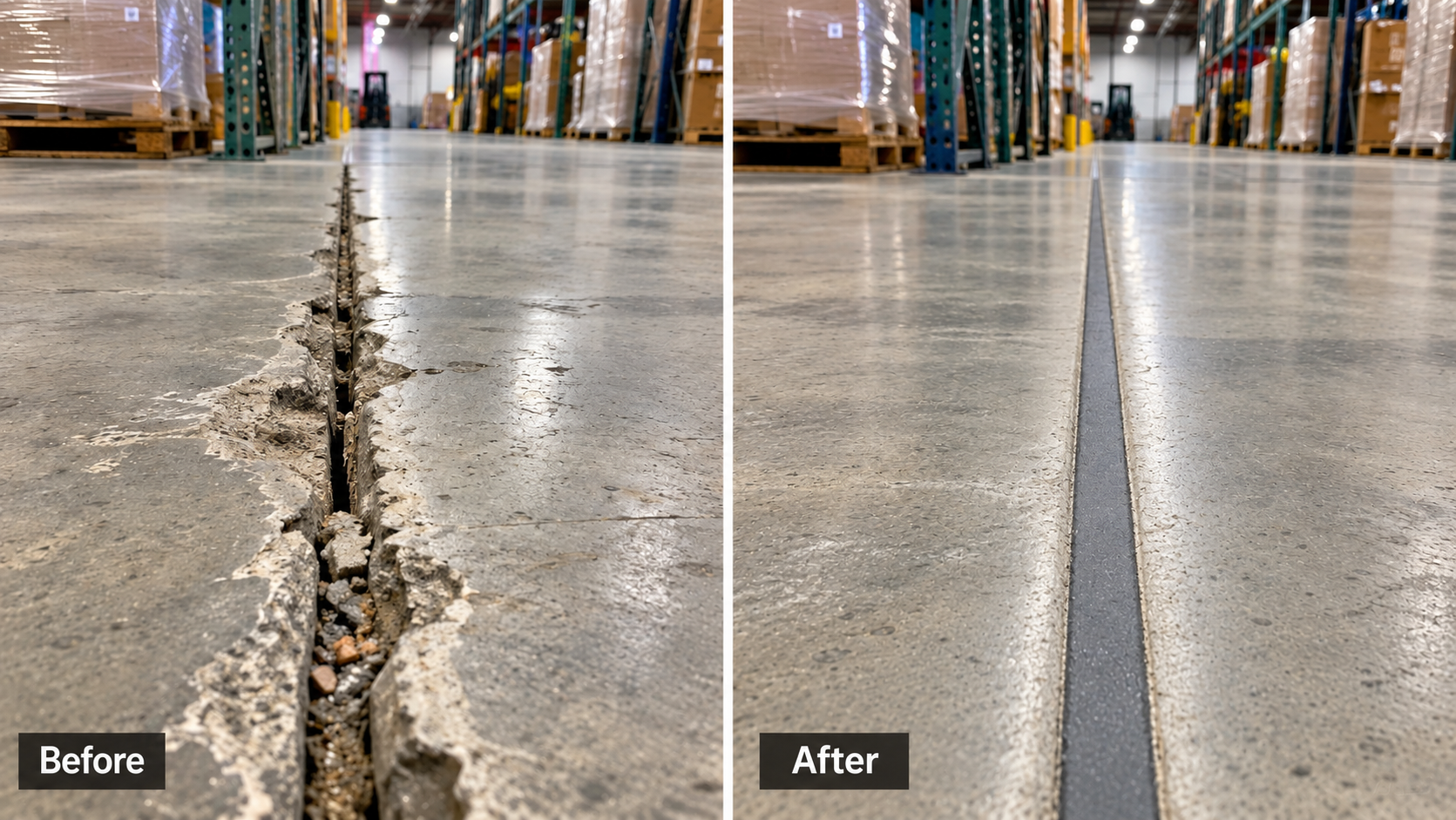
- Are wide enough to catch wheels or pallet jacks
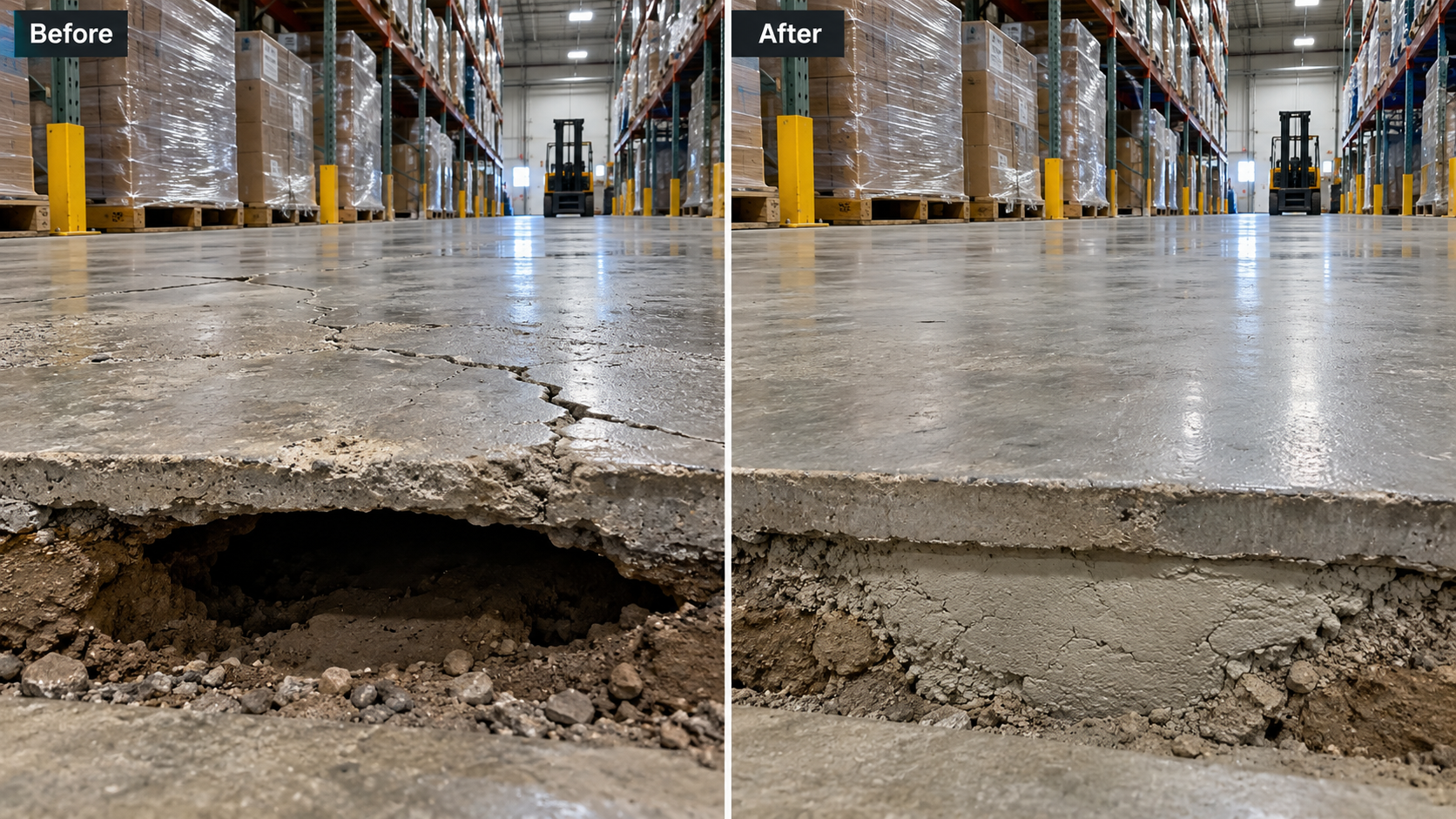
- Have vertical displacement (one side higher than the other)
- Continue to widen over time
- Create safety hazards or trip risks
At this point, the issue is no longer cosmetic. A landlord may argue that the floor requires repair before the next tenant can safely use the space.
If the damage resulted from misuse, overloading, or failure to report problems early, deposit deductions become more likely.
Normal Wear and Tear vs. Chargeable Damage
This is the most misunderstood part of warehouse lease disputes.
What Is Normal Wear and Tear?
Normal wear and tear refers to expected deterioration that happens when a property is used as intended. In warehouses, this often includes:
- Minor surface cracking
- Worn floor coatings
- Polished or scuffed concrete from traffic
- Small joint cracks
These conditions happen even when tenants act responsibly.
What Is Considered Damage?
Damage usually involves one or more of the following:
- Neglecting known floor issues until they worsen
- Overloading areas beyond design capacity
- Using the floor for purposes not allowed under the lease
- Allowing water intrusion or chemical exposure without action
If cracks expand into safety hazards or structural problems because no action was taken, a landlord may reasonably claim repair costs.
What Your Lease Agreement Really Says About Floor Repairs
In commercial leases, the lease is king.
Many warehouse leases include clauses covering:
- Maintenance responsibilities
- Floor condition at surrender
- Repair vs. replacement obligations
- Security deposit usage
Some leases require tenants to return the space in “broom clean” condition, excluding normal wear. Others require the tenant to repair damage they caused, but not inherent aging.
Triple-net leases often place more responsibility on the tenant, but even then, landlords usually remain responsible for structural elements, including major slab failures.
If your lease does not clearly state that all floor cracking is your responsibility, the landlord must show that the damage exceeds normal use.
How New Jersey and Eastern Pennsylvania Handle Commercial Deposits
New Jersey
New Jersey has strict residential security deposit laws, but commercial warehouse leases are not governed by those same statutes.
Instead, deposit disputes rely on:
- Lease language
- Documentation of condition
- Reasonableness of deductions
Courts generally do not favor landlords who withhold deposits for ordinary wear in industrial spaces.
Pennsylvania (Eastern PA)
The situation is similar in Pennsylvania. Commercial lease deposits are controlled by the lease, not consumer deposit laws.
However, landlords are still expected to act in good faith. Deducting for routine cracking in a warehouse floor is difficult to justify unless the damage is clearly excessive or tenant-caused.
This applies across Lehigh Valley, Northampton, Lehigh, Bucks, Montgomery, and Philadelphia counties.
Why Ignoring Floor Cracks Can Cost You Later
Even if cracks start as normal wear, ignoring them can change how they are classified.
Small cracks can:
- Widen under traffic
- Allow moisture intrusion
- Lead to slab movement
- Create safety hazards
When that happens, landlords may argue that early repair would have prevented larger damage.
From our experience repairing warehouse concrete floors, early intervention almost always costs less and protects deposit outcomes.
Documenting Floor Conditions Is Your Best Protection
One of the simplest ways to protect your deposit is documentation.
We strongly recommend:
- Photographing the floor at move-in
- Noting existing cracks in writing
- Reporting new cracks as they appear
- Keeping maintenance records
This creates a clear paper trail showing what existed before your tenancy and what developed over time.
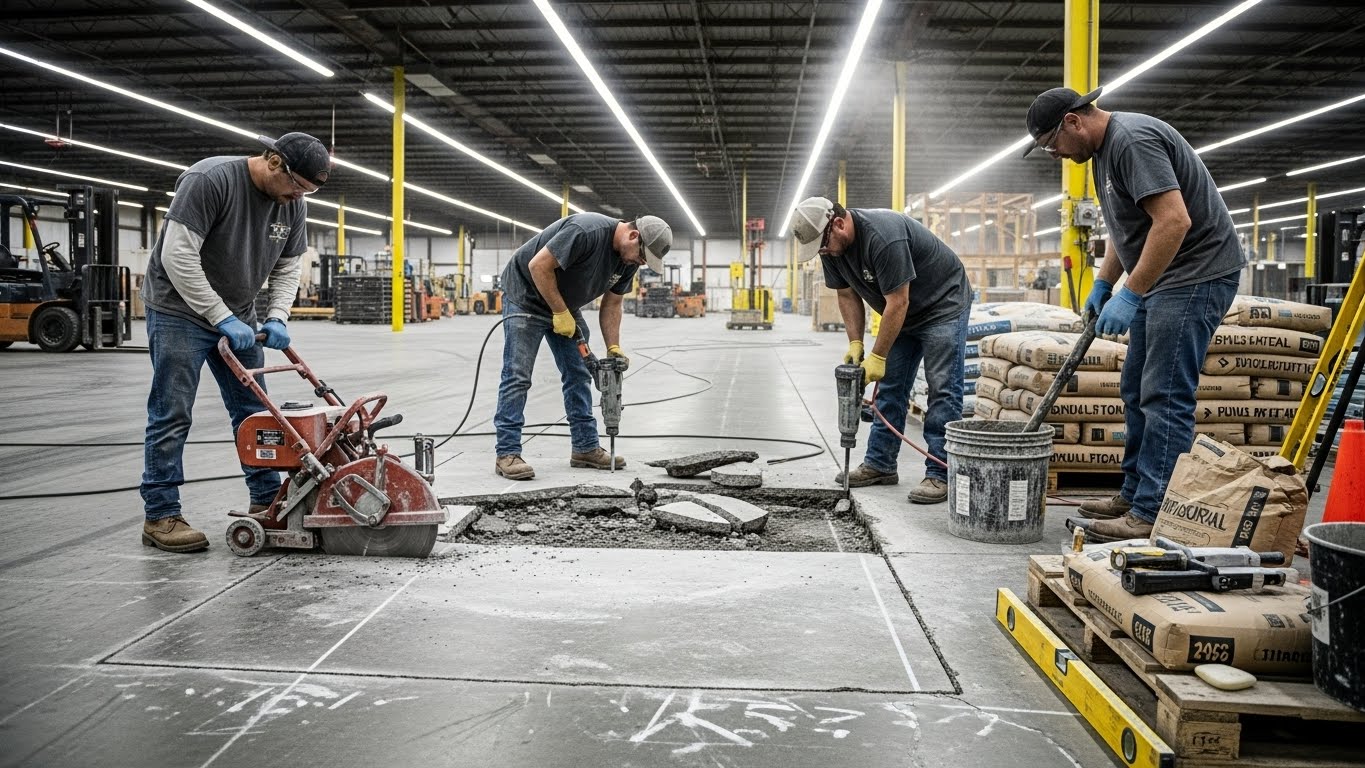
Repairing Warehouse Concrete Floors Before Lease End
If cracks worsen or create operational issues, proactive repair can make a major difference.
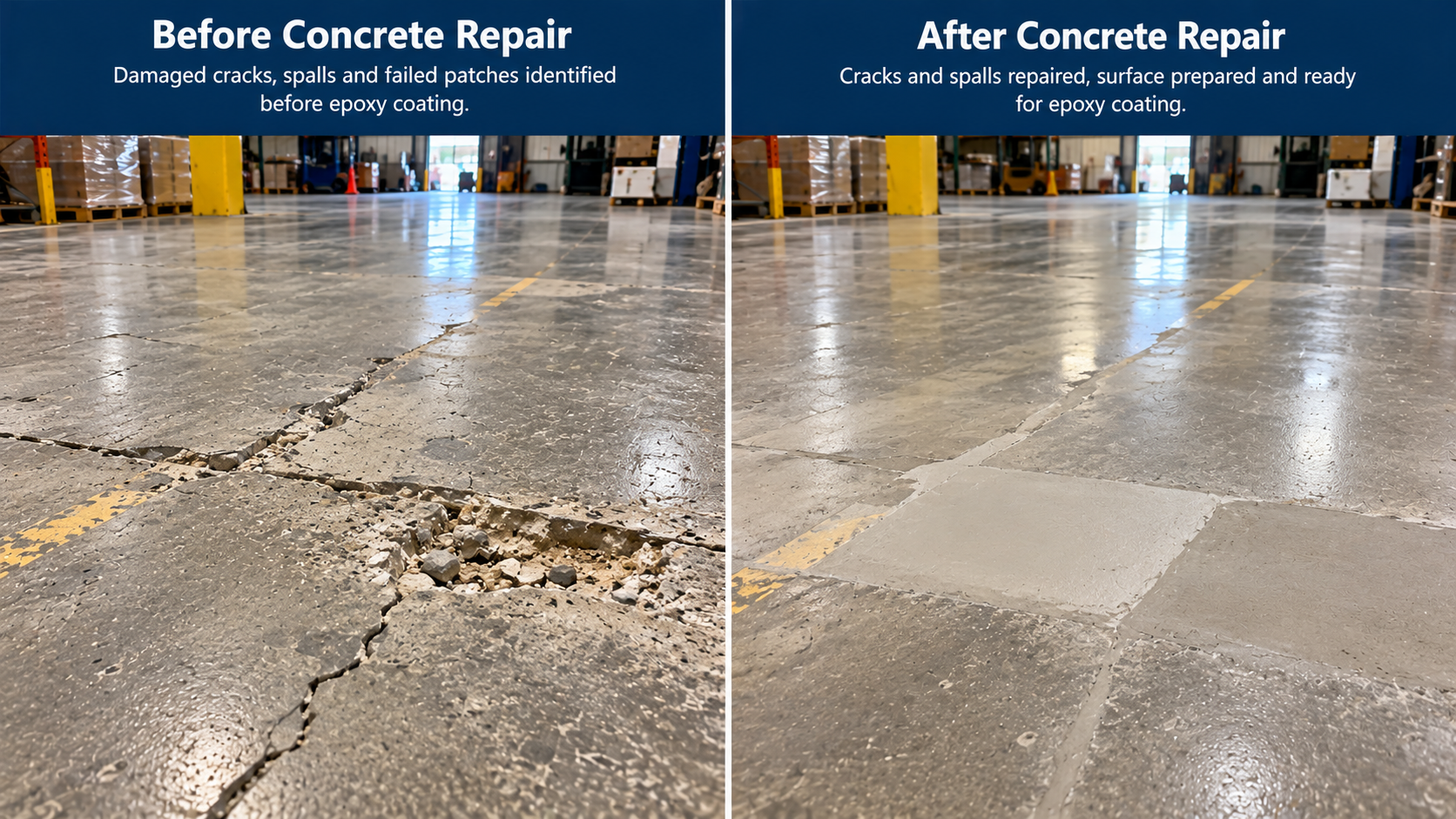
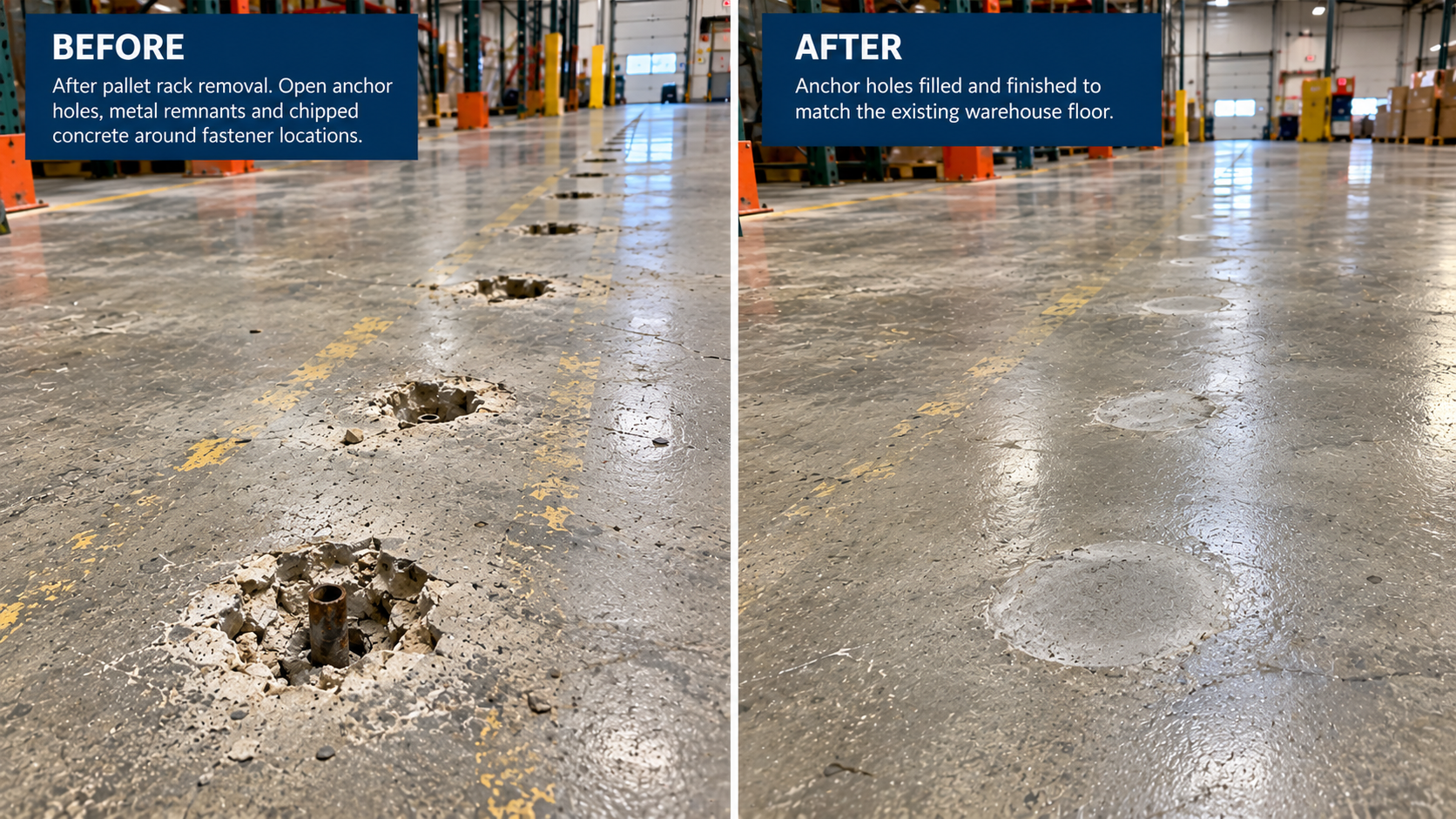
Professional concrete floor repair can:
- Restore flatness and safety
- Prevent further deterioration
- Demonstrate responsible property care
- Reduce landlord objections at move-out
Importantly, repairs are often far less expensive than losing part or all of a security deposit.
How We Help Warehouse Owners and Tenants in NJ and Eastern PA
We specialize in warehouse concrete floor repairs. We do not work on residential floors or decorative concrete.
Our service areas include:
- New Jersey
- Lehigh Valley
- Northampton County
- Lehigh County
- Bucks County
- Montgomery County
- Philadelphia County
We understand how landlords, tenants, and property managers evaluate floor conditions at lease end. Our repairs are practical, functional, and focused on meeting commercial standards, not cosmetic overkill.
Final Thoughts…
Most warehouse tenants do not lose their deposit simply because of concrete floor cracks.
You are far more likely to protect your deposit if:
- The cracks are normal for industrial use
- The floor was used as intended
- Issues were documented and addressed
- Repairs were made when needed
If you are unsure whether your warehouse floor condition could affect your deposit, getting a professional assessment early can save time, money, and disputes.
If you manage, lease, or own a warehouse in New Jersey or Eastern Pennsylvania and are concerned about concrete floor cracks, we can help.
We provide professional warehouse concrete floor repair services across NJ, Lehigh Valley, Northampton, Lehigh, Bucks, Montgomery, and Philadelphia counties.
Contact us today to discuss your floor condition and find out whether repair makes sense before it becomes a deposit issue.