(908) 369-3110

IN THIS ARTICLE
Why You Need a Concrete Floor Repair for 24/7 Distribution Centers in New Jersey
Your facility doesn’t stop. Trucks arrive at 2 AM. Forklifts run through every shift. Orders go out around the clock, seven days a week. So when the concrete floor starts failing, you can’t just shut everything down and bring in a repair crew for a week.
That’s the reality for distribution centers across New Jersey. The floor takes a beating 24 hours a day, and when it needs repair, the work has to happen without grinding your operation to a halt.
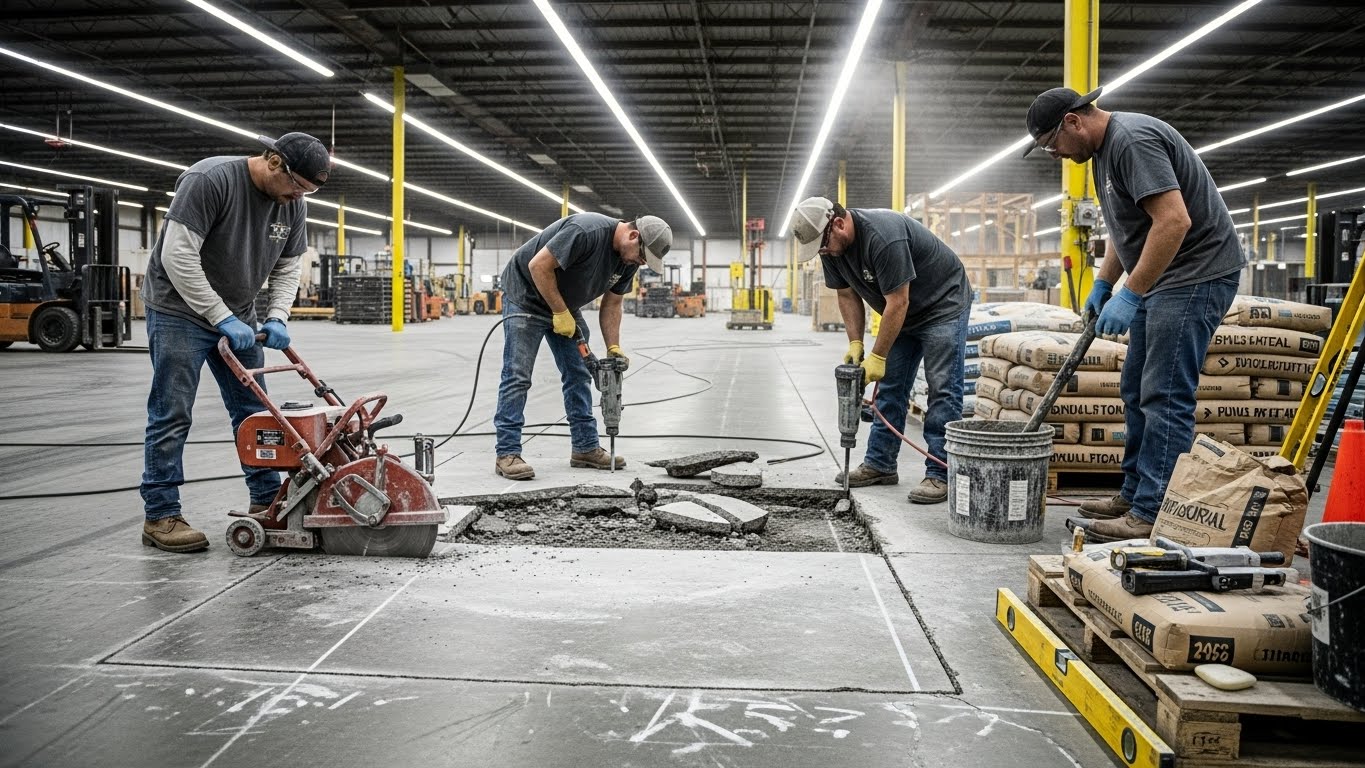
At Warehouse Floor Repairs, this is what we do. We specialize in concrete floor repair for warehouses and distribution centers in New Jersey and Pennsylvania. A large part of our work involves facilities that operate continuously. We’ve built our entire process around getting repairs done in live environments — safely, quickly, and without compromising the quality of the work.
Why 24/7 Operations Make Floor Repair Harder
Repairing a concrete floor in an empty building is straightforward. You show up, do the work, let it cure, and leave. Nobody’s in the way. Nothing’s moving.
A 24/7 distribution center is the opposite of that.
There’s always someone working. Forklifts are always running. Product is always moving. You can’t just cordon off half the warehouse and tell everyone to work around it. Every square foot of that floor is in use at some point during the day.
That creates a set of challenges that most concrete contractors aren’t equipped to handle.
First, there’s scheduling. You don’t have a clean window where the building is empty. Repairs have to be broken into phases and coordinated around shift changes, receiving schedules, and outbound shipping windows. During peak seasons — holiday fulfillment, back-to-school, quarterly inventory pushes — the timing gets even tighter.
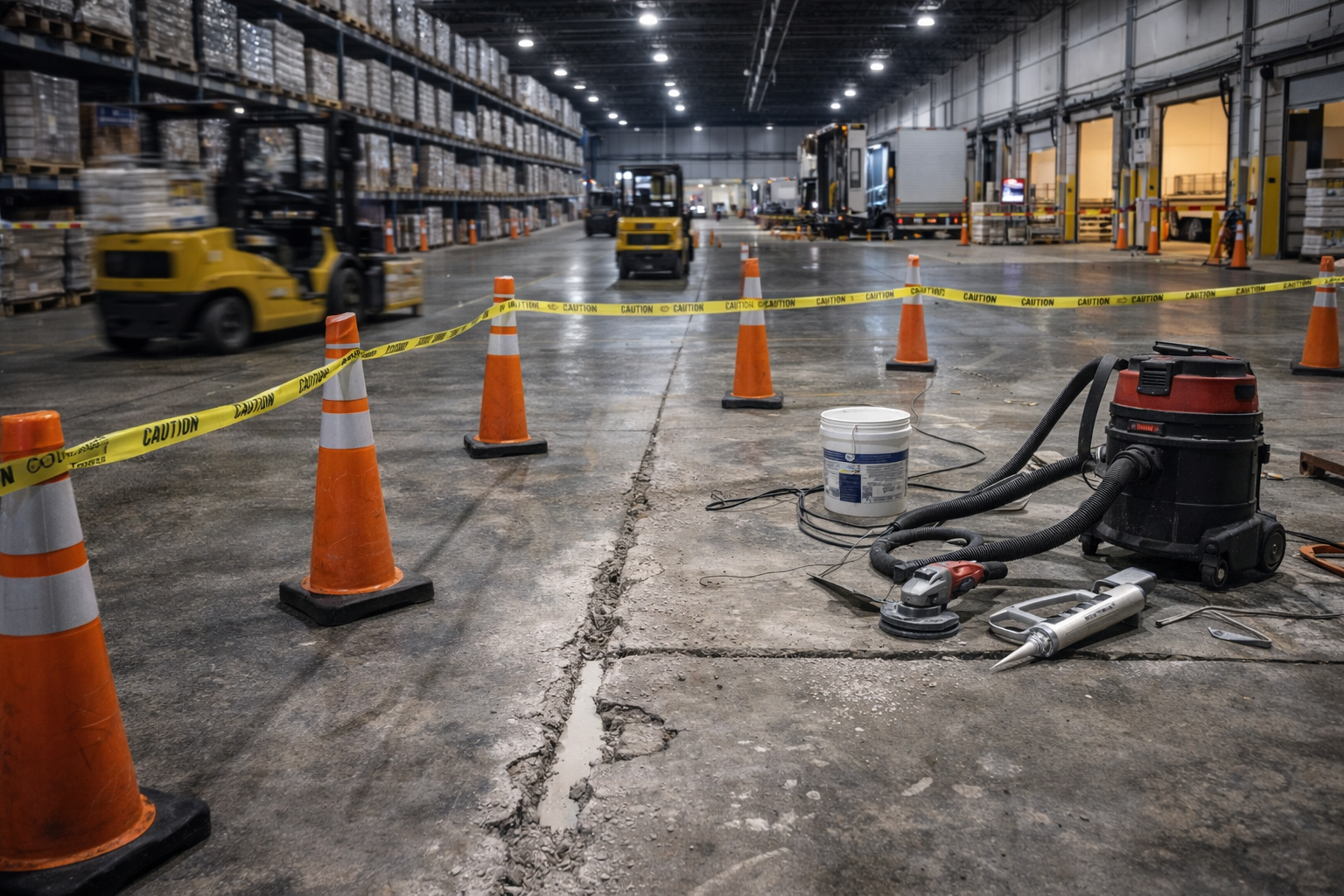
Then there’s safety. You’ve got active workers, moving equipment, and a repair crew all sharing the same space. That requires proper barricading, clear communication, and a plan that accounts for foot traffic and forklift routes near the work zone.
And finally, there’s cure time. Traditional concrete repair materials can take 24 to 72 hours to fully cure. In a facility that runs nonstop, that’s not workable. You need materials that cure in hours, not days, so repaired sections can handle traffic again quickly.
This is why 24/7 distribution centers need a contractor who has done this before. Not someone figuring it out on your floor for the first time.
What Causes Concrete Floor Damage in NJ Distribution Centers
Distribution centers are some of the hardest environments for a concrete slab. The combination of constant use, heavy loads, and New Jersey’s climate creates conditions that wear floors down faster than almost any other setting.
Non-Stop Traffic
The biggest factor is repetitive loading. Forklifts, reach trucks, pallet jacks, and tuggers run the same aisles day after day. Those routes absorb thousands of load cycles per week. The concrete flexes slightly under each pass. Over time, that flexing leads to fatigue cracking, especially in aisles where the slab was poured thinner or where the subgrade has softened.
Heavy Racking Loads
Distribution centers use high-density racking systems. Each upright leg transfers thousands of pounds of static load directly into the slab. That concentrated pressure can cause localized cracking and even punch-through failures if the floor wasn’t designed for the load it’s carrying.
Dock Area Abuse
Loading docks are the hardest-hit zones in any distribution center. Trailers bump the dock wall. Forklifts transition from the warehouse floor to the dock leveler and back again hundreds of times a day. The concrete around dock doors gets hammered from both sides — mechanical impact from above and freeze-thaw damage from outside air.
In New Jersey, dock areas take an extra beating in winter. Every time a dock door opens, cold air rushes in and hits warm, moist concrete. The temperature differential accelerates surface deterioration. Add road salt tracked in on forklifts and trailer wheels, and you’ve got a recipe for scaling and spalling.
Freeze-Thaw Cycles
Even inside the building, freeze-thaw is a factor near entry points, dock doors, and any area exposed to outside air. Water enters the concrete through small cracks and pores. It freezes, expands by about 9%, and breaks the concrete apart from the inside. In a New Jersey winter, this cycle can repeat dozens of times between November and March.
Age and Deferred Maintenance
Many distribution centers in New Jersey were built during the logistics boom of the early 2000s. Those floors are now 20-plus years old. If maintenance has been deferred — joints not refilled, cracks not addressed, coatings not maintained — the damage stacks up. A floor that could have been repaired affordably five years ago might now need extensive work.
Common Floor Problems We See in NJ Distribution Centers
We’ve worked in distribution centers across the state. These are the issues that come up most often.
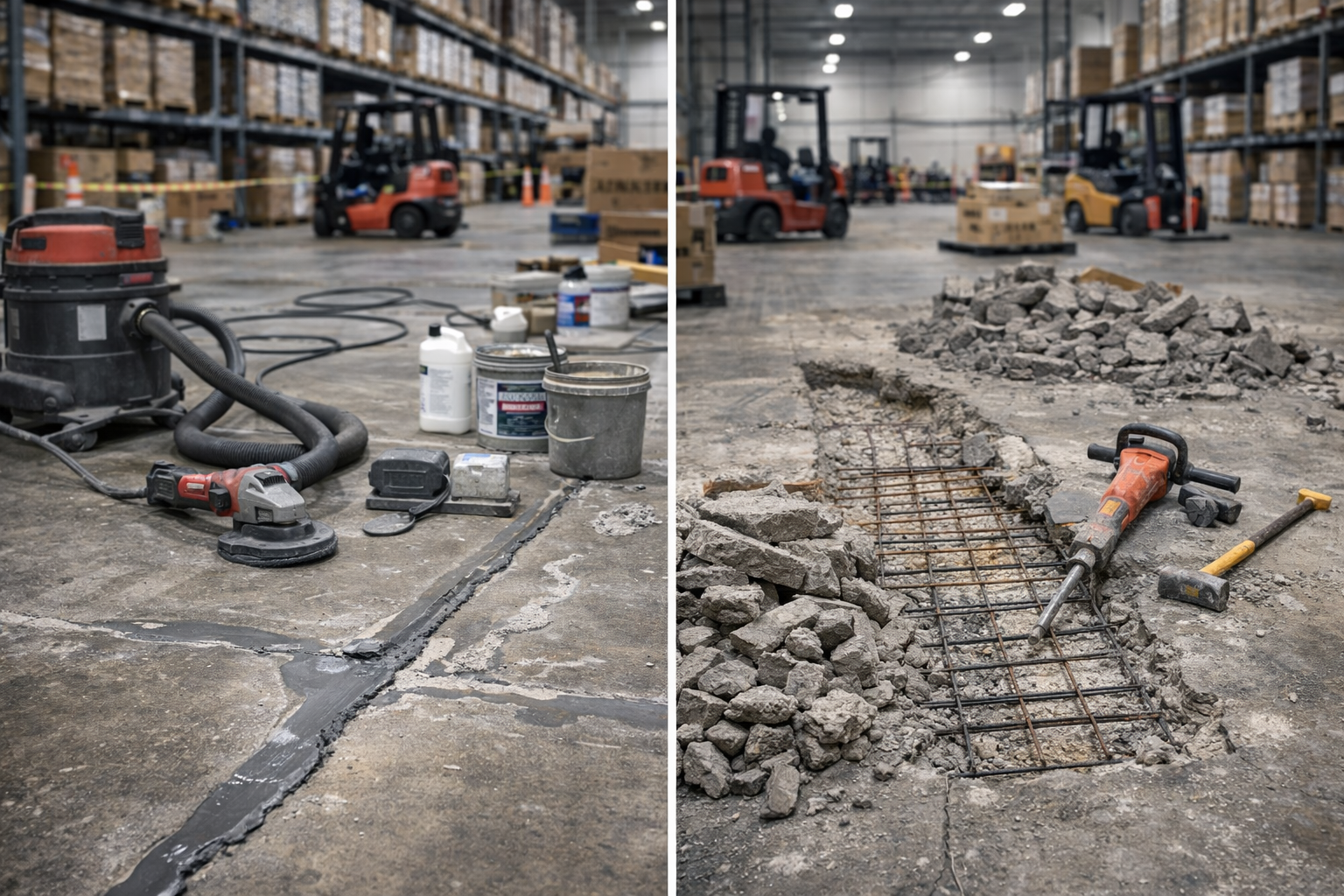
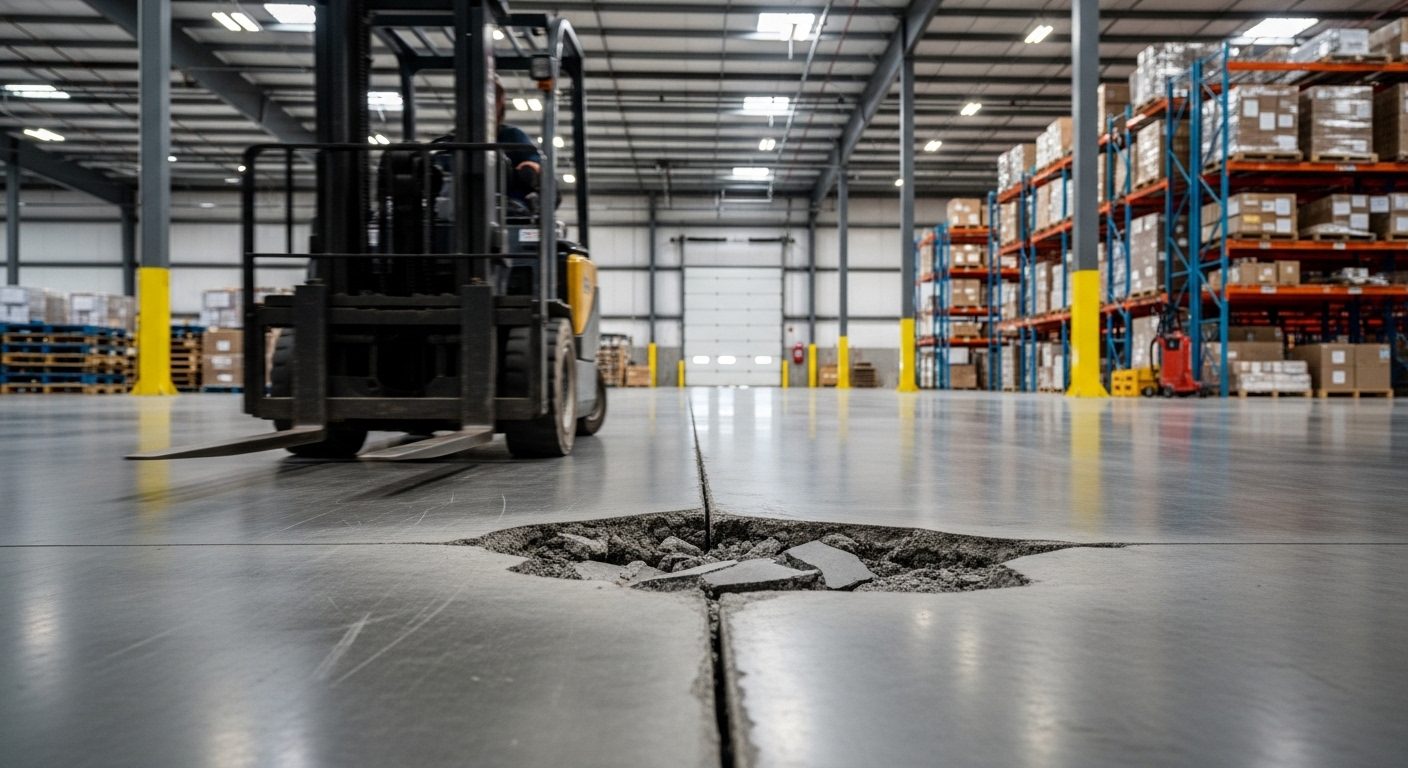
Cracked slabs in high-traffic aisles. Forklift lanes and pick aisles are the first areas to show cracks. The cracks usually follow traffic patterns and get worse over time as wheels hit them repeatedly.
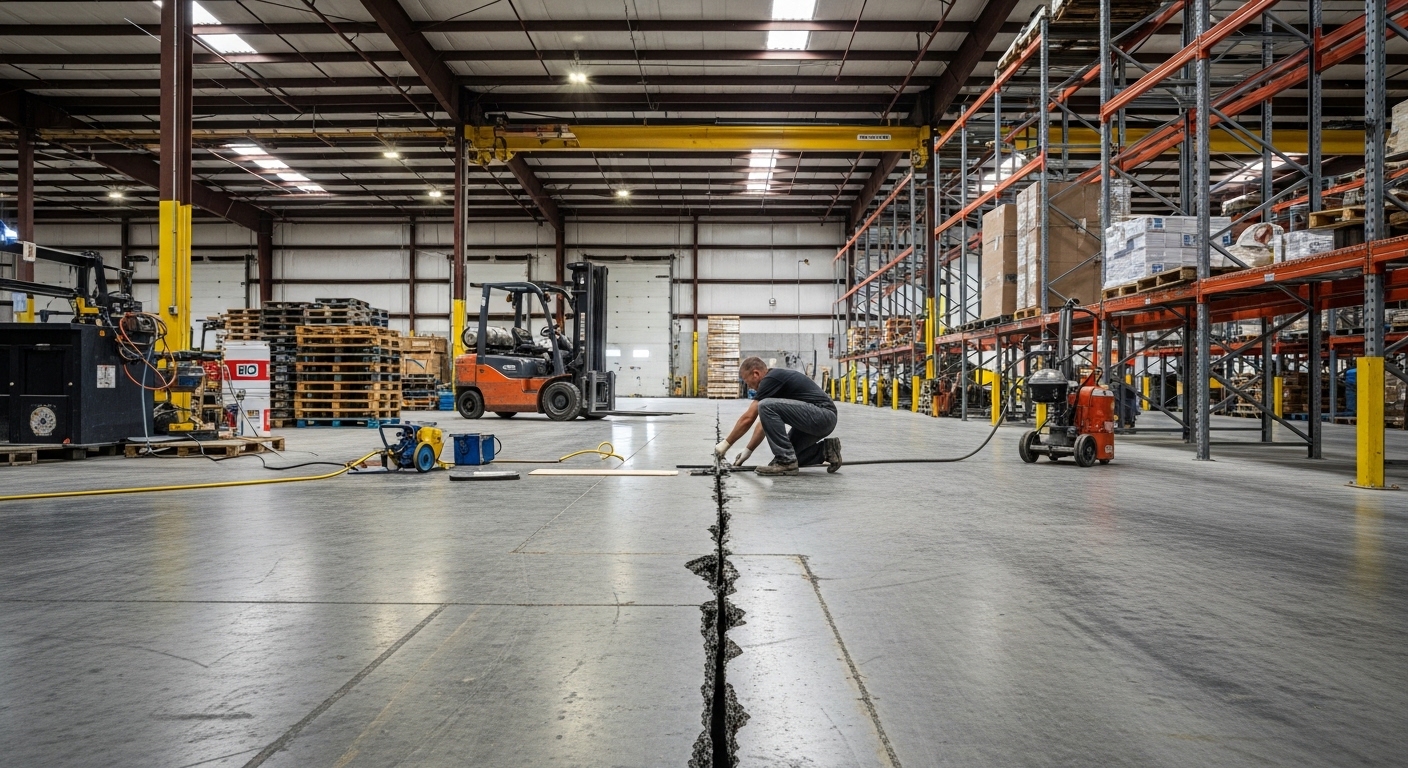
Deteriorated control joints. Joints are designed to manage natural concrete movement, but they wear out. The filler material degrades, the joint edges spall, and what was once a smooth transition becomes a rough channel that rattles equipment and damages wheels.
Spalling and scaling near dock areas. The combination of impact, temperature swings, and chemical exposure causes the surface layer to break apart. You’ll see rough patches, shallow pits, and flaking concrete. It looks bad and creates debris that gets tracked into cleaner areas of the facility.
Uneven floor sections. Settlement, curling, and differential movement between slab sections create lips and height changes. Even a small offset — a quarter inch — is a trip hazard for workers and a jolt for loaded forklifts.
Worn or failed floor coatings. Many distribution centers have epoxy or urethane floor coatings that have worn through in high-traffic areas. Peeling coatings create loose debris and expose the bare concrete underneath to faster wear.
How We Repair Distribution Center Floors Without Stopping Your Operation
This is the core of what we do. Our process is designed specifically for facilities that can’t shut down.
Phased Repair Planning
We don’t try to fix the entire floor at once. We break the project into zones and work through them one section at a time. Each zone is chosen based on your operational priorities — worst damage first, or areas that can be most easily isolated from active work.
Before we start, we sit down with your operations team. We want to understand your traffic patterns, shift schedules, receiving windows, and any upcoming peaks. That information drives the repair plan.
Night and Weekend Scheduling
Most of our work in 24/7 facilities happens during the shifts with the lightest traffic. For many distribution centers, that’s overnight or on weekends. We adjust our schedule to match your operation, not the other way around.
If you have a partial shutdown window — even a few hours between shifts — we can use it. We’ve built our workflow around short, productive windows rather than long uninterrupted stretches.
Fast-Cure Materials
This is critical. We use materials that are specifically engineered for fast return to service.
Our polyurea joint fillers and crack repair systems cure in as little as one hour. That means a joint we fill at midnight can handle forklift traffic by 1 AM. Epoxy crack injection systems cure in a few hours. Industrial resurfacing overlays can be traffic-ready in four to six hours depending on conditions.
Standard concrete repair materials that take days to cure have no place in a 24/7 facility. We don’t use them.
Safety Protocols in Active Work Zones
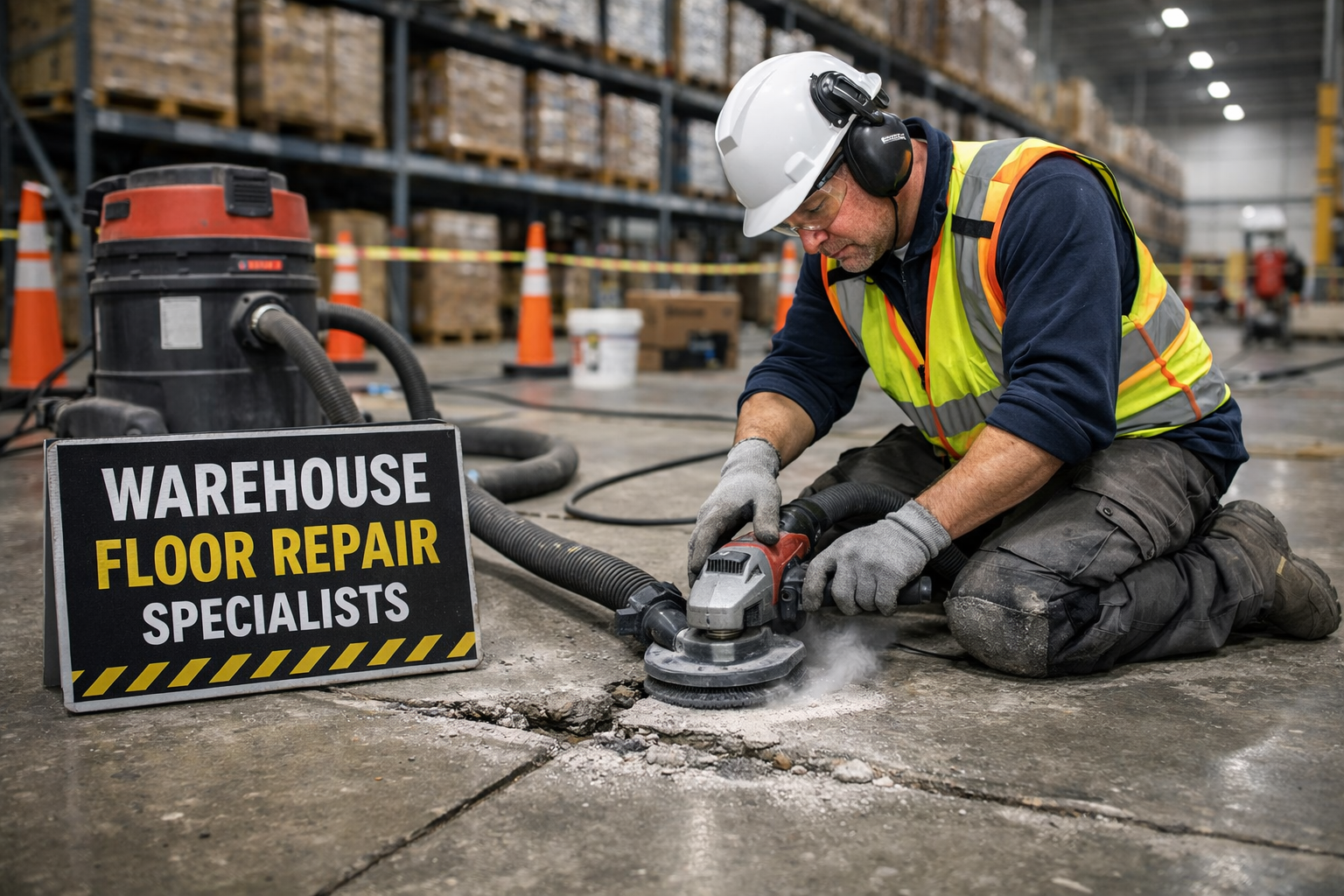
We set up portable barriers and signage around every active repair zone. Our crews are trained to work in live warehouse environments. We wear high-visibility gear, maintain communication with your floor supervisors, and keep our work area tight and contained.
We don’t spread out across half the building. We work in focused zones, finish them, and move on.
Coordination and Communication
You’ll know exactly what we’re doing, where we’re doing it, and when each zone will be back in service. We provide daily updates on multi-day projects and give advance notice before moving to a new zone so your team can adjust routes and staging areas.
No surprises. No guesswork. Just a clear plan executed on schedule.
The Cost of Ignoring Floor Damage in a 24/7 Facility
In a facility that runs continuously, floor damage doesn’t sit still. It gets worse every single day.
A crack that a forklift hits 200 times a day grows faster than one that gets hit 20 times a day. A deteriorated joint that catches a wheel every few minutes breaks down faster than one in a lightly used aisle. The math isn’t complicated — more traffic means faster deterioration.
Here’s what deferred maintenance actually costs you:
Equipment damage. Rough floors wear out forklift wheels, shock absorbers, and steering components. Fleet maintenance costs go up. If you lease your forklifts, you could face excess wear charges at the end of the lease.
Product damage. Loads shift and fall when forklifts hit cracks and rough joints. Damaged inventory is lost revenue.
Workers’ compensation claims. A trip-and-fall injury on a cracked floor is expensive. Medical costs, lost work time, and increased insurance premiums add up fast.
OSHA exposure. Distribution centers are subject to OSHA inspections. Cracked and uneven floors violate general duty clause requirements for safe walking-working surfaces. Fines are real.
Lease-end costs. If you’re in a leased facility, deferred floor damage can result in significant restoration costs when your lease expires. Fixing it now is almost always cheaper than fixing it later — and far cheaper than paying a landlord’s contractor to fix it for you at move-out.
Areas We Serve in New Jersey
We work across the entire state, with heavy coverage along New Jersey’s major industrial corridors.
Central Jersey is a hub for distribution center activity, particularly around Exit 8A of the New Jersey Turnpike, the I-95 corridor, and the Route 1 logistics belt through Middlesex and Mercer counties. We do a significant amount of work in this area.
In North Jersey, we serve facilities along I-78, I-287, I-80, and the Route 17 corridor through Bergen, Passaic, Morris, Essex, and Union counties.
In South Jersey, we cover Burlington County, Camden County, Gloucester County, and other nearby areas.
We also serve distribution centers and warehouses across eastern Pennsylvania, including the Lehigh Valley, Bucks County, and the greater Philadelphia region.
Get Your Warehouse Floor Assessment Now
If your distribution center is dealing with concrete floor damage and you can’t afford to stop operations for repairs, give us a call. That’s the exact situation we’re built for.
At Warehouse Floor Repairs, we provide on-site floor assessments for distribution centers and warehouses throughout New Jersey and Pennsylvania. We’ll evaluate your floor, identify the priority repairs, and put together a phased plan that fits your schedule and your budget.
We work around you. That’s not a slogan. It’s how every job gets planned and executed.
Contact Warehouse Floor Repair today to schedule your warehouse concrete floor assessment.

- Concrete Floor Repair for 24/7 Distribution Centers in New Jersey - March 2, 2026
- Warehouse Floor Repair Cost vs. Replacement in NJ - March 2, 2026
- Heavy-Duty Crack Repair for Warehouses in Burlington County - March 2, 2026