(908) 369-3110

IN THIS ARTICLE
How We Fix Dangerous Concrete Floor Joints for Forklifts in Middlesex County Warehouses
If you manage a warehouse in Middlesex County, chances are your concrete floor is working harder than it ever was designed to. Edison, South Brunswick, Perth Amboy, Woodbridge — this stretch of central New Jersey is packed with distribution centers, manufacturing facilities, and fulfillment operations running forklifts across their floors day in and day out. And those floors take a beating.
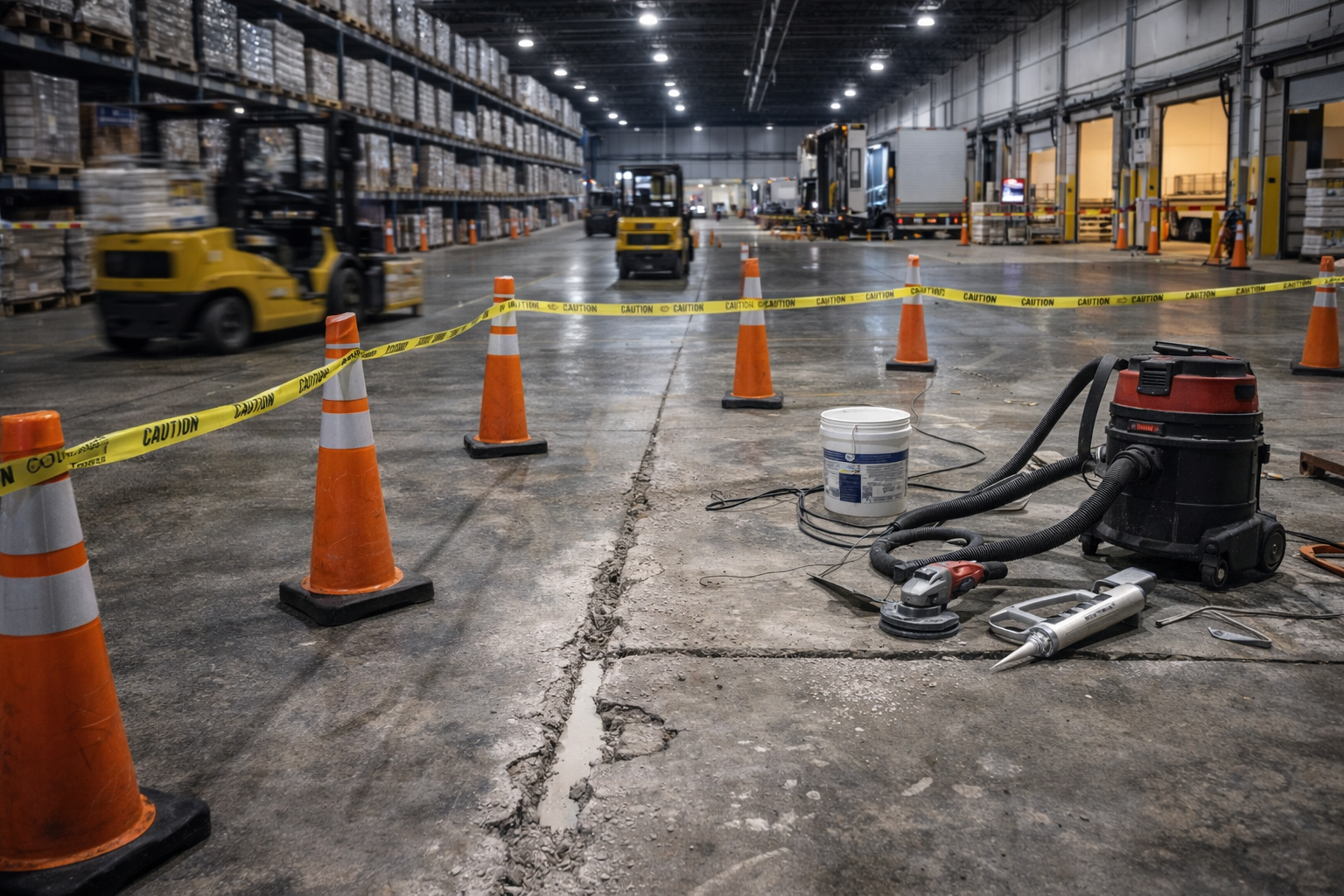
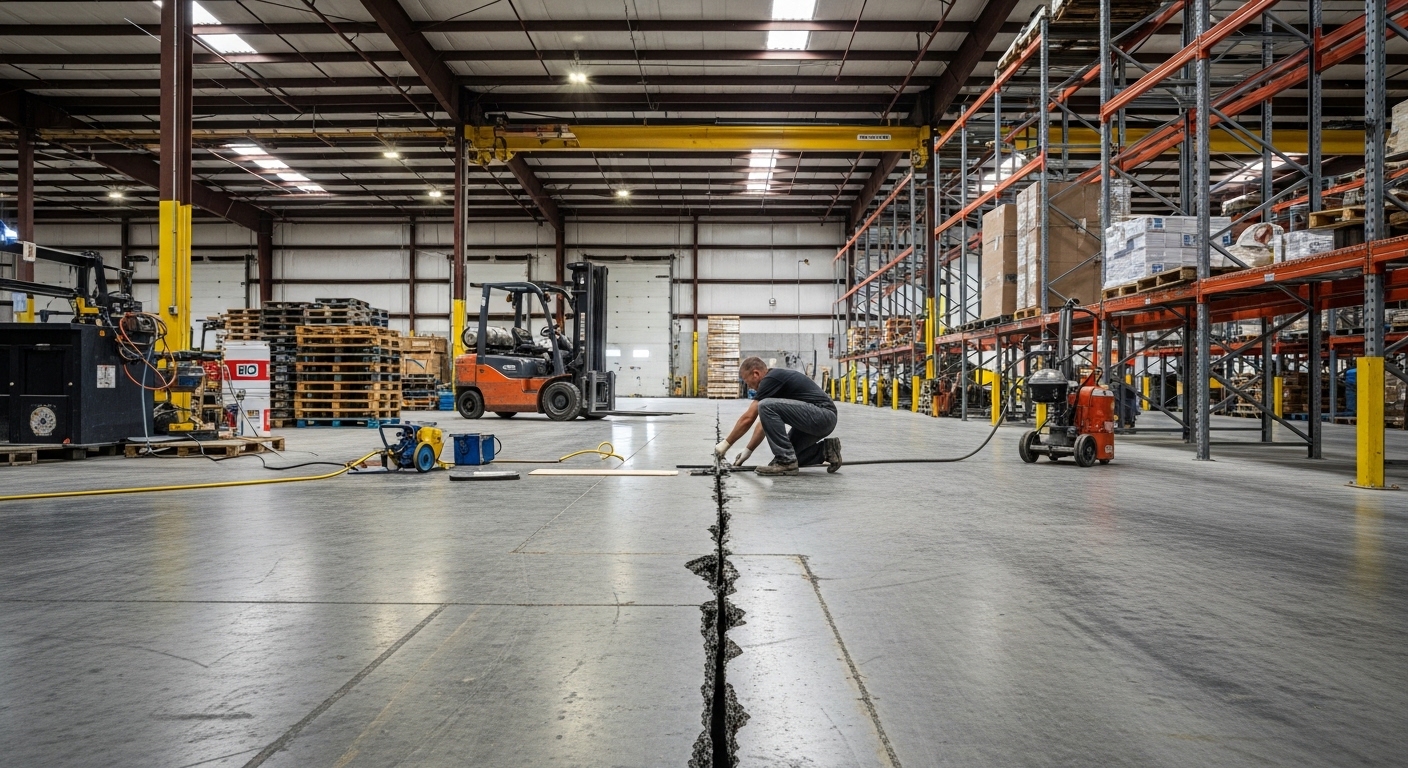
One of the most overlooked sources of real danger in a warehouse environment is the concrete floor joint. Not cracks in the middle of a slab — joints. The deliberate cuts and seams are built into every concrete floor. When they fail, they create a hazard that’s easy to walk past but impossible to ignore once a forklift driver hits one wrong.
Why Concrete Joints Exist in the First Place
Concrete shrinks as it cures and expands and contracts with temperature changes. Without a way to manage that movement, slabs crack unpredictably. Control joints, construction joints, and isolation joints are all installed during the original pour to give the concrete a planned place to move. They’re a structural feature — not a weakness.
The problem is what happens to those concrete joints over time, especially under industrial traffic.
Why Joints Fail in Warehouse Environments
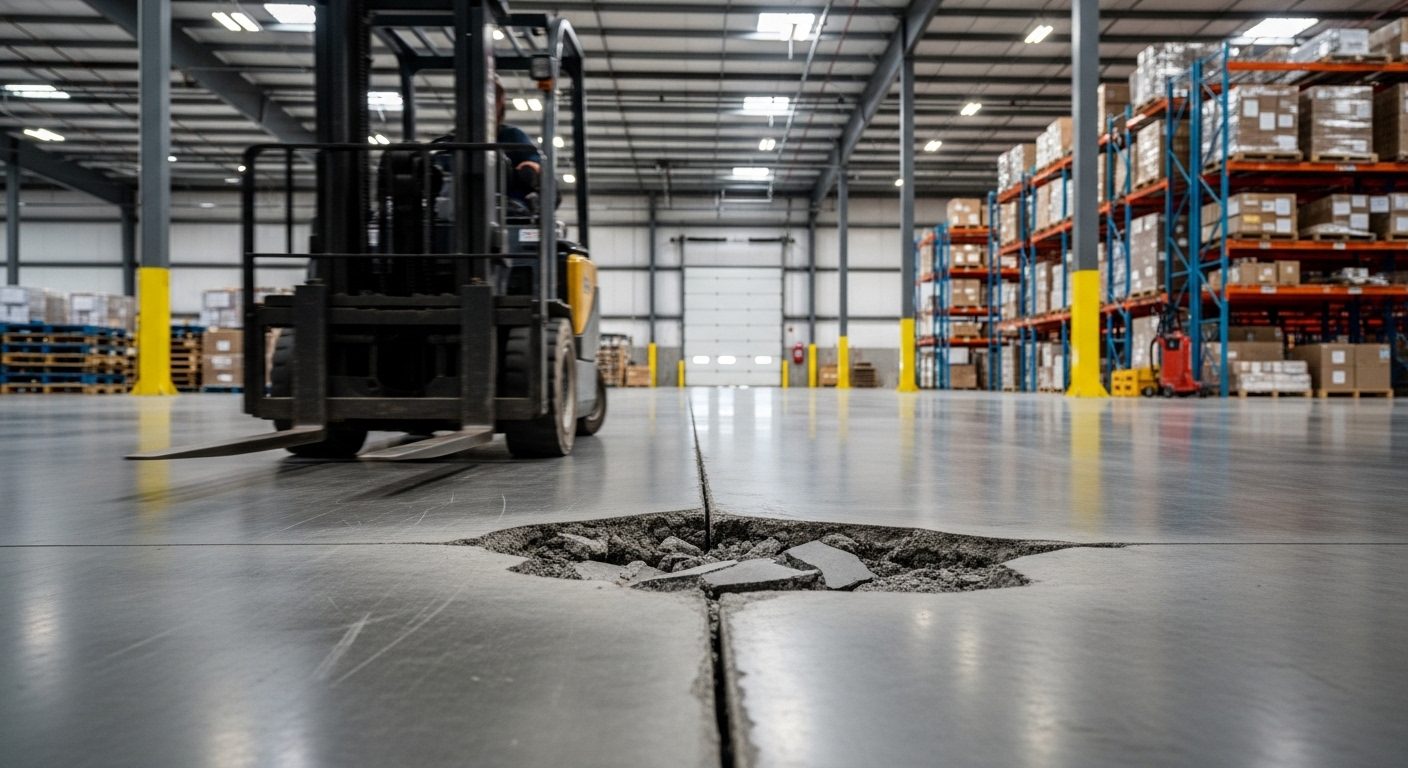
A standard warehouse forklift — even an unloaded one — can weigh 8,000 to 10,000 pounds. A loaded lift carrying pallets of product can exceed 15,000 pounds. Every time that machine rolls over a floor joint, it applies a dynamic load to the slab edges on either side of that joint. Do that thousands of times a day for several years, and the joint filler breaks down, the edges chip and spall, and what was once a smooth transition becomes a ridge or a gap.
Moisture makes it worse. In NJ, seasonal freeze-thaw cycles force water into joint openings, expanding and contracting the gap and accelerating edge deterioration. Poor original installation — wrong filler material, inadequate joint depth, incorrect joint spacing — shortens a joint’s useful life significantly.
Eventually, one slab edge sits higher than the other. That’s called edge curling or lipping, and it’s exactly what causes forklifts to catch, jolt, and in some cases tip.
How to Recognize a Dangerous Joint
You don’t need to be a concrete professional to spot a joint that needs attention. Walk your floor and look for:
Spalled or crumbling edges. Chipped or broken concrete along the joint line is a clear sign the edges are no longer structurally sound.
Lip formation. Run your hand or foot across a joint. If you can feel one side is higher than the other, even by a quarter inch, that’s a forklift hazard. At highway speeds — which forklifts effectively reach indoors — a quarter-inch lip can cause violent jolting.
Failed or missing joint filler. The material inside the joint (often a polyurethane or epoxy compound) hardens, shrinks, or pulls away from the slab edges over time. When it’s gone, the edges have no lateral support and deteriorate faster.
Hollow sound when tapped. Use a metal rod or the handle of a hammer to tap near the joint. A hollow sound suggests delamination or subsurface voids beneath the slab surface.
Not every damaged joint requires emergency action. But any joint that has developed a visible lip, exposed aggregate, or missing filler in a forklift travel path should be evaluated by a professional sooner rather than later. Check out our concrete floor joint repair service; you’ll not be disappointed.
What It Actually Costs When You Ignore Joint Damage
The repair itself is straightforward and relatively affordable. Ignoring the problem is where the real expense builds up.
Forklift wear. Constant impact loading from rough joints accelerates wear on tires, wheel bearings, mast components, and frames. Maintenance costs go up. Equipment life goes down.
Driver fatigue and injury. Operating a forklift over a rough floor all day is physically taxing. Beyond fatigue, a sudden jolt from a bad joint can cause loss of control, dropped loads, or a tip-over. OSHA takes forklift accidents seriously, and the liability exposure from an injury on a deteriorated floor is significant.
Product and rack damage. Vibration from poor floor conditions affects the stability of loads. Dropped product, damaged inventory, and stressed racking systems are all downstream costs.
Compliance exposure. OSHA’s general duty clause requires employers to keep the workplace free of recognized hazards. A deteriorated forklift travel surface that you’ve documented and not repaired is a documented hazard. That’s a problem.
When Repair Isn’t Enough: Full Joint Reconstruction
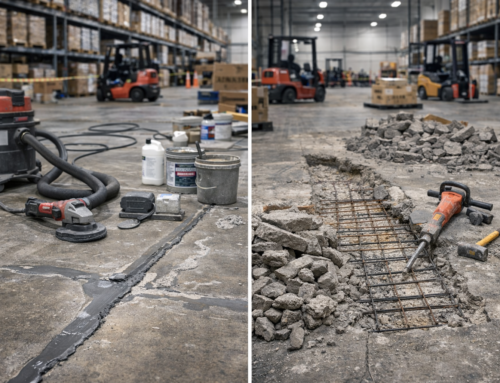
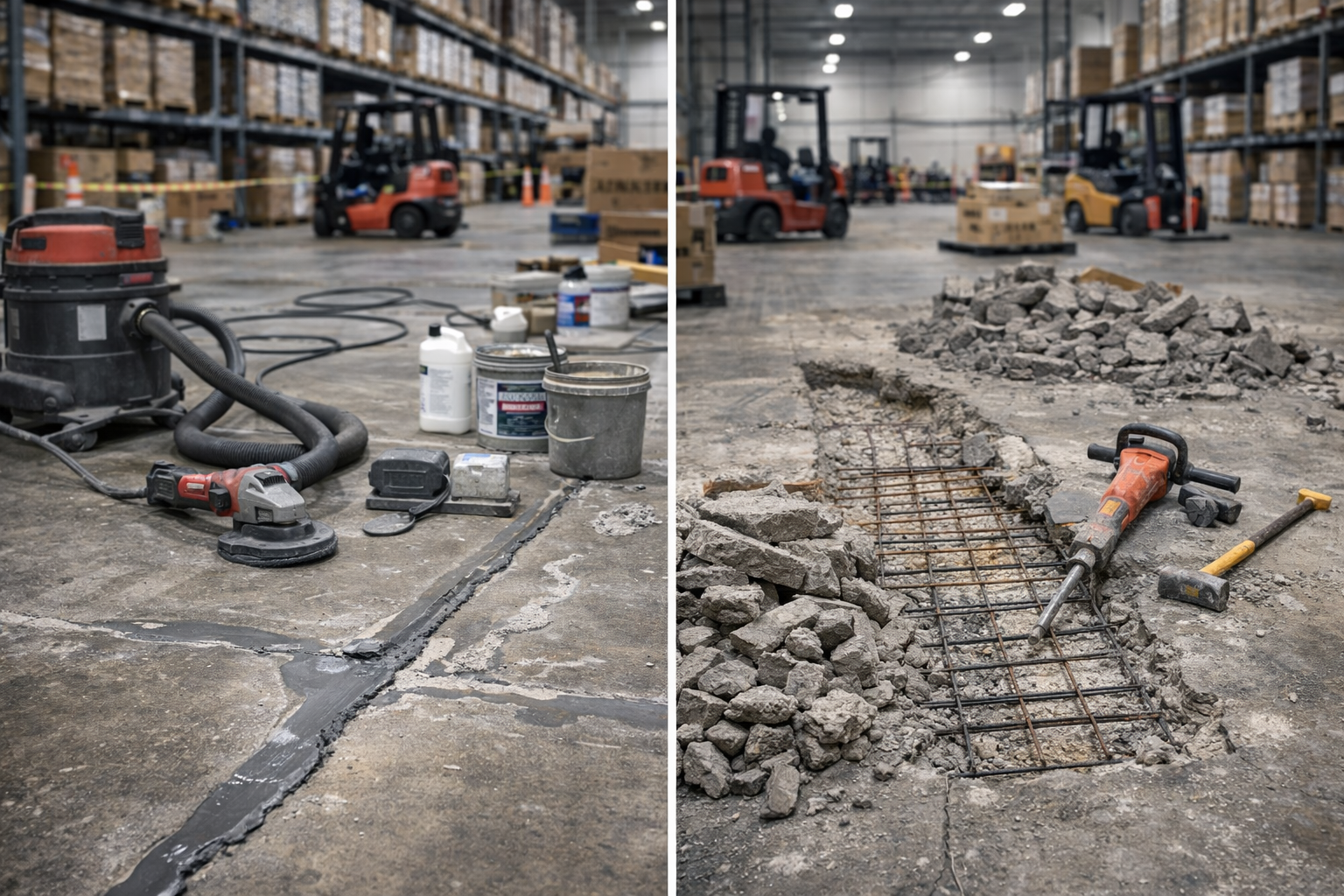
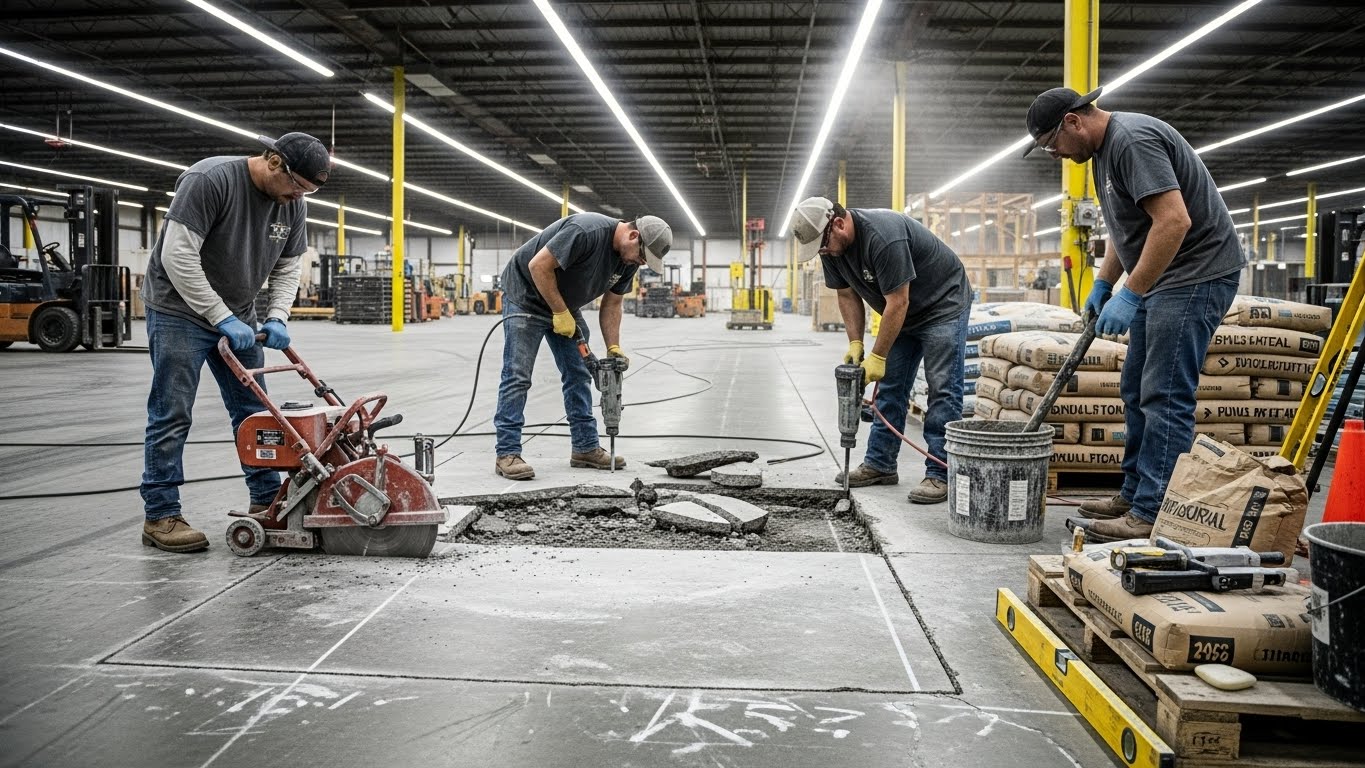
Some joints are too far gone for surface-level repair. If the concrete on either side of a joint has fractured several inches deep, or if there’s significant slab settlement creating a permanent height difference, you’re looking at saw-cutting out the damaged section and making a new joint. This is more involved but still far less expensive than replacing an entire slab bay.
There’s also the question of load transfer. In slabs that were originally built without dowel bars across the joint, there may be little structural connection between adjacent slabs. Repeated forklift loading can cause one slab to deflect independently of its neighbor, which is what leads to lipping in the first place. A dowel bar retrofit — drilling and epoxy-setting steel dowels across the joint before filling — restores that load transfer and dramatically extends the life of the repair.
Maintaining Joints After Repair
A quality repair should last years under normal warehouse conditions. But no repair lasts forever without basic attention.
Walk your forklift travel lanes monthly and check joints for early signs of filler breakdown or edge chipping. Catching a problem when the filler is just starting to pull away is a simple fix. Waiting until the edges are spalling again means a more involved repair.
Talk to your forklift operators. They drive across every inch of that floor and will notice a rough spot long before anyone in the office does. A simple reporting process — a text to the facilities manager, a mark on a floor map — pays for itself many times over.
We Repair Warehouse Concrete Floors Across Middlesex County and Beyond
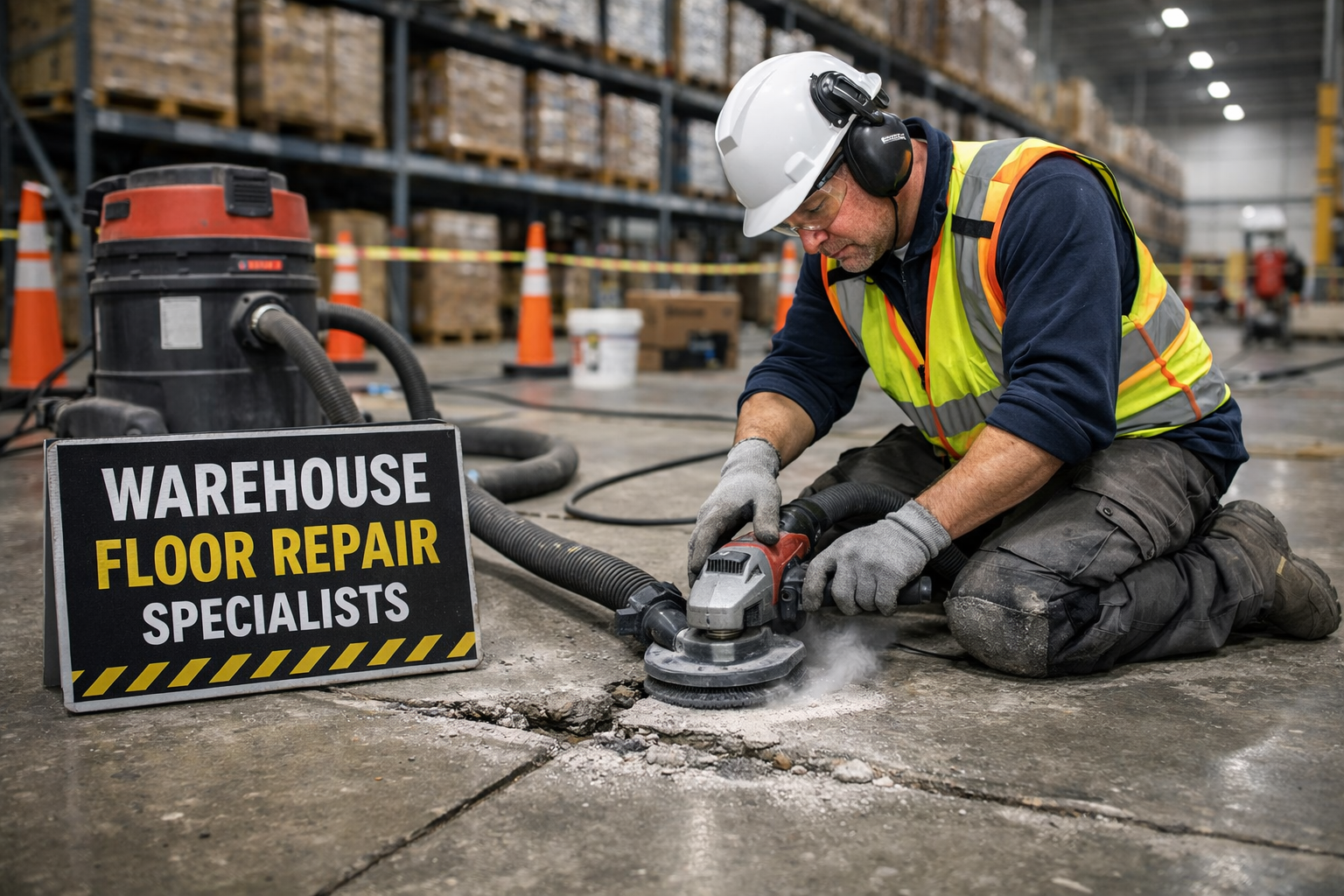
Our crew specializes in industrial concrete floor repair for warehouses, distribution centers, cold storage facilities, and manufacturing plants across Middlesex County, the rest of New Jersey, and Pennsylvania. We work around your operations — nights, weekends, phased sections — so you don’t have to shut down to get your floor fixed.
If you’ve got joints that are overdue for attention, we’ll come out, assess the floor, and give you an honest picture of what’s there and what it will take to fix it right.
Contact us today for a floor assessment. A phone call and a site visit are all it takes to get started.

- Concrete Floor Repair for 24/7 Distribution Centers in New Jersey - March 2, 2026
- Warehouse Floor Repair Cost vs. Replacement in NJ - March 2, 2026
- Heavy-Duty Crack Repair for Warehouses in Burlington County - March 2, 2026