

IN THIS ARTICLE
Who pays for warehouse concrete floor repairs in a lease?
In most warehouse leases, the tenant pays for concrete floor repairs, especially under triple net (NNN) and modified net leases. However, the final responsibility always depends on what the lease actually says and whether the damage is considered routine wear, tenant-caused, or a true structural issue tied to the building’s foundation.
Now, let’s break it down properly so landlords and tenants understand how warehouse concrete floor repair responsibility is typically handled in New Jersey and Eastern Pennsylvania.
Understanding Repair Responsibility in Warehouse Leases
Warehouse and industrial leases are different from residential leases. In commercial real estate, the law generally assumes that both parties are experienced, represented, and capable of negotiating terms. Because of that, courts almost always defer to the lease language itself.
When it comes to concrete floor repairs, responsibility usually falls under maintenance and repair clauses, not habitability rules. This is why understanding the type of lease and how “floors” are defined matters so much.
Types of Commercial Leases and How They Affect Floor Repairs
Before determining who pays for warehouse concrete floor repairs, you need to know what type of lease you are dealing with.
Triple Net (NNN) Leases
This is the most common lease type for warehouses in New Jersey and Eastern Pennsylvania.
Under a triple net lease, the tenant typically pays for:
- Property taxes
- Insurance
- Maintenance and repairs
In practical terms, this means the tenant is responsible for maintaining the warehouse interior, including the concrete floor. Cracks, surface wear, joint damage, spalling, and uneven slabs are usually considered part of normal maintenance.
Unless the lease specifically shifts that obligation to the landlord, warehouse concrete floor repairs are almost always the tenant’s responsibility in a NNN lease.
Modified Net Leases
A modified net lease splits responsibilities between landlord and tenant. The exact split depends on the negotiated terms.
In many modified net leases:
- The tenant still handles interior maintenance
- The landlord may cover roof, exterior walls, and structural components
Concrete floors are typically classified as an interior element, not a structural one. As a result, tenants often remain responsible for floor repairs, even in modified net leases.
Gross (Full-Service) Leases
Gross leases are less common for warehouses but do exist, especially in multi-tenant industrial buildings.
Under a gross lease:
- The landlord pays most operating and maintenance expenses
- The tenant pays a higher rent that includes these costs
In this setup, the landlord may be responsible for concrete floor repairs. That said, many gross leases still carve out exceptions for:
- Damage caused by tenant operations
- Heavy equipment or forklifts
- Neglect or misuse
So even in a gross lease, tenants may still pay for floor repairs if the damage is tied to their use of the space.
Tenant vs. Landlord Responsibilities for Warehouse Concrete Floors
Now let’s look more closely at how responsibility is typically divided.
When the Tenant Pays for Concrete Floor Repairs
In most warehouse leases, the tenant is responsible for:
- Routine wear and tear
- Surface cracking
- Joint deterioration
- Spalling from forklift traffic
- Localized settlement due to racking loads
- Damage caused by operations or equipment
Concrete warehouse floors are designed to take abuse, but heavy daily use is expected. Because of that, courts and property managers usually view floor damage as part of ongoing maintenance, not a landlord obligation.
Another key point is “as-is” leasing. Commercial tenants in New Jersey and Pennsylvania generally lease warehouse space in its existing condition. If the floor already has defects and the tenant accepts the space, future repairs often fall on the tenant unless the lease says otherwise.
When the Landlord May Be Responsible
Landlords are usually responsible for:
- The building foundation
- Structural components
- Major capital repairs
If a warehouse concrete floor problem is caused by:
- Foundation failure
- Major subsidence tied to the building structure
- Soil issues affecting the entire slab
Then responsibility may shift to the landlord.
However, this is where confusion often happens. A concrete slab is not automatically considered part of the foundation. In many warehouses, the slab is a non-structural floor poured over prepared soil. That distinction matters legally.
Courts have repeatedly ruled that:
- The foundation supports the building
- The concrete slab supports operations, not the structure
Because of that, floor repairs often remain the tenant’s responsibility, even when the repair is expensive.
Why Lease Language Matters More Than Assumptions
One of the biggest mistakes landlords and tenants make is assuming responsibility based on “common sense” rather than reading the lease.
Floors vs. Foundation
Many leases separate obligations like this:
- Landlord repairs the foundation
- Tenant repairs floors
If the lease clearly defines these terms, courts will enforce them exactly as written.
There have been cases where tenants were required to pay for full warehouse floor replacement because:
- The lease said the tenant must repair “all floors”
- The landlord was only responsible for the foundation
- Engineers confirmed the slab was not structural
Even when repair costs are high, courts generally enforce the lease as written.
Ambiguous Language Creates Disputes
If the lease uses vague language like “structural components” without defining whether the slab counts, disputes are more likely.
That’s why:
- Clear definitions protect both sides
- Ambiguity almost always leads to litigation or expensive negotiations
If you are signing or renewing a warehouse lease, this is one area where clarity matters.
Practical Tips for Tenants Leasing Warehouse Space
If you are a warehouse tenant in New Jersey or Eastern Pennsylvania, here are some practical steps to protect yourself.
Inspect the Concrete Floor Before Signing
Always document:
- Existing cracks
- Uneven areas
- Joint damage
- Prior repairs
Photos and inspection reports can prevent future arguments about pre-existing conditions.
Negotiate Repairs Upfront
If the floor is already in poor condition:
- Ask the landlord to repair it before move-in
- Negotiate a rent concession or tenant improvement allowance
- Clarify responsibility in writing
Once the lease is signed, leverage is limited.
Understand End-of-Lease Obligations
Many leases require tenants to:
- Return the floor in good condition
- Repair damage beyond normal wear
- Fix safety hazards before vacating
Ignoring this can lead to costly surprises at move-out.
What This Means in New Jersey and Eastern Pennsylvania
In our experience working with warehouse floors across New Jersey and Eastern PA, most properties operate under leases where:
- Tenants are responsible for interior maintenance
- Concrete floor repairs fall under tenant obligations
- Landlords step in only for true structural failures
Counties like:
- Lehigh
- Northampton
- Bucks
- Montgomery
- Philadelphia
All follow similar commercial leasing norms. While local market practices vary slightly, the legal framework is consistent. Lease terms come first.
Why Warehouse Concrete Floor Repairs Should Be Handled Professionally
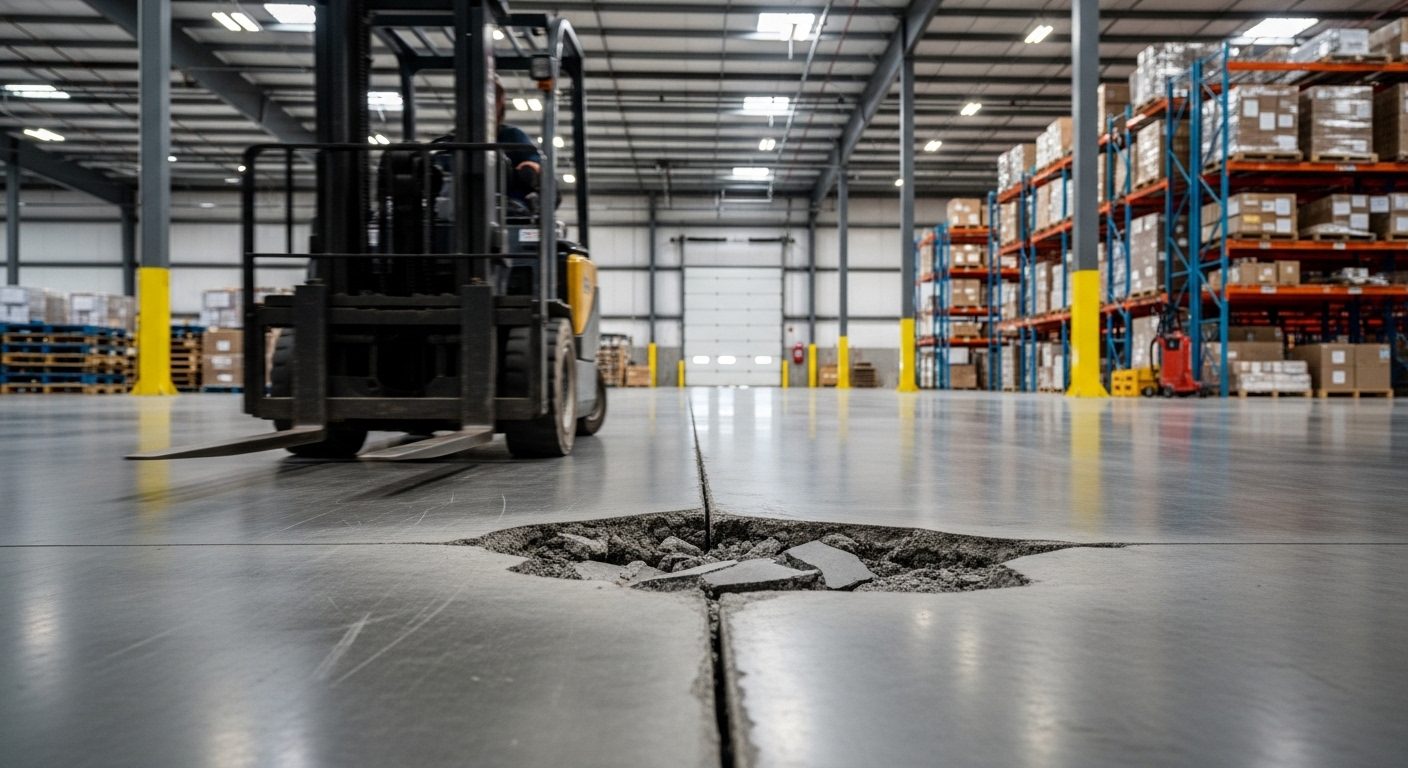
Whether you are a landlord or a tenant, warehouse concrete floor issues are not cosmetic problems. Cracks, spalling, and uneven slabs can:
- Damage forklifts and equipment
- Create safety hazards
- Slow down operations
- Lead to lease disputes
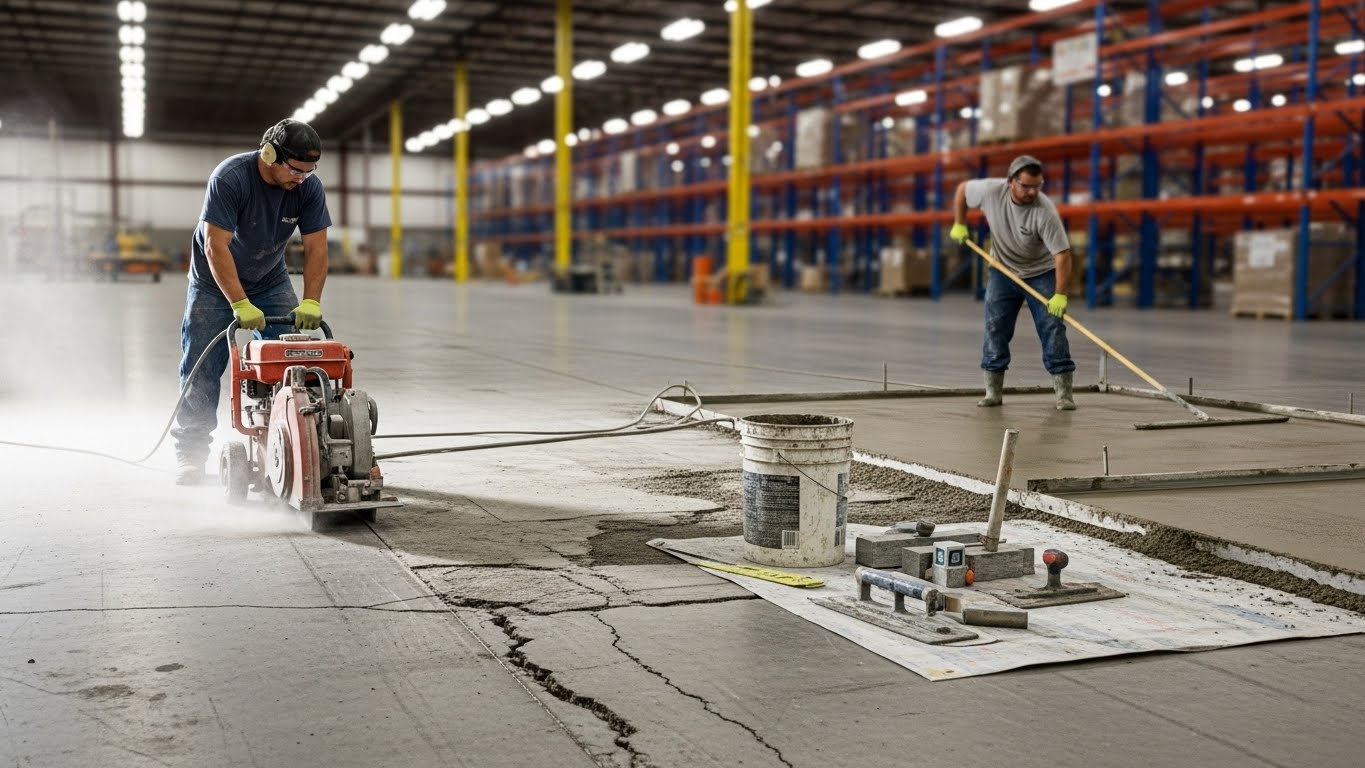
Professional repair ensures:
- Compliance with safety standards
- Long-term durability
- Clear documentation for landlords and tenants
Quick patch jobs often fail and cost more over time.
Need Warehouse Concrete Floor Repairs in NJ or Eastern PA?
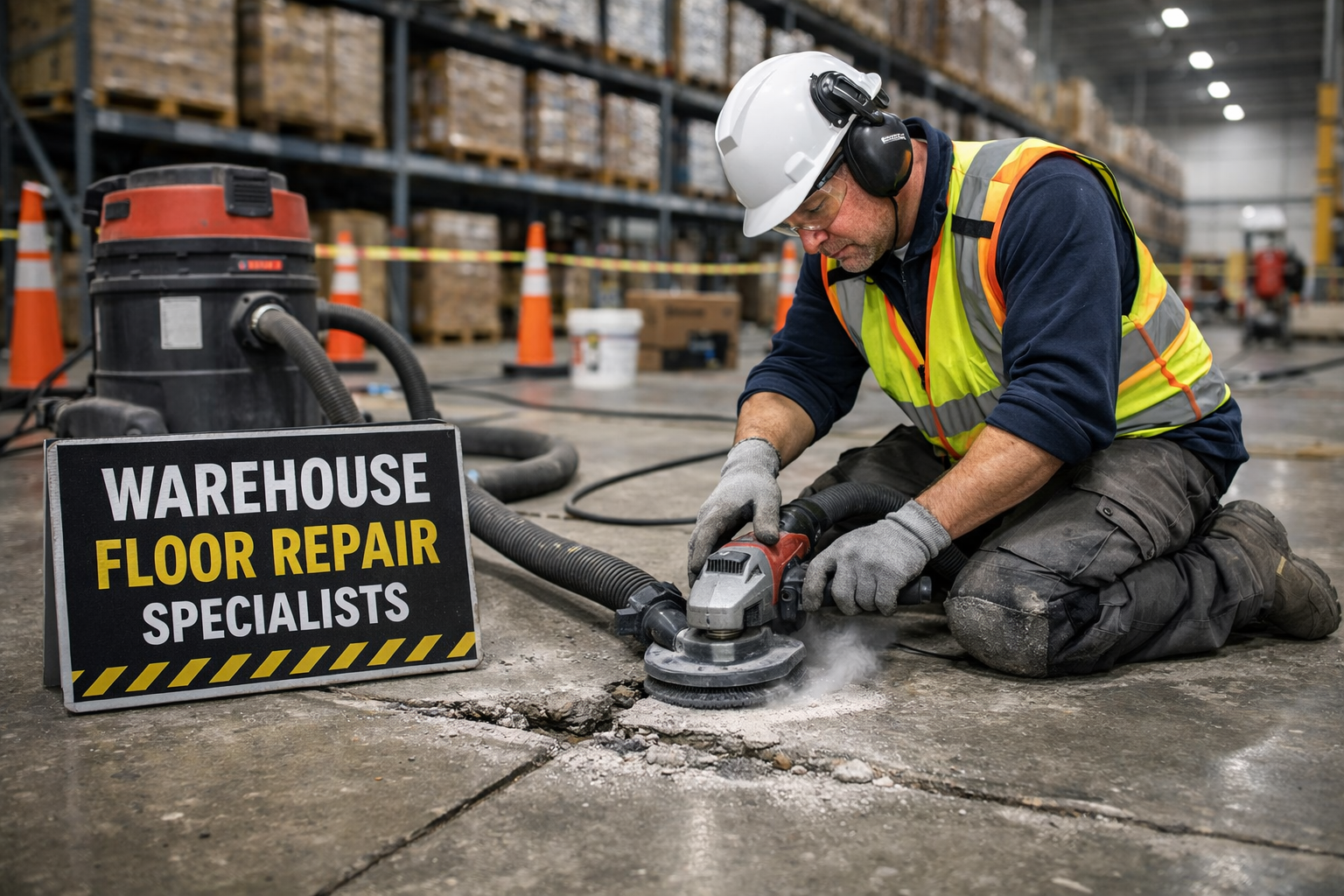
We specialize exclusively in warehouse concrete floor repairs throughout New Jersey and Eastern Pennsylvania, including the Lehigh Valley, Northampton, Lehigh, Bucks, Montgomery, and Philadelphia counties.
If you are dealing with:
- Cracked warehouse floors
- Uneven slabs
- Joint deterioration
- Operational safety concerns
We can inspect the issue, explain your repair options clearly, and help you move forward without guesswork.
If you are unsure whether a repair is your responsibility as a tenant or landlord, we’re happy to take a look and provide practical guidance based on real-world warehouse conditions. Contact us today to discuss your warehouse concrete floor repair needs.

- Concrete Floor Repair for 24/7 Distribution Centers in New Jersey - March 2, 2026
- Warehouse Floor Repair Cost vs. Replacement in NJ - March 2, 2026
- Heavy-Duty Crack Repair for Warehouses in Burlington County - March 2, 2026