

IN THIS ARTICLE
Fixing Warehouse Floor Anchor Hole After Pallet Rack Removal: All You Need to Know
Once pallet racks are removed, the old anchor locations become part of your open warehouse floor again.
That is when small concrete defects that were easy to ignore under the racking suddenly become much more noticeable.
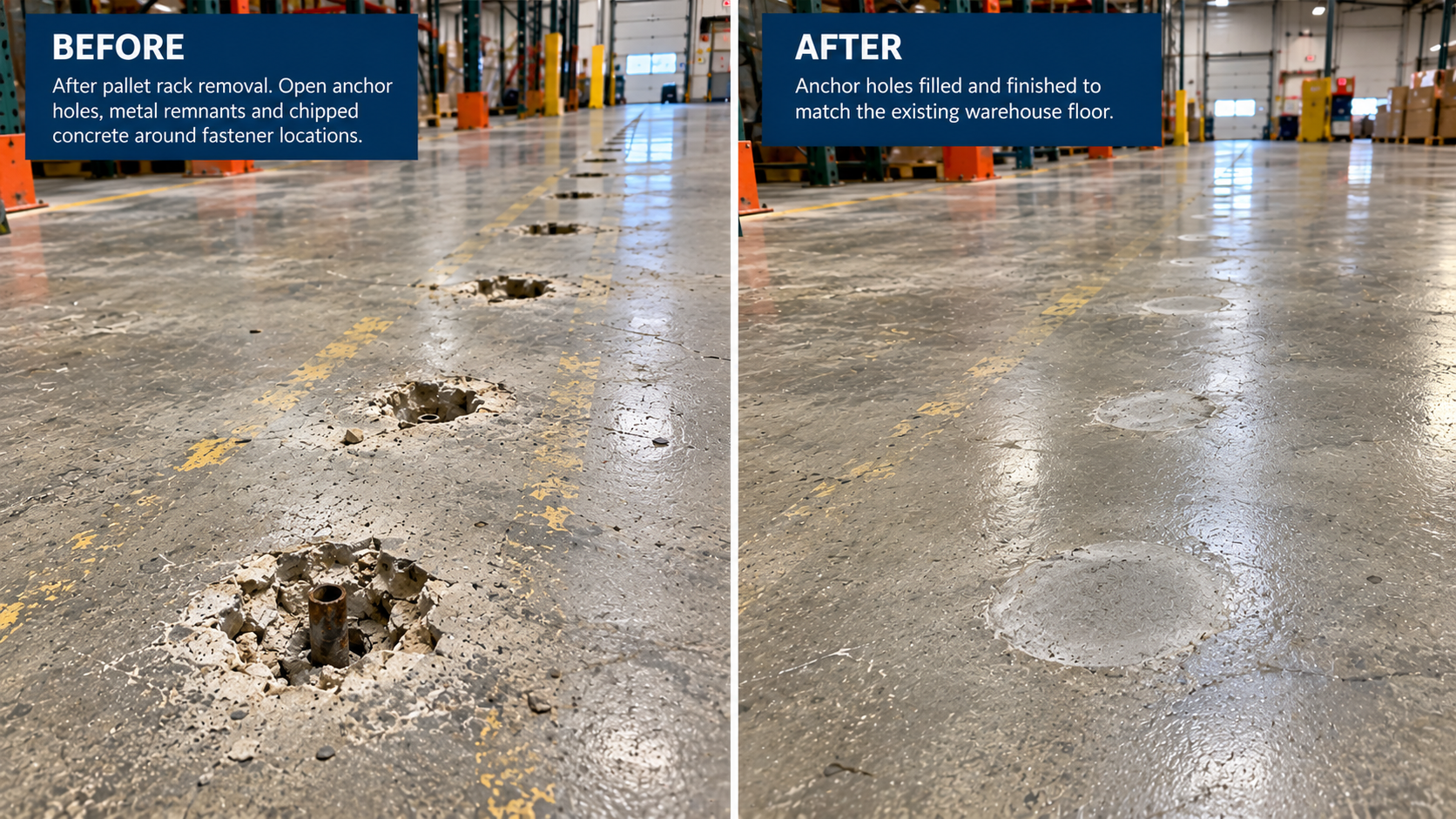
You may be left with open anchor holes, metal remnants projecting from the slab, chipped concrete around the old fastener locations, or clusters of damaged spots running down an entire former rack line.
If your warehouse is being reconfigured, prepared for a new tenant, or fitted out for a different layout, those old anchor locations deserve attention before the replacement layout is finalized.
At Warehouse Floor Repairs, we look at these situations from a practical concrete repair standpoint.
The question is not simply, “Can these holes be filled?”
The better question is:
What was actually left behind after rack removal, and what repair is needed to make that area usable again?
That distinction matters when planning warehouse floor anchor hole repair in New Jersey or Eastern Pennsylvania.
Imagine a warehouse in Edison or Cranbury where several long rows of pallet racks have just been relocated.
The installer has finished removing the racking, but the floor now contains dozens or even hundreds of abandoned fastening points.
Some are clean holes.
Some still contain anchor remnants.
Others have broken concrete around the edges.
Grouping those locations into one planned concrete repair project can make much more sense than dealing with individual holes later after the new warehouse layout is already in place.
What Is Left in the Concrete After Pallet Rack Removal?
Rack removal does not always leave behind a neat, empty hole.
The condition of each anchor location can vary depending on the fastener, the age of the installation, the removal process and the condition of the concrete around it.
You may find several different conditions across the same warehouse.
Open anchor holes
These are the most obvious.
The anchor has been removed, but the hole remains in the slab.
Once the area becomes part of a forklift aisle, staging zone or open work area, those holes may collect dirt and debris and become more noticeable under traffic.
Anchor remnants
Sometimes part of the fastener remains in the concrete.
It may sit below the surface, flush with the floor or project above it.
A projecting metal remnant is a different repair issue from a clean abandoned hole.
It should also be clearly identified before the repair crew arrives.
Chipped concrete around the anchor
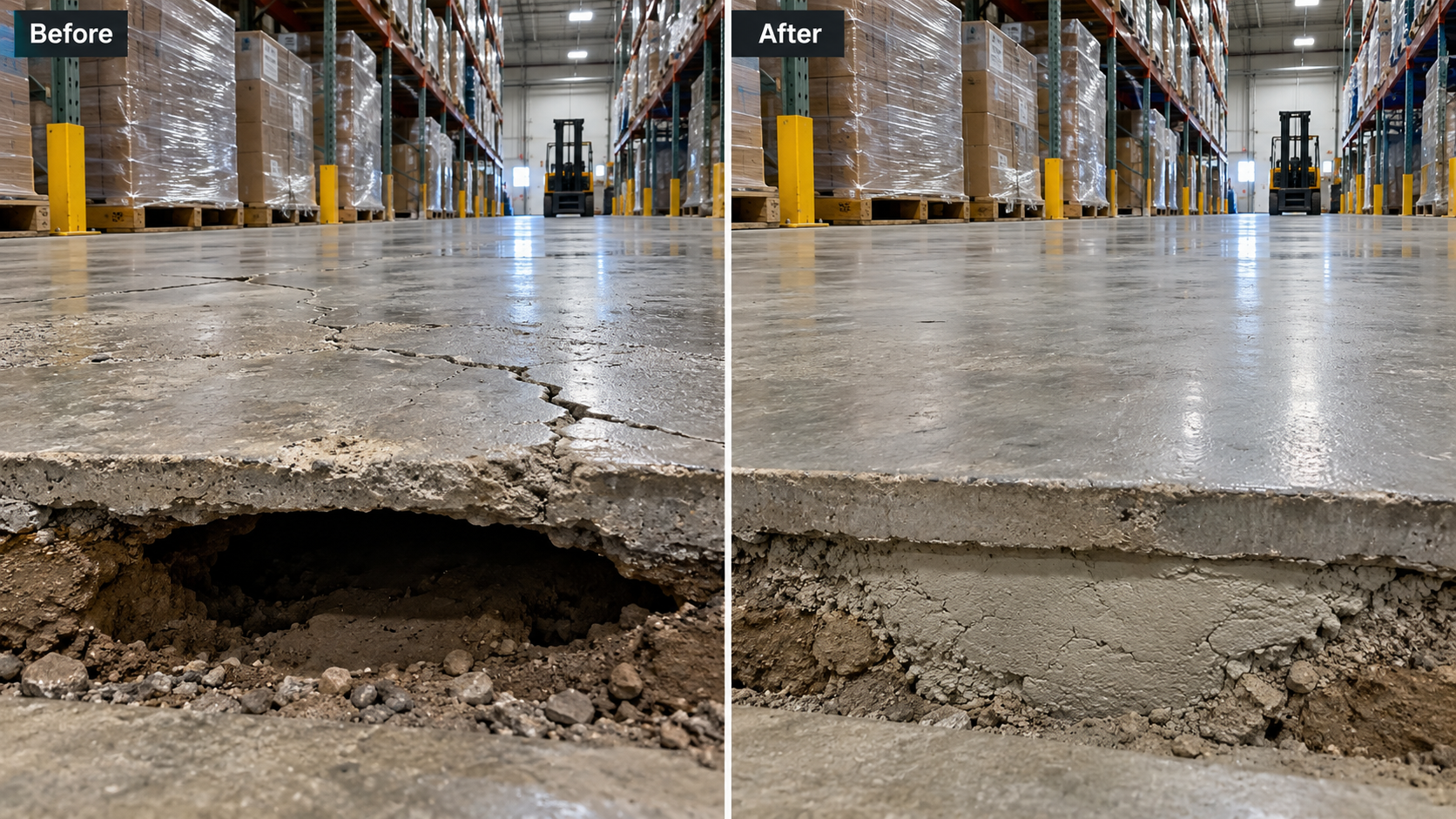
Anchor removal can sometimes take part of the surrounding concrete with it.
Instead of a simple round hole, you may be left with an irregular damaged area.
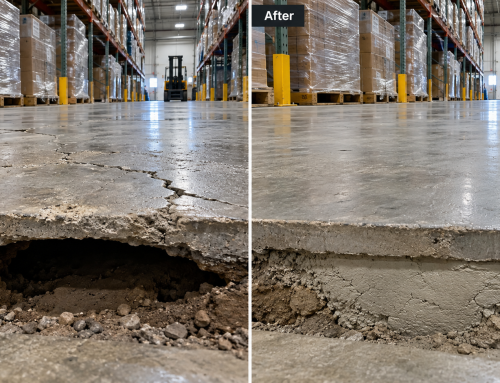
If the concrete has broken away around the old anchor location, the repair needs to address the damaged concrete too, not just the original hole.
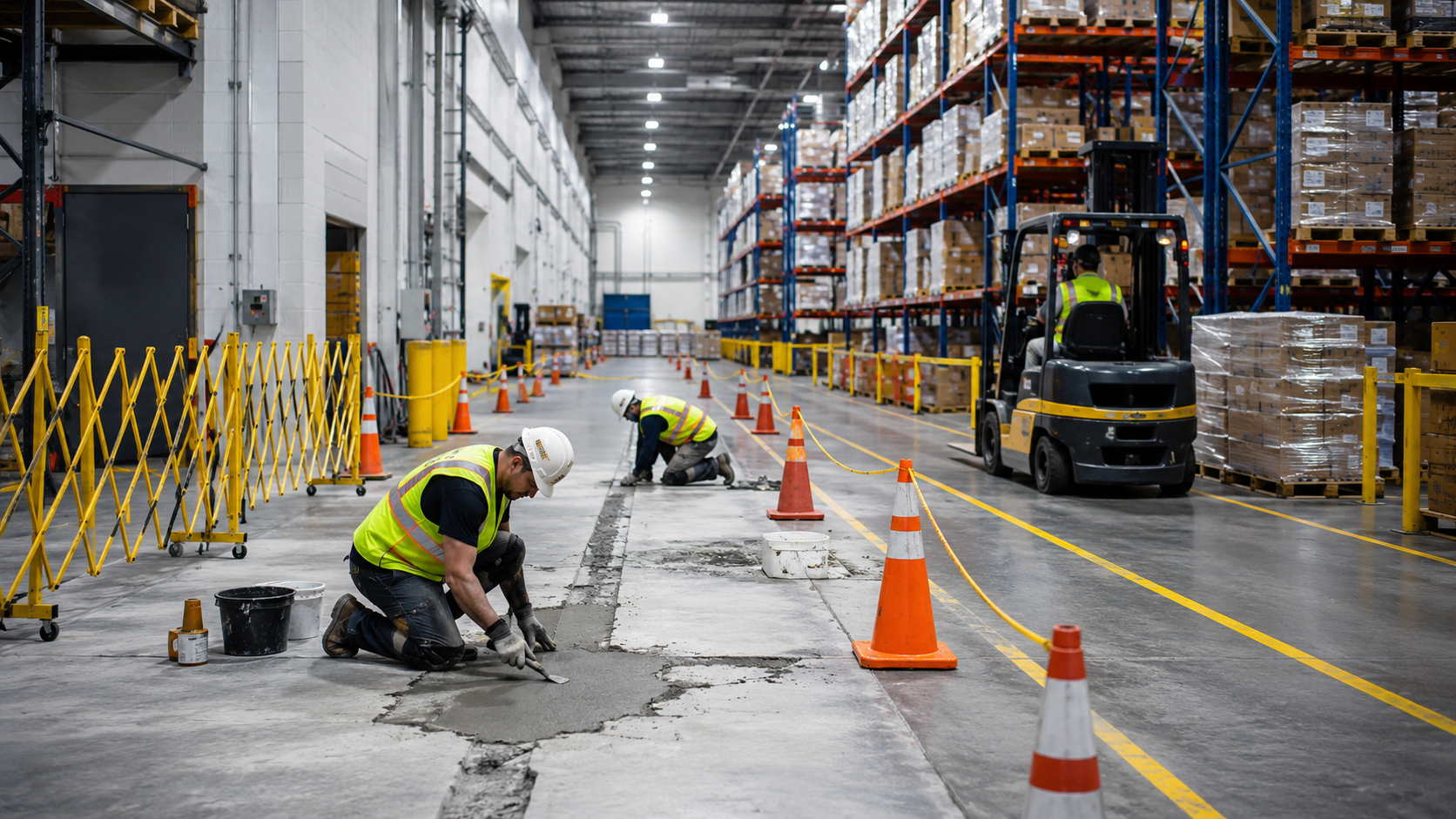
Where anchor removal has created more significant surface breakup, our concrete spalling repair service is relevant because the repair may involve removing loose material and rebuilding the damaged area.
Gouges and nearby surface damage
Rack removal equipment can also leave scraped or gouged concrete nearby.
That is related, but it is not exactly the same defect.
Our article on repairing concrete floor gouges explains that type of damage in more detail.
For abandoned rack anchors, the main goal is restoring the fastening locations and any concrete immediately damaged around them.
Which Old Anchor Locations Need More Than a Cosmetic Patch?
Not every abandoned anchor location requires the same repair.
That is why a warehouse full of small holes should not automatically be treated as a simple “fill them all” job.
The surrounding concrete matters.
A clean abandoned hole
If the anchor has been fully removed and the concrete around the hole remains solid, the repair may be relatively straightforward.
The location still needs proper preparation, and the repair material needs to be suitable for the floor conditions and future use.
But the scope is usually different from a location where the surrounding slab has broken apart.
A hole with projecting metal
If metal remains above the floor surface, that condition needs to be documented separately.
A repair cannot simply be placed over a projecting obstruction and expected to create a proper finished surface.
The exact handling depends on the abandoned anchor and the confirmed work scope.
One important limitation is worth stating clearly:
Anchors that are still supporting installed racking, machinery or equipment should not be treated as abandoned floor defects.
Those belong to the active installation and should remain outside the repair scope unless properly addressed by the responsible contractor.
Broken concrete around the old anchor
When removal has chipped or fractured the slab, the repair becomes more than hole filling.
The damaged area may need to be prepared back to sound concrete before it can be restored.
This is especially important when old rack lines are being converted into:
- Forklift aisles
- Open staging areas
- Packing areas
- Production space
- Pedestrian routes
- New storage layouts
A patch that looks acceptable in an unused corner may not hold up the same way once loaded equipment begins crossing it every day.
That is why future use should be part of the repair conversation from the beginning.
How Should You Document Old Rack Anchor Holes Before Repair?
If you are removing a large amount of warehouse racking, documentation can save a lot of time.
You do not need to create an engineering survey.
But giving the repair contractor a clear picture of what is left behind makes it much easier to understand the size and condition of the job.
Start with the approximate number of abandoned anchor locations.
For example:
- 20 holes from one short rack section
- 80 to 100 holes across several rows
- Approximately 300 locations across a full warehouse reconfiguration
Then photograph representative examples.
Do not send twenty photos of identical clean holes if the floor contains several different conditions.
Instead, try to capture:
- A clean empty anchor hole
- A location with metal still present
- Chipped concrete around an old anchor
- A wider view showing several holes in one former rack line
- Any location with significant surrounding floor damage
It also helps to note whether the old rack area will become a traffic route.
A row of abandoned holes under replacement racking may be treated differently in project planning from the same defects sitting in the middle of a new forklift lane.
A simple hole-count worksheet can include:
- Warehouse location
- Approximate number of holes
- Number of rack rows removed
- Typical hole diameter if known
- Whether metal remnants remain
- Number of visibly broken locations
- Photos by area
- Current traffic in the zone
- Planned future use
- Date the new layout is expected to begin
This is also where original project photography would make the article more useful.
A real before-and-after image showing several abandoned anchor holes before repair and the restored floor afterward gives facility managers a much better idea of what this work involves.
Plan the Concrete Repair Around Your Next Warehouse Layout
The best time to deal with abandoned rack anchors is often before the new warehouse layout is installed.
Once replacement racking, equipment or workstations are in place, access becomes more difficult.
The repair may also be harder to coordinate around active operations.
Imagine a hypothetical tenant fit-out in an Eastern Pennsylvania warehouse.
The old rack system is removed on Friday.
The new layout is scheduled to begin installation the following week.
If the floor repair is not identified until Monday morning, the concrete work suddenly becomes a schedule problem.
That can be avoided by including the floor condition in the reconfiguration plan from the beginning.
For a grouped repair, we would want to know:
- How many rack sections are being removed
- How many anchor locations will be abandoned
- Whether the surrounding concrete is damaged
- Which areas will become active traffic routes
- Whether forklifts need access during the repair
- When the new warehouse layout is scheduled
- Whether other concrete defects are present nearby
This last point can be especially useful.
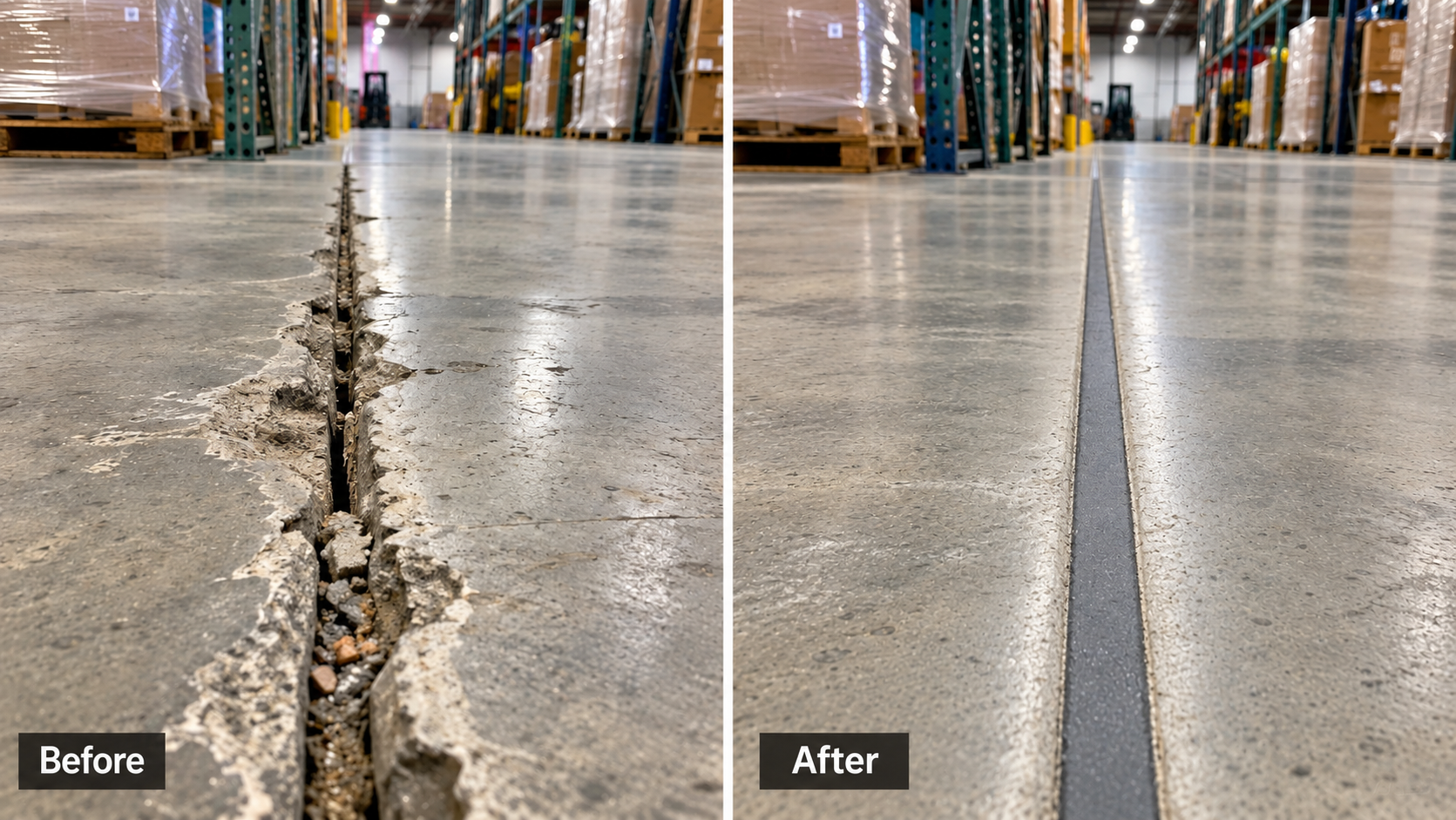
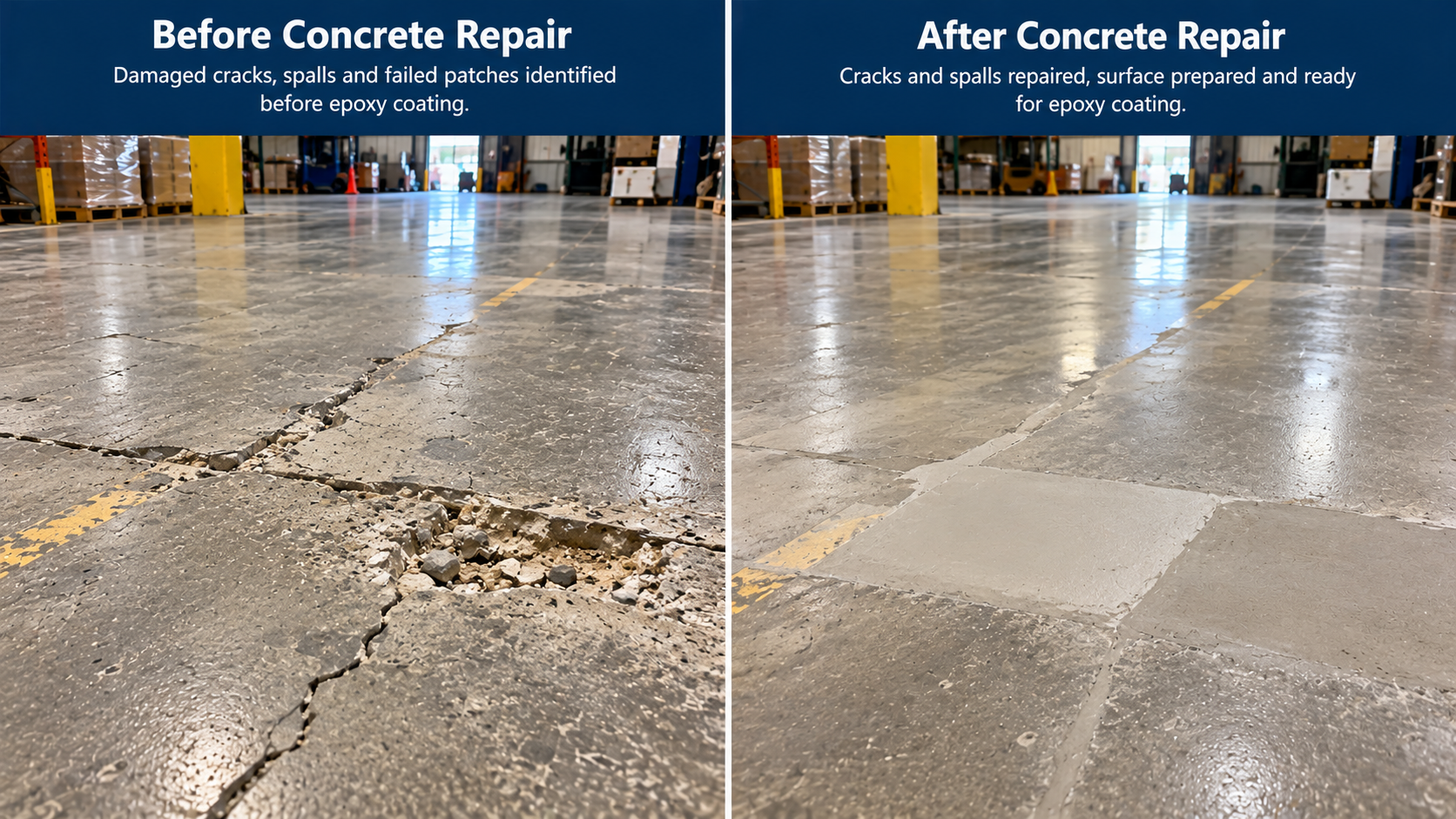
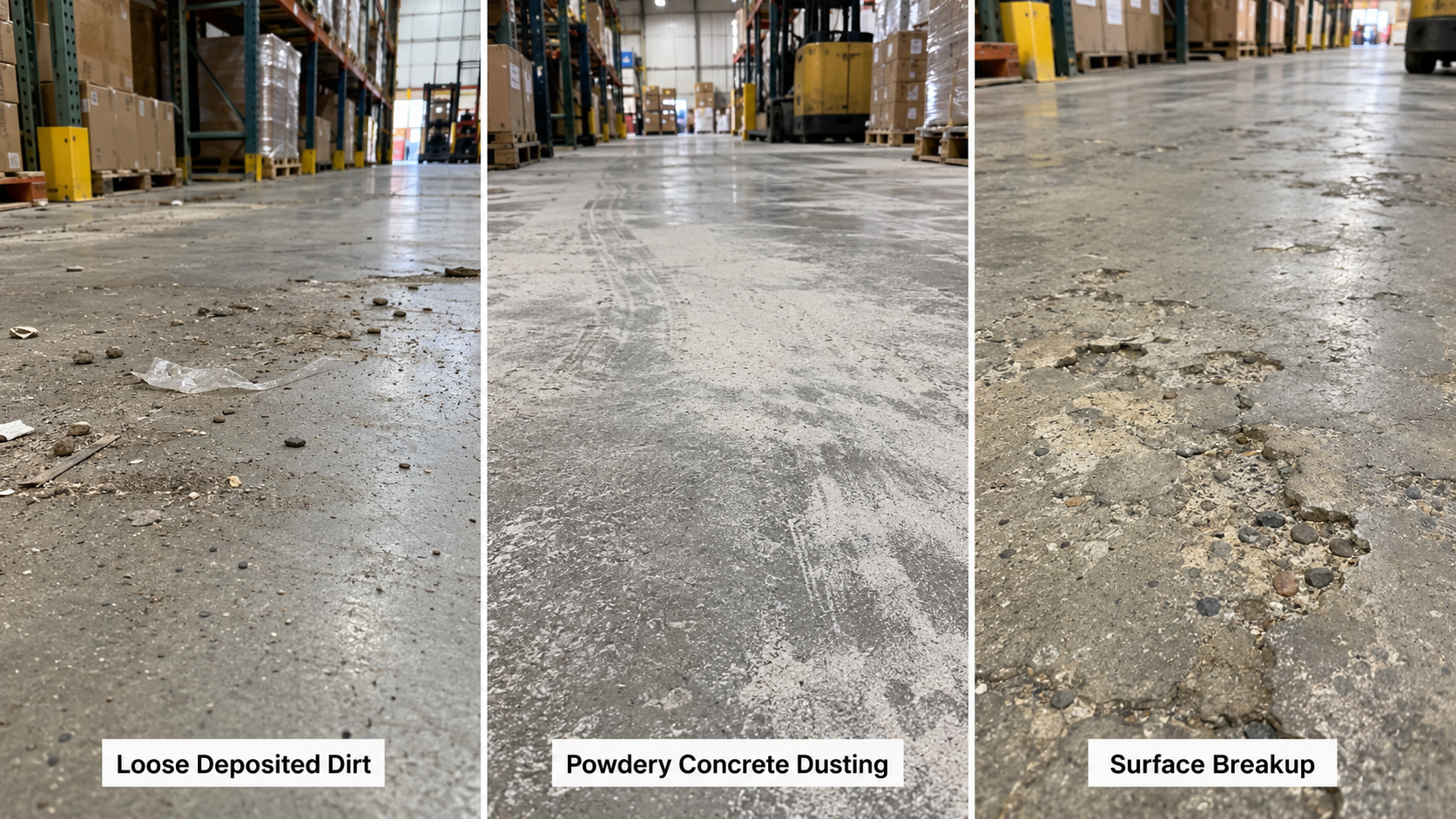
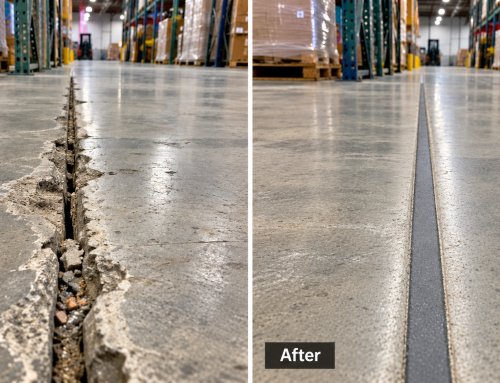
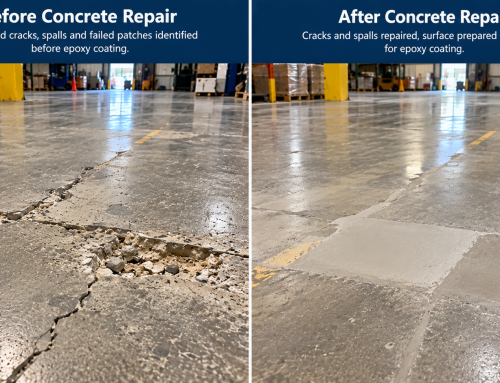
If your facility already has chipped joints, spalls, cracked areas or other localized concrete damage, it may make sense to evaluate those issues during the same visit rather than scheduling multiple small repair projects separately.
Our warehouse concrete floor repair service covers broader warehouse floor damage and is the right place to start when several types of defects need to be evaluated together.
For facility managers, the main benefit is coordination.
You want the concrete work completed while the area is accessible and before the next warehouse layout makes those locations difficult to reach.
How Warehouse Floor Repairs Can Help After Rack Removal
At Warehouse Floor Repairs, we work with warehouses and industrial facilities throughout New Jersey and Eastern Pennsylvania.
If you are removing or relocating pallet racks, we can evaluate the concrete left behind and determine whether the abandoned anchor locations fall within our repair scope.
That evaluation should separate simple empty holes from locations that involve:
- Remaining anchor material
- Broken concrete edges
- Surface spalling
- Gouging around the rack line
- Other nearby warehouse floor damage
The goal is to understand the actual condition before deciding how the repair should be handled.
This can be especially worthwhile when dozens or hundreds of abandoned locations are grouped together as part of a warehouse reconfiguration, tenant fit-out or rack relocation.
Instead of discovering individual floor problems after the new layout is installed, you can address the old fastening locations while the space is still open.
Reconfiguring a warehouse in New Jersey or Eastern Pennsylvania?
Contact Warehouse Floor Repairs at (908) 369-3110 and tell us your facility location, approximate number of abandoned anchor positions and whether the surrounding concrete has broken away.
We can review the condition of the floor and help determine whether those old rack locations fit within your broader warehouse concrete repair project.