
IN THIS ARTICLE
Concrete Repairs You Must Make Before Planning an Epoxy Warehouse Floor
A new epoxy floor is a major investment, so the condition of the concrete underneath deserves attention before installation day.
If your New Jersey or Eastern Pennsylvania warehouse has broken joints, recurring cracks, loose patches or uneven slab sections, those issues should be part of the conversation before the coating contractor starts surface preparation.
A coating can improve the finished appearance and performance of a warehouse floor, but it does not automatically correct damaged concrete underneath it.
That distinction matters.
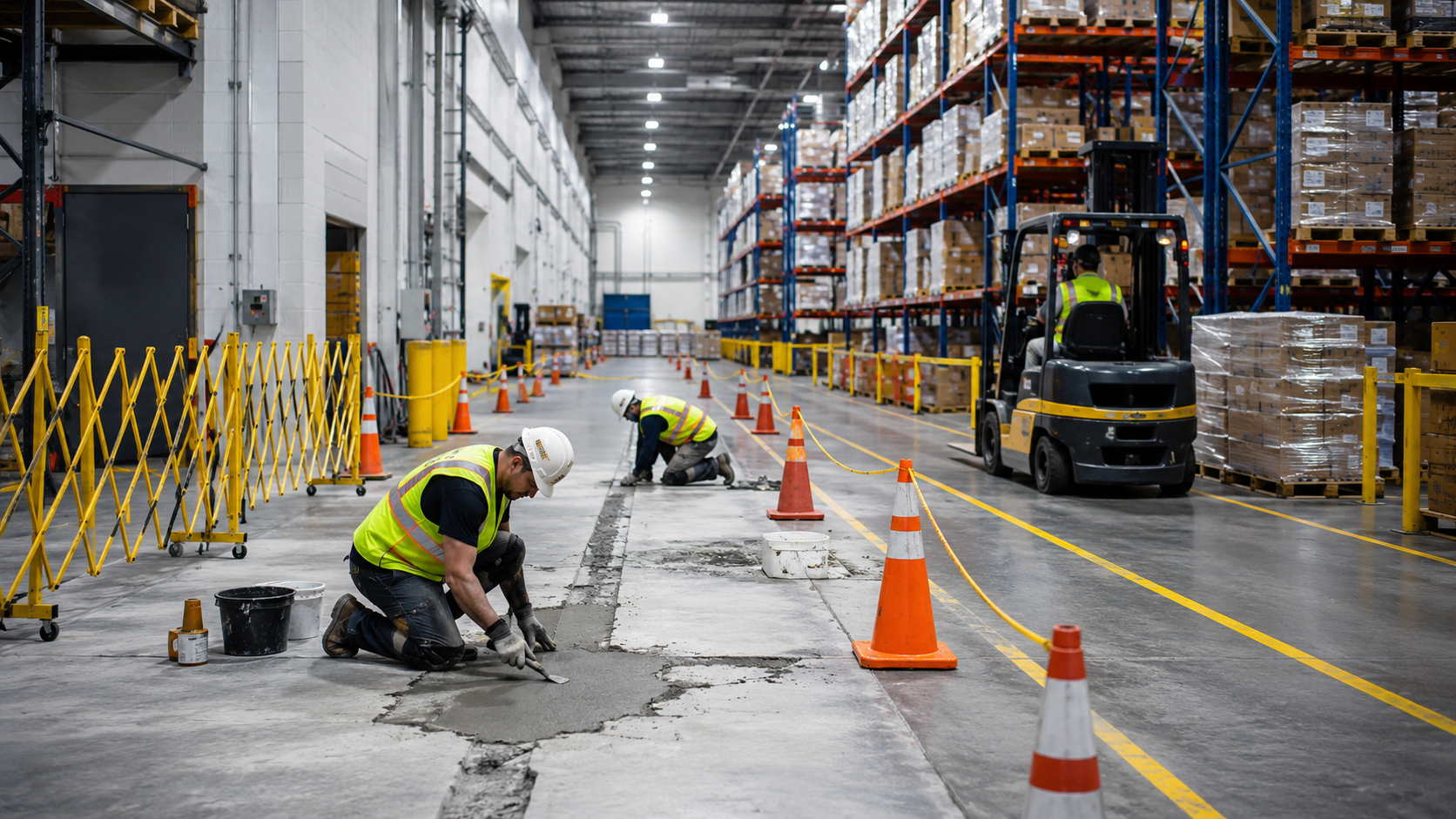
At Warehouse Floor Repairs, we often look at the condition of the existing slab from a repair standpoint. The coating installer may be focused on preparation, adhesion and the finished system, while our job is to identify concrete defects that may need to be repaired before that final floor system goes down.
For an occupied warehouse, timing matters too.
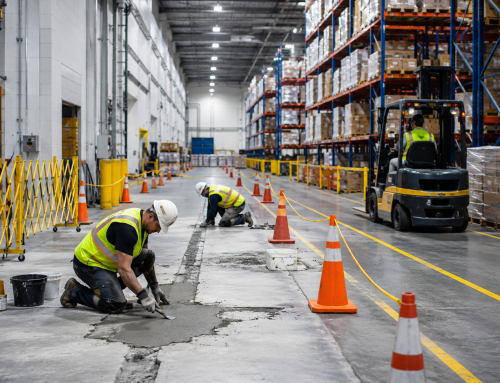
You may already have a coating contractor scheduled, forklift routes planned around the work and limited downtime available. Discovering major concrete damage after surface preparation has started can delay the entire project.
It is much better to identify those problems early.
Which Concrete Floor Defects Should Be Checked Before Epoxy Installation?
Before installing an epoxy or similar warehouse floor coating, take a close look at the concrete substrate itself.
The main question is simple:
Is the concrete underneath solid enough for the coating contractor to work with?
Several common warehouse floor problems deserve attention before the coating goes down.
Cracks
Not every crack means the same thing.
Some are old and stable. Others may continue moving. Some are narrow surface cracks, while others have widened or deteriorated under years of forklift traffic.
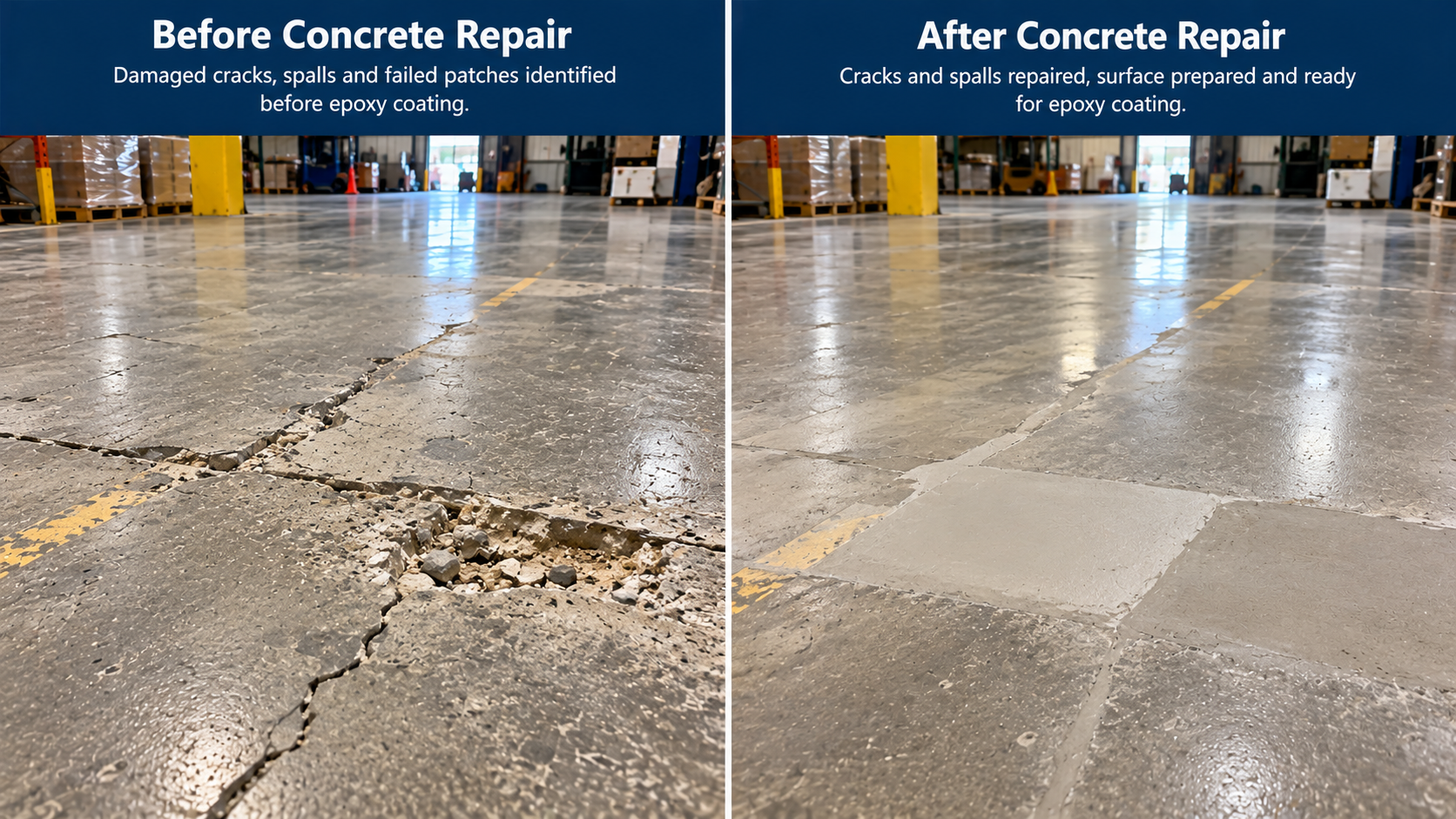
If the crack itself requires repair, that should be addressed before it disappears beneath the finished coating.
Our concrete floor crack repair service focuses on repairing damaged concrete cracks based on their actual condition.
The important point is that coating over a visible crack does not necessarily solve whatever caused the concrete to crack in the first place.
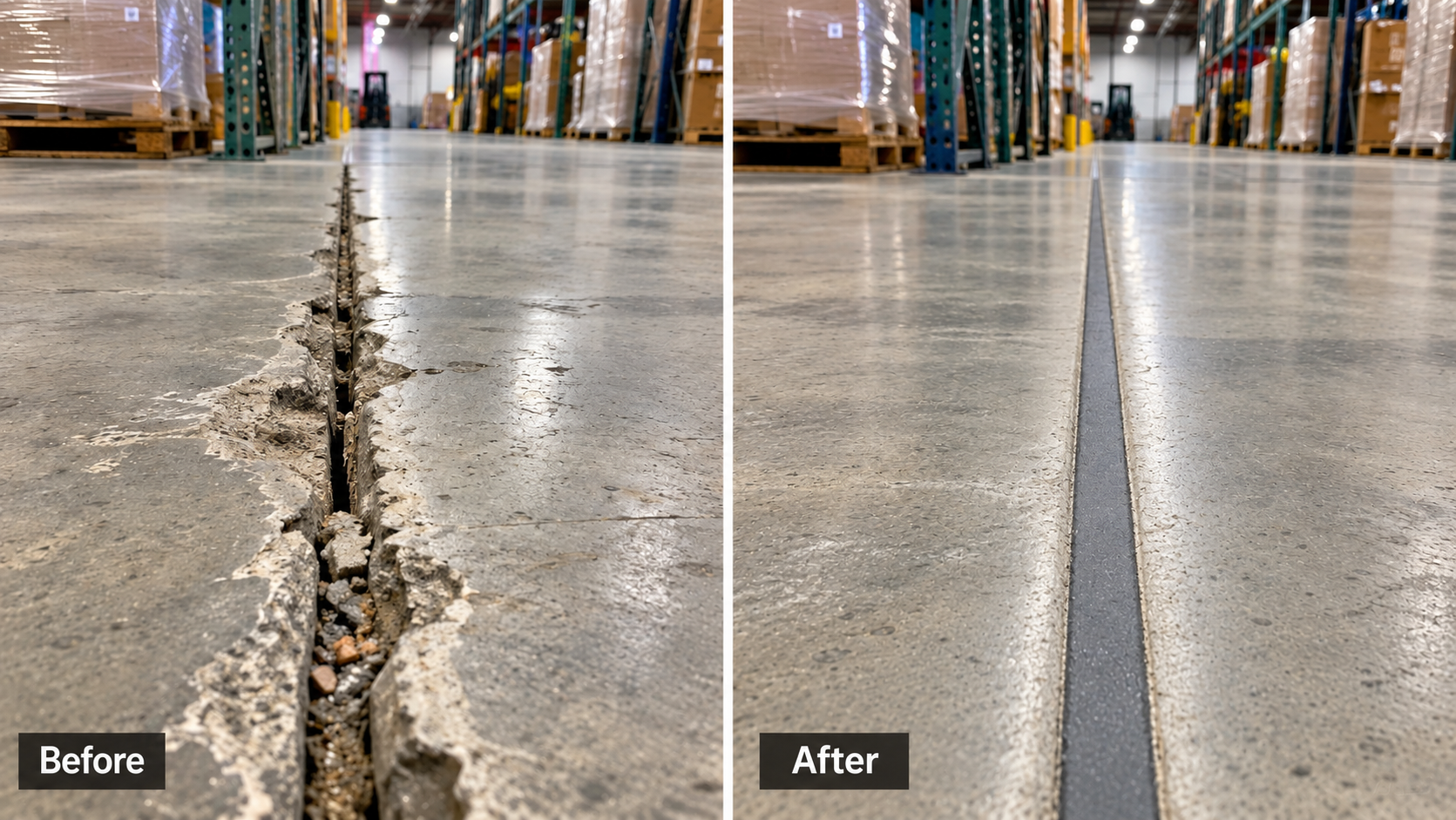
Broken joints
Warehouse joints take a lot of punishment.
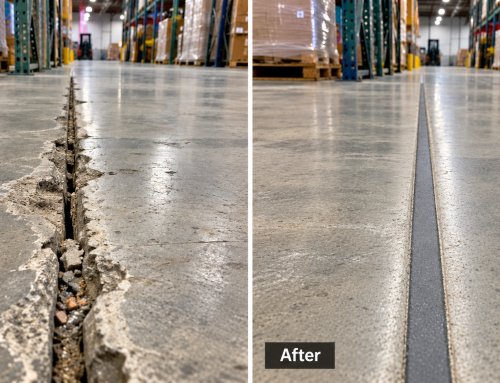
Forklift wheels repeatedly cross the same locations, and once joint edges start chipping or breaking away, the damage can become wider and rougher.
If damaged joint edges are simply covered during the coating project, the underlying concrete defect still exists.
These areas should be evaluated separately so the repair scope is clear before coating begins.
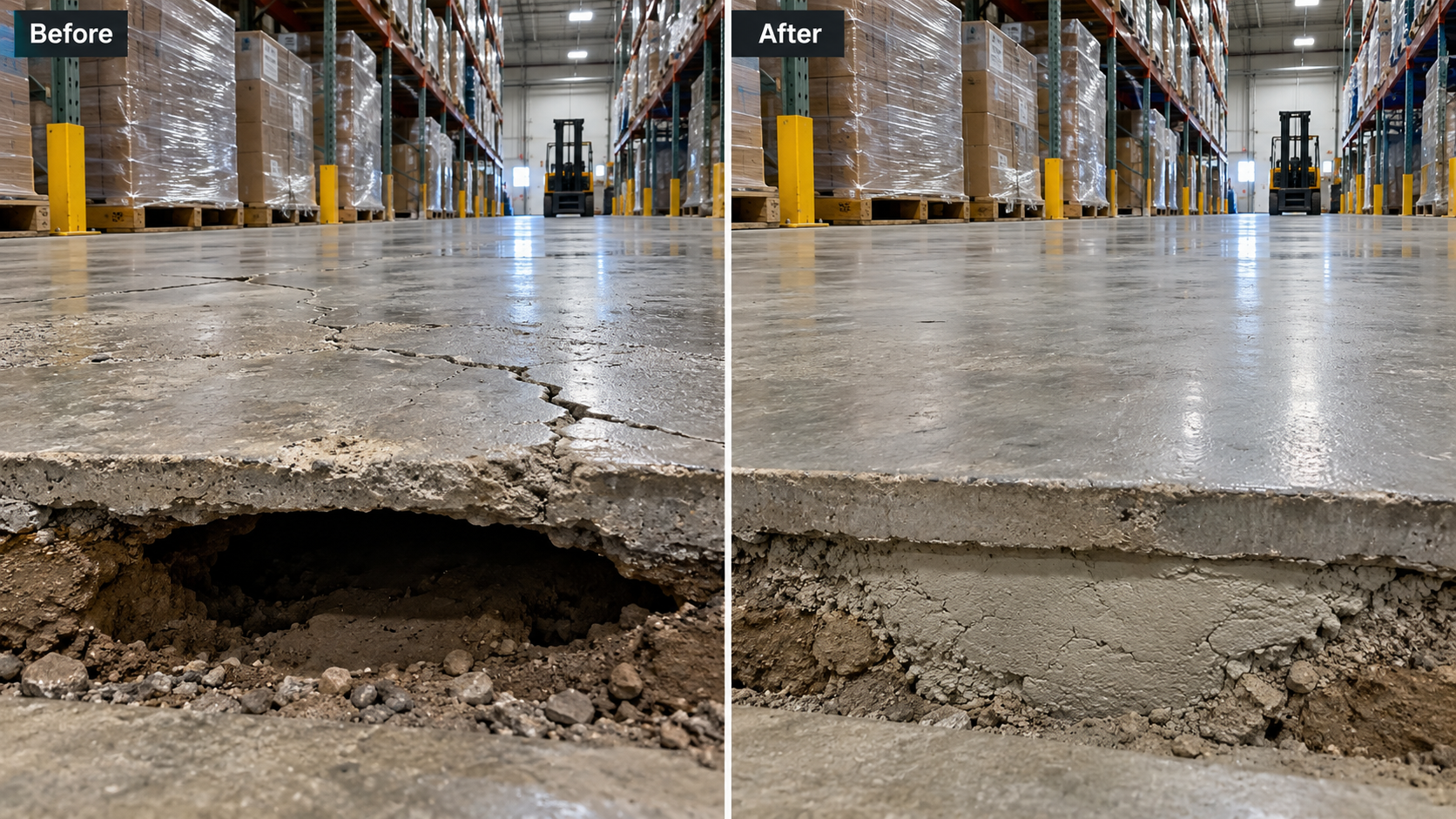
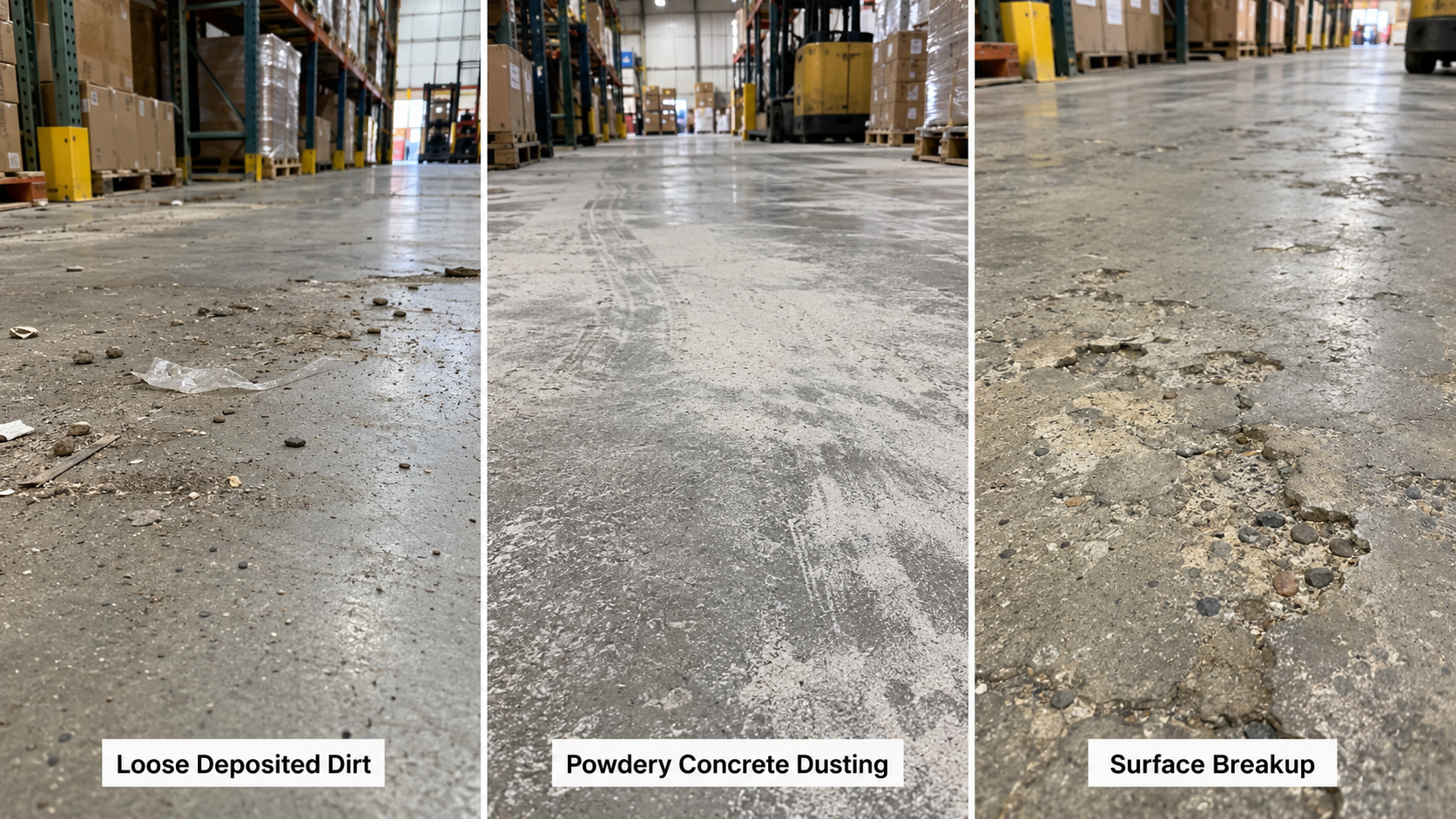
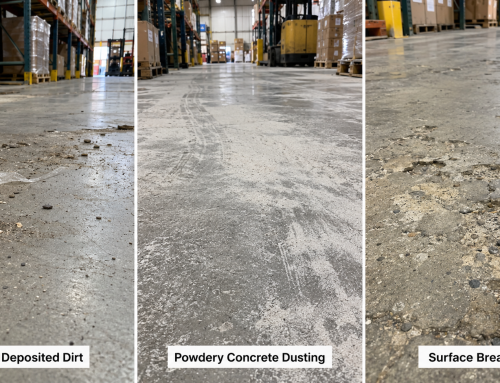
Spalled or loose concrete
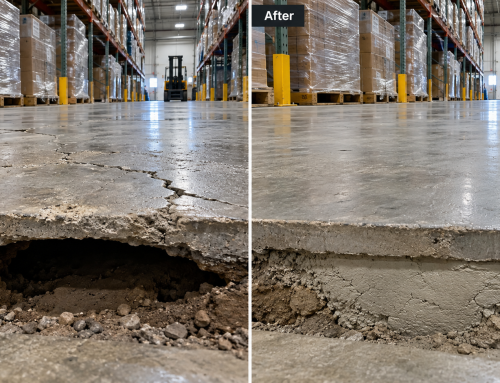
If the surface is flaking, breaking apart or producing loose pieces of concrete, the weak material should not simply be hidden under a new finish.
A coating needs a suitable substrate underneath it.
Where the slab has progressed into actual concrete surface breakdown, concrete spalling repair may need to be part of the pre-coating work.
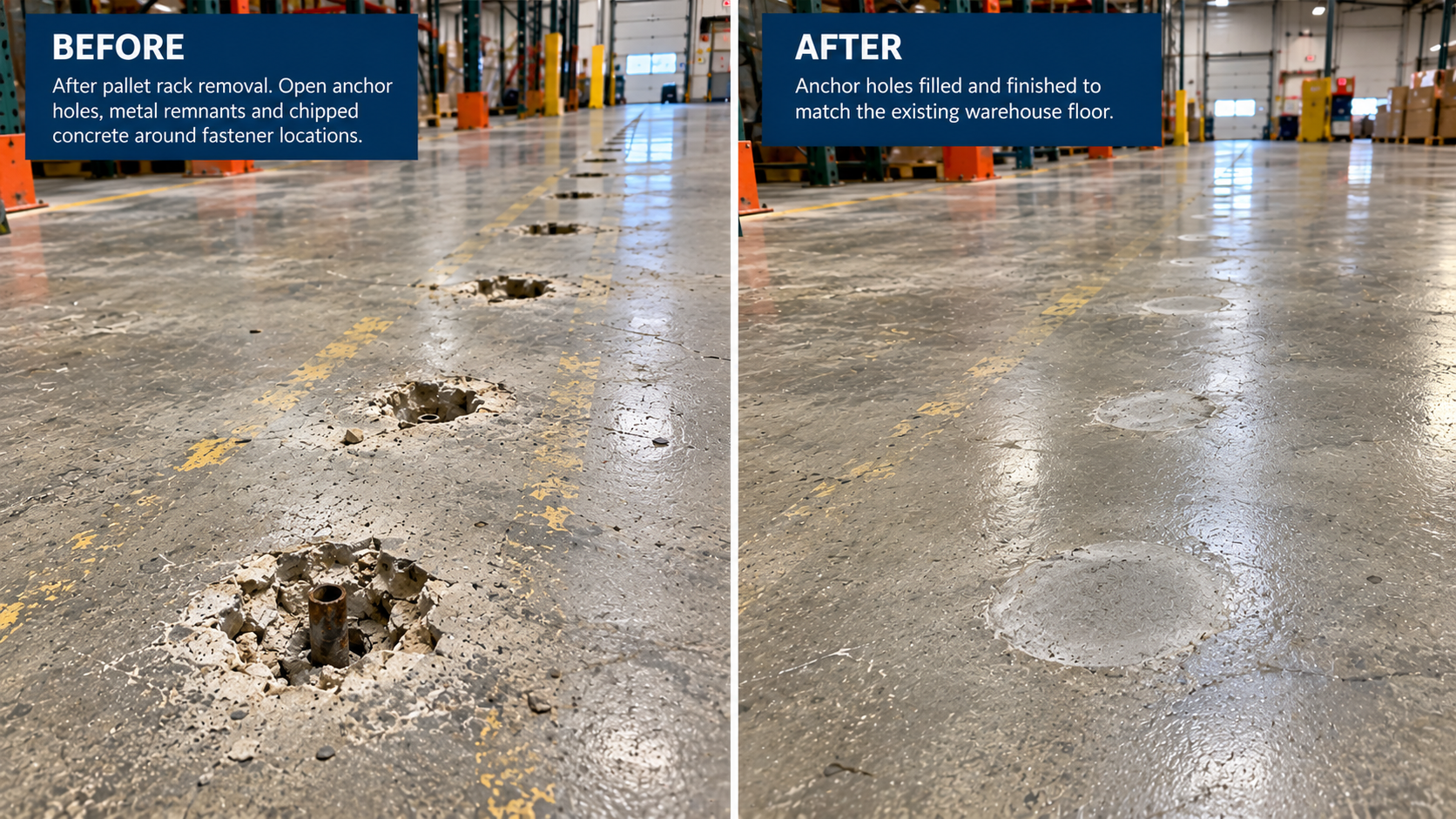
Weak or deteriorated patches
Older warehouses often have years of repair history.
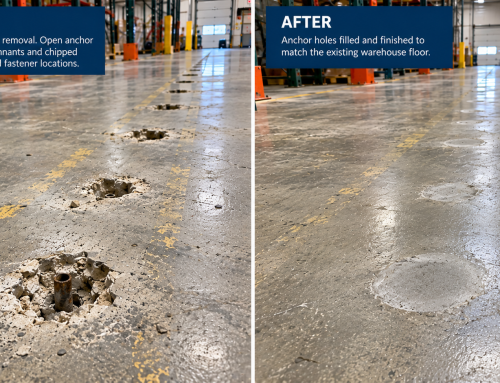
You may find patched areas from previous joint work, equipment anchors, floor damage or old repairs. Some are still solid. Others may be loose, cracked or separating from the surrounding slab.
Those questionable areas are worth checking before the coating installer commits to them as part of the finished floor.
Uneven or moving slabs
This is especially important.
If one section of the floor has settled or moves under traffic, an epoxy coating does not stabilize the concrete.
That support issue should be identified separately.
A coating is the finish. It should not be expected to correct a structural or slab-support problem underneath it.
What Should the Concrete Repair Contractor and Coating Installer Agree On?
A smooth project depends on coordination.
The repair contractor and coating installer do not have the same job, but their work affects each other.
Before repairs begin, both sides should understand what condition the concrete needs to be in before coating installation.
A practical pre-coating discussion should cover the following.
Which cracks need repair?
The coating contractor should identify which cracks affect their preparation and coating system.
The concrete repair contractor can then evaluate damaged cracks and determine what repair work is appropriate from the concrete side.
This avoids a situation where one contractor assumes the other is handling the problem.
Which joints remain joints?
This is a big one.
Not every joint should simply disappear beneath a coating.
The joint type, movement and the coating manufacturer’s requirements need to be understood before repair work begins.
The coating contractor should make the final call on how their system needs to transition across or terminate around specific joints, while the concrete repair contractor addresses damaged concrete where required.
Which weak areas need to come out?
If the surface contains loose patches, spalled concrete or weak repairs, everyone should agree on how much damaged material needs to be removed before the coating system is installed.
You do not want the coating installer preparing a surface only to discover that sections underneath are unsound.
What preparation will follow the concrete repair?
Repair materials and surface preparation need to work together.
After concrete repairs are completed, the coating installer may have specific grinding, profiling or preparation requirements before their system can be installed.
That handoff should be discussed beforehand.
For facility managers, the practical lesson is simple:
Do not schedule concrete repair and epoxy installation as two completely separate projects that never speak to each other.
The more coordination there is beforehand, the less chance you have of losing valuable installation time.
Why Movement and Moisture Questions Need Answers Before Installation
Two issues deserve special attention because concrete repair alone does not answer them: movement and moisture.
Movement
If a crack keeps opening, a joint is moving significantly or one slab panel is shifting vertically, that needs to be understood before coating.
Otherwise, the finished floor system may simply be installed over an active problem.
From our side at Warehouse Floor Repairs, we can evaluate visible concrete damage and identify areas where separate slab repair or stabilization may need to be considered.
But the coating installer also needs to determine how their specific system handles joints, repaired cracks and expected movement.
That decision should be based on the coating manufacturer’s requirements, not a generic recommendation.
Moisture
Moisture is another area where responsibilities need to stay clear.
Concrete can contain or transmit moisture that affects certain coating systems.
The coating contractor should confirm what moisture testing their system requires, what limits apply and what surface preparation is needed before installation.
If moisture mitigation is necessary, that should be handled by the party qualified and responsible for that part of the coating system.
Our role is concrete repair.
We do not want to blur that line by implying that fixing a crack, spall or joint automatically makes the slab ready for every coating product.
The coating installer should confirm final compatibility.
This is also different from simply sealing a warehouse floor. If you are comparing the two, our article on sealing a warehouse concrete floor explains that adjacent topic in more detail.
Your Pre-Coating Concrete Repair Checklist
If you are planning an epoxy warehouse floor in New Jersey or Eastern Pennsylvania, it helps to walk the floor before the coating project is locked into the schedule.
Here is a practical checklist you can use with your repair contractor and coating installer.
1. Walk the entire coating area
Do not only inspect the worst section.
Mark every visible crack, broken joint, spall, loose patch and uneven slab area within the planned coating zone.
2. Photograph the defects
Take close-up photos and wider images showing where each defect sits within the warehouse.
This makes it easier for both contractors to discuss the same locations.
3. Mark recurring cracks
If you already know that a crack has been repaired before and returned, tell both contractors.
That history matters.
4. Check joints carefully
Look for:
- Missing filler
- Broken joint edges
- Wide gaps
- Uneven slab edges
- Movement under forklift traffic
These conditions may require more than ordinary surface preparation.
5. Find weak concrete
Tap, inspect and visually check questionable patches.
If the concrete is flaking, crumbling or breaking loose, make sure those areas are evaluated before coating preparation begins.
6. Identify uneven slabs
Note any location where forklifts hit a bump, drop into a low area or rock across a slab transition.
A coating will not level or stabilize a moving slab by itself.
7. Confirm repair products and cure requirements
The coating installer should know what repair materials will be used and how long those repairs need before their preparation or coating system can proceed.
8. Confirm moisture requirements
Ask the coating contractor:
- What moisture testing is required?
- Who performs it?
- What limits apply to the selected system?
- What happens if the slab does not meet those limits?
9. Coordinate the schedule
Concrete repair may need to happen before grinding, surface preparation or coating installation.
In an occupied warehouse, this is especially important because aisle closures and forklift rerouting may already be tightly planned.
A simple handoff should look like this:
Warehouse Floor Repairs: identify and repair confirmed concrete defects.
Coating installer: confirm moisture conditions, final surface preparation and compatibility with the selected coating system.
That separation keeps responsibilities clear.
How Warehouse Floor Repairs Can Help Before Your Epoxy Project
At Warehouse Floor Repairs, we work with warehouses and industrial facilities throughout New Jersey and Eastern Pennsylvania.
If you already have an epoxy or other coating project planned, we can focus on the concrete underneath it.
That may include evaluating and repairing:
- Damaged cracks
- Broken joint edges
- Spalled concrete
- Weak surface areas
- Failed patches
- Uneven or deteriorated concrete sections
We are not there to sell you a coating system.
Our role is to help make sure obvious concrete defects are identified and addressed before your coating contractor begins the finished floor installation.
That can make project planning much easier.
For example, if a busy warehouse has three damaged forklift joints, several spalled patches and one recurring crack, it is better to know that before the coating crew arrives with equipment and material.
The concrete repairs can be scheduled first.
The coating installer can then complete the preparation required for their system once those repairs are ready.
That is a much cleaner handoff than discovering damaged concrete halfway through the coating project.
If you are planning an epoxy floor at your NJ or Eastern PA facility, contact us before installation to discuss the concrete underneath it.
Call (908) 369-3110 and tell us your location, the areas you are concerned about and when your coating project is scheduled to begin.
We can help you identify the concrete repairs that may need attention before your coating installer starts.