
IN THIS ARTICLE
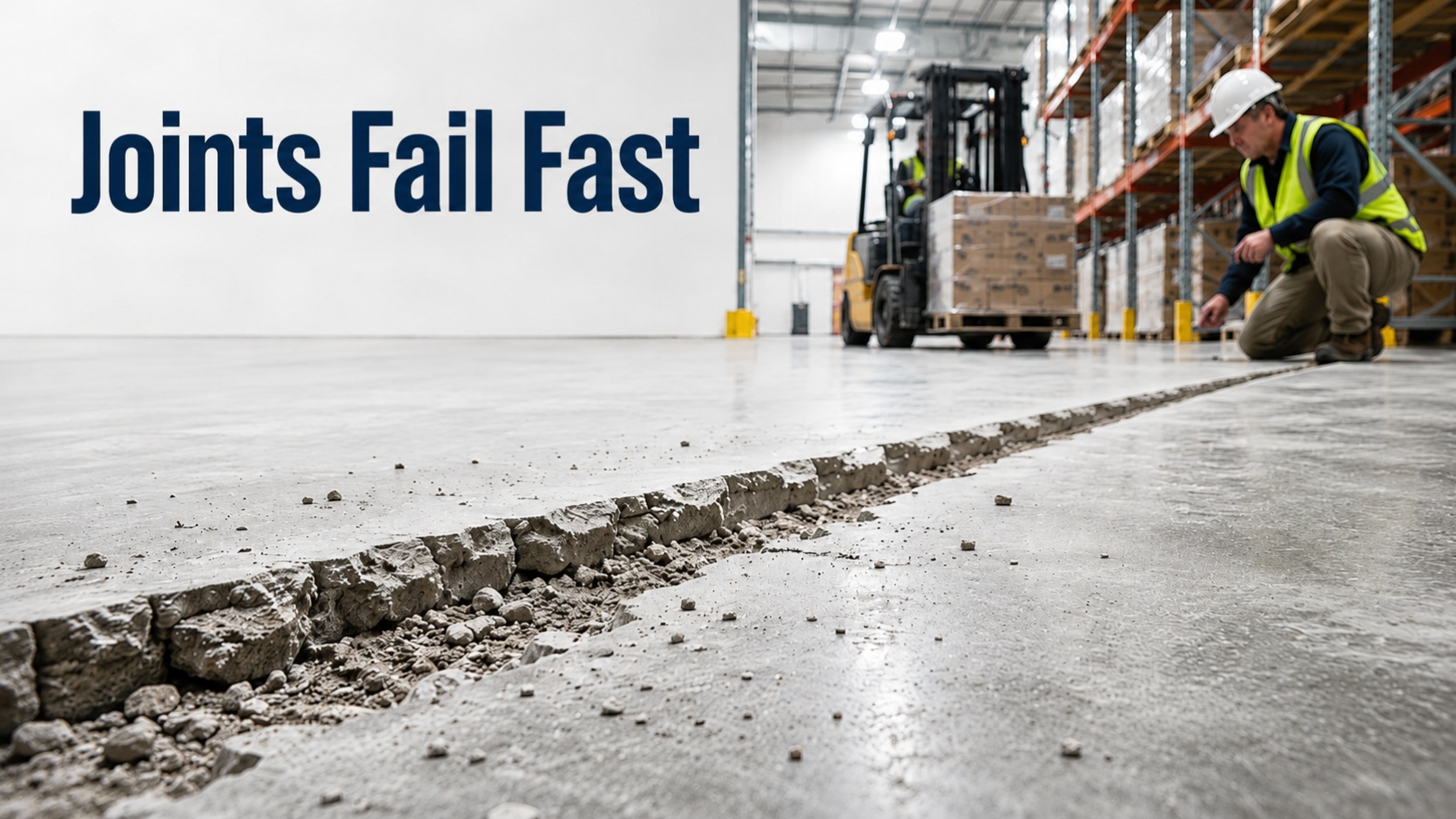
Here is Why Damaged Warehouse Floor Joints Get Worse Fast
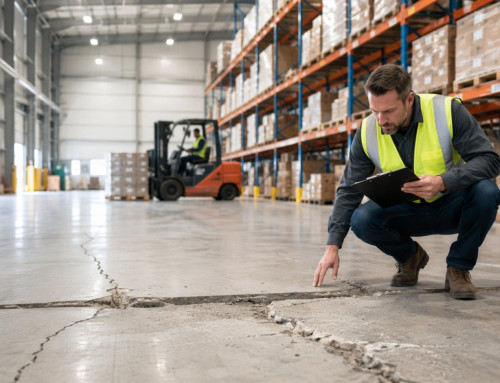
A damaged warehouse floor joint may not look urgent at first.
Maybe one edge is chipped. Maybe forklift operators complain about a rough bump in the same aisle. Maybe pallet jacks catch slightly when crossing a joint. Or maybe there is always dust, debris, or loose concrete collecting in one section of the floor.
But warehouse floor joint damage rarely stays small for long.
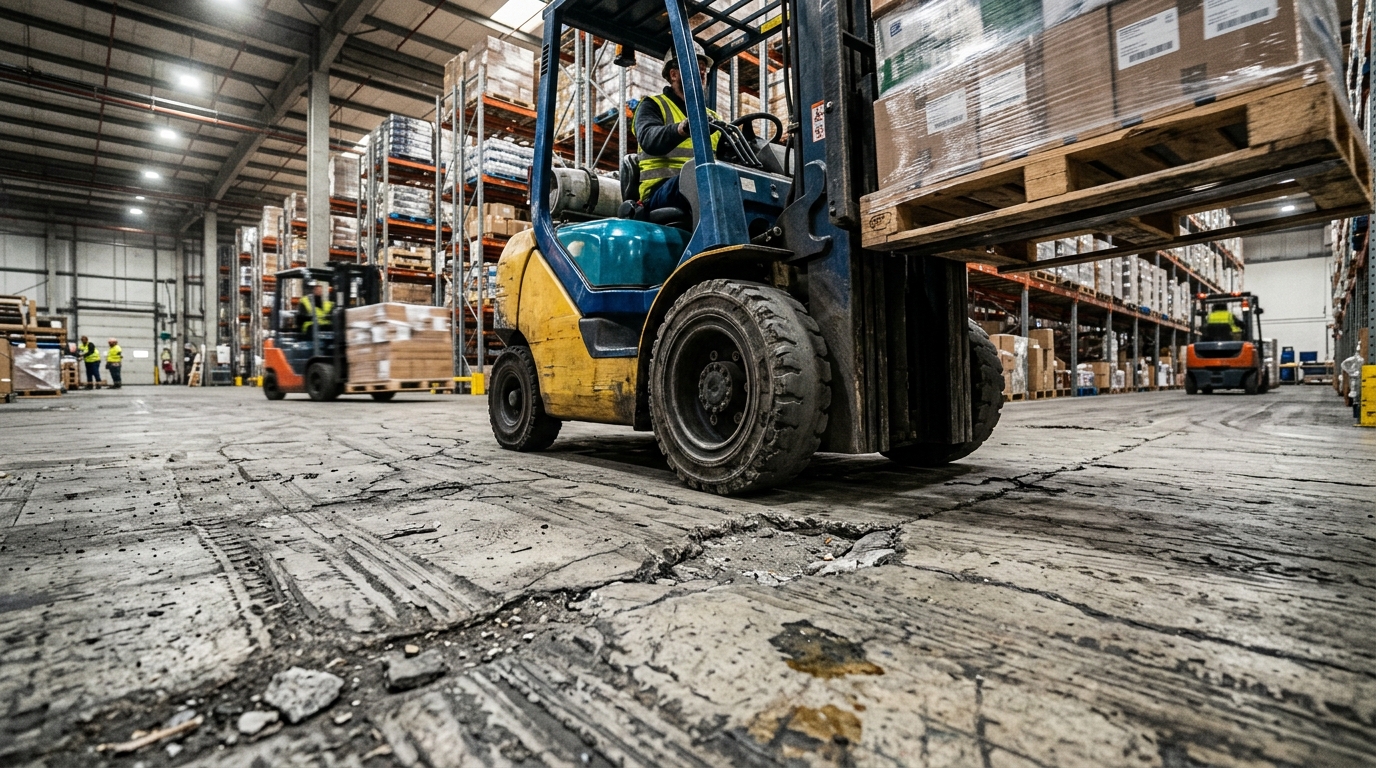
Once forklifts, pallet jacks, loaded carts, and material handling equipment begin striking a broken joint edge, the damage usually accelerates. The joint gets rougher. More concrete breaks away. Forklifts hit it harder. Operators slow down or swerve. Eventually, what started as a small joint chip can become a larger safety, productivity, and repair-cost problem.
If your facility needs warehouse floor joint repair, it is better to act before the damage spreads across high-traffic aisles, loading areas, or forklift routes. This guide explains why damaged joints get worse so quickly, how to recognize the warning signs, what repair options are available, and when New Jersey warehouse owners and facility managers should schedule a professional inspection.
What Are Warehouse Floor Joints and Why Do They Matter?
Warehouse concrete floors have joints for a reason. Concrete expands, contracts, shrinks, and moves over time. Joints help control that movement and reduce random cracking across the slab.
But in a warehouse, floor joints are more than construction details. They are traffic transition points.
Forklifts, pallet jacks, order pickers, and loaded carts cross those joints again and again. In some facilities, the same joint may be crossed hundreds or thousands of times every week. When the joint is smooth and properly maintained, traffic moves across it with minimal impact. But once the joint edge chips, breaks, sinks, or becomes uneven, it turns into a repeated impact point.
That is where problems begin.
A damaged joint can affect:
- Forklift travel speed
- Operator comfort
- Wheel and tire wear
- Pallet jack movement
- Trip hazard risk
- Concrete dust and debris
- Product movement
- Repair costs over time
A warehouse floor joint is not just a line in the slab. It is one of the highest-stress areas of the floor, especially in forklift aisles, loading zones, dock approaches, freezer areas, staging lanes, and tight turning spaces.
That is why damaged joints should not be treated as cosmetic flaws. They are early warning signs that the floor is beginning to fail at a high-impact point.
Why Damaged Warehouse Floor Joints Get Worse Fast
Damaged joints get worse quickly because the damage creates its own cycle.
Here is how it usually happens:
- A joint edge chips, cracks, or breaks.
- A forklift wheel hits the damaged edge.
- The impact breaks away more concrete.
- The joint becomes wider, rougher, or more uneven.
- Forklifts hit the joint harder on the next pass.
- The damaged area spreads along the joint.
This cycle is the main reason warehouse floor joint damage can grow faster than facility managers expect.
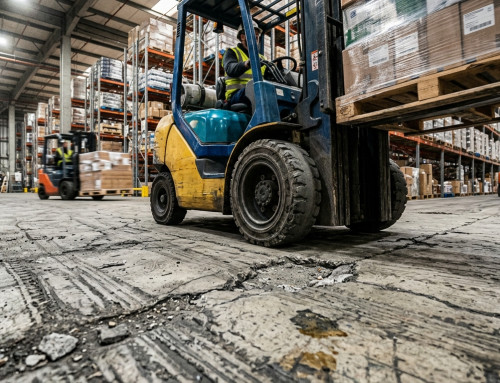
Forklift wheels concentrate heavy loads onto a small contact area. When those wheels cross a sharp, broken, or uneven joint edge, the force is not spread smoothly across the floor. It hits the weak edge directly. If that edge is already cracked or spalling, it breaks down further.
The same thing can happen with pallet jacks and loaded carts. A small joint chip may not seem serious, but when loaded equipment crosses that same spot repeatedly, the damaged edge weakens. Loose concrete breaks away. The joint opens up. More debris collects. The repair area gets larger.
Several factors can speed up the damage:
- Repeated forklift traffic in the same aisles
- Heavy loaded forklifts crossing the joint
- Sharp turning near the joint
- Hard braking and acceleration
- Uneven slab panels on either side of the joint
- Water, dust, or debris entering the joint
- Poor previous patching
- Weak or aging concrete around the joint
- Settlement beneath one side of the slab
- Damaged forklift wheels creating extra impact
If you want a deeper breakdown of the causes, read this related guide on causes of floor joint damage in warehouse concrete floors.
Common Signs Your Warehouse Floor Joints Need Repair
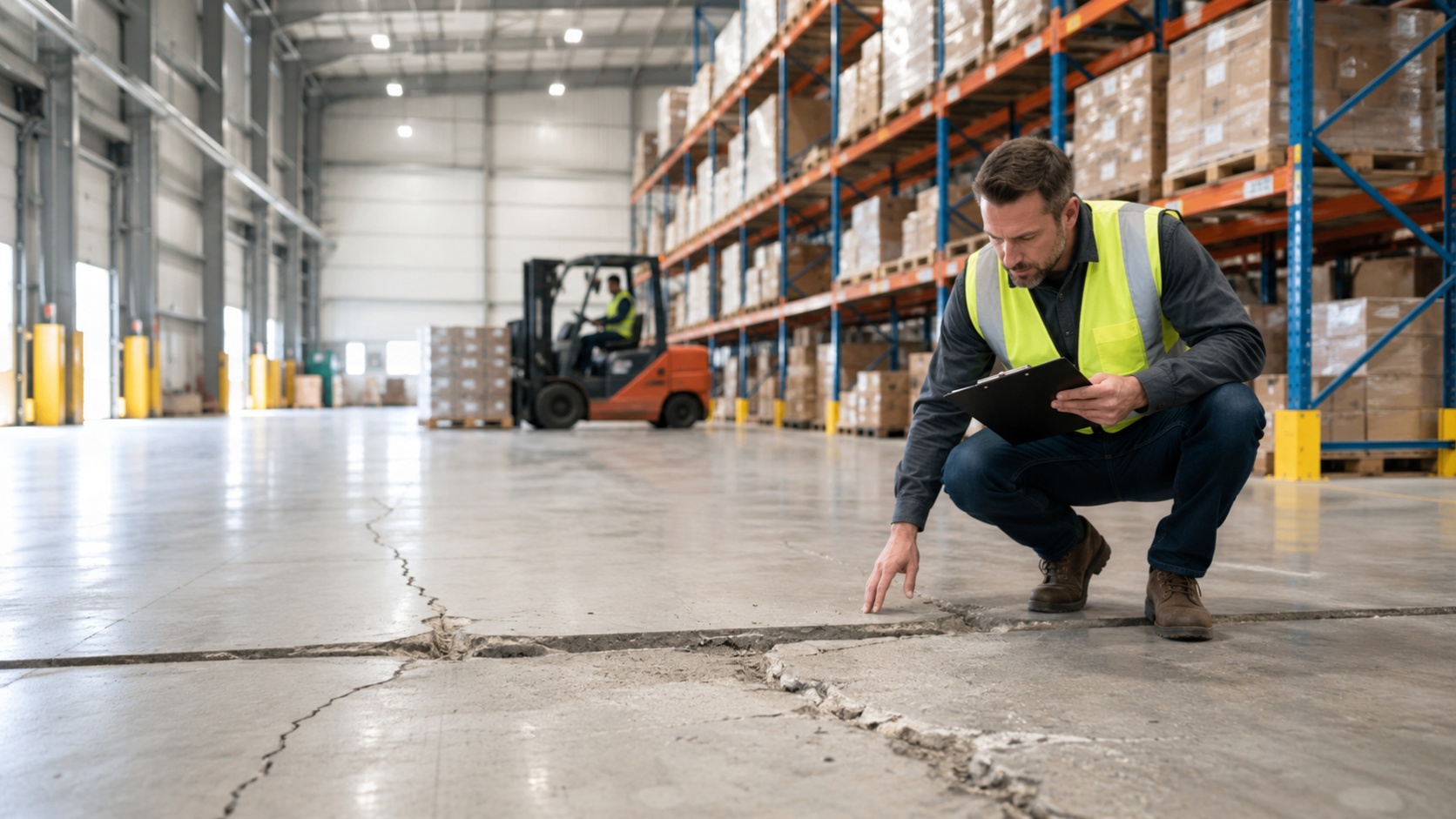
Joint damage is not always dramatic at the beginning. In many warehouses, it starts with small but noticeable changes in how traffic moves across the floor.
Watch for these warning signs:
- Chipped joint edges
- Broken concrete along the joint
- Joint widening
- Spalling or flaking concrete near the joint
- Dust and debris collecting inside the joint
- Loose repair material coming out of old patches
- Forklifts bouncing over the joint
- Pallet jacks catching on the joint edge
- Operators slowing down at the same location
- Noise or vibration when equipment crosses the joint
- Uneven slab edges on either side of the joint
- More frequent forklift wheel wear
- Failed patches that keep breaking apart
One of the best clues comes from your forklift operators. They feel the floor every shift. If they keep reporting a rough joint, bouncing, vibration, or a section of floor they prefer to avoid, take it seriously.
That complaint may be the first sign that the joint is no longer functioning as a smooth traffic transition.
Warehouse managers should also pay attention to recurring debris. If the same joint always has loose concrete, dust, or broken material around it, the joint is actively deteriorating. Sweeping it up does not solve the problem. It only removes the evidence until forklift traffic breaks off more concrete.
For a broader overview of warehouse floor problems, see common issues with warehouse concrete floors and how to fix them.
How Forklift Traffic Damages Warehouse Floor Joints
Forklifts are one of the biggest reasons warehouse floor joint damage spreads quickly.
A loaded forklift places heavy pressure on the floor. When it crosses a smooth joint, the transition may be manageable. But when it crosses a chipped, uneven, or broken joint, the wheel impact is concentrated on the weakest part of the concrete.
That impact damages the joint in several ways:
- It breaks off already weakened joint edges.
- It widens cracks near the joint.
- It pushes loose material out of old repairs.
- It creates vibration that affects nearby concrete.
- It increases wear on forklift wheels.
- It turns small chips into larger spalled areas.
The problem is worse in high-traffic aisles where forklifts follow the same route every day. It is also worse near loading docks, staging areas, turning zones, rack aisles, cold storage rooms, and doorways where traffic patterns are concentrated.
Sharp turning adds another layer of stress. When a forklift turns near a damaged joint, the wheel can grind, scrape, or twist against the broken edge. This can accelerate spalling and edge failure.
That is why joint repair should be considered part of forklift-damage prevention, not just concrete maintenance. If your facility is already dealing with forklift-related floor damage, review this guide on how to protect warehouse concrete floors from forklift damage. You may also find this article on warehouse floor cracks from forklift traffic useful if cracks are spreading beyond the joint area.
Why Quick Patches Usually Fail on Warehouse Floor Joints
One of the most common mistakes in warehouse floor maintenance is treating joint damage like a simple gap to fill.
That approach rarely lasts in a forklift-heavy environment.
Quick patches often fail because the repair does not address the actual condition of the joint. The contractor or maintenance team may fill the visible gap, but the surrounding concrete is still weak, loose, uneven, or moving.
Common reasons joint patches fail include:
- Loose concrete was not removed before patching.
- The joint was not properly cleaned.
- Old failed filler was left inside the joint.
- The wrong repair material was used.
- The material was too weak for forklift traffic.
- Broken joint edges were filled instead of rebuilt.
- The repair was not finished flush with the floor.
- The floor reopened to traffic too soon.
- Slab settlement or movement was ignored.
A warehouse floor joint repair that cannot survive forklift impact is not a real repair. It is only a temporary patch waiting to fail.
This matters because failed patches can make the next repair more complicated. The old repair material may need to be removed. The joint may have widened. More concrete may have broken away. And if forklifts continued running over the failed patch, the surrounding slab may now be more damaged than it was before.
For warehouse owners and facility managers, the goal should not be to “fill the joint.” The goal should be to restore a durable, smooth, traffic-ready transition that can handle warehouse operations.
Warehouse Floor Joint Repair Options
The right repair method depends on the condition of the joint, the surrounding concrete, the traffic level, and whether the slab is stable. A professional contractor should inspect the damage before recommending a repair plan.
Here are the most common warehouse floor joint repair options.
1. Joint Cleaning and Preparation
Every good joint repair starts with preparation.
Warehouse joints often collect dust, debris, old filler, broken concrete, oil, moisture, and contaminants. If those materials are not removed, the repair may not bond correctly.
Joint cleaning and preparation may include:
- Removing loose concrete
- Removing failed joint filler
- Cleaning debris from the joint
- Preparing the joint walls
- Opening the damaged area enough for proper repair
- Checking whether the joint is stable or moving
This step is not glamorous, but it is one of the most important parts of the repair. Poor preparation is one of the main reasons warehouse floor joint repairs fail early.
2. Removing Damaged Concrete Around the Joint
If the joint edges are chipped, broken, or spalling, the damaged concrete must usually be removed before rebuilding the area.
Patching over loose concrete is a waste of money. The repair material may bond to the weak surface, but the weak surface can still break away under forklift traffic.
Removal may be needed when:
- Joint edges are crumbling
- Spalling has spread along the joint
- Old patch material is failing
- Concrete breaks loose when struck or scraped
- The joint has become jagged or uneven
The purpose is to reach sound concrete before rebuilding the joint. Without that step, the repair is only as strong as the damaged material underneath it.
For more detail on professional service options, visit the concrete warehouse floor joint repair page.
3. Rebuilding Joint Edges with Industrial Repair Mortar
When the joint edge is broken, the repair usually needs to rebuild the edge, not just fill the joint.
This is where high-strength repair mortar or epoxy-based repair materials may be used, depending on the floor condition and traffic demand. The goal is to create a stronger, cleaner transition that can handle repeated wheel impact.
Joint edge rebuilding may be appropriate when:
- Forklift wheels are striking a broken edge
- Concrete has chipped away along the joint
- The joint has become too rough for smooth travel
- Pallet jacks catch on the transition
- The damaged area is spreading along the joint
A proper repair should account for the way the joint is used. A joint in a low-traffic storage corner does not face the same abuse as a joint across a main forklift aisle. High-traffic joints need repair materials and finishing that match the actual operating environment.
4. Joint Filling or Sealing
Joint filling or sealing may help protect the joint, reduce debris collection, and support smoother traffic over the joint. But it works best when the joint edges are still sound or have already been rebuilt.
Joint filling may be used to:
- Reduce debris inside the joint
- Support wheel traffic across the joint
- Protect the joint from additional deterioration
- Improve the smoothness of forklift travel
- Help maintain a cleaner warehouse floor
However, joint filling is not a cure-all. If the surrounding concrete is broken, crumbling, or moving, simply filling the gap will not solve the problem. The damaged edge may need to be removed and rebuilt first.
5. Grinding and Smoothing the Repair
After the joint is repaired, the surface may need grinding or finishing to create a smooth transition between the repair and the surrounding floor.
This matters because forklift wheels punish raised edges and uneven repairs. A repair that sticks up, dips down, or creates a sharp transition can become the next point of impact.
Grinding and smoothing may help when:
- The repair needs to be flush with the surrounding floor
- Previous patches created raised edges
- Forklifts are bouncing over the repaired area
- Pallet jacks catch on uneven transitions
- The joint needs a cleaner travel path
The goal is not just to make the joint look better. The goal is to make the repair function better under daily traffic.
6. Slab Stabilization or Concrete Floor Leveling
Sometimes joint damage is a symptom of a deeper problem.
If one slab panel has settled, moved, or lost support, the joint may fail again even after it is patched or rebuilt. In that case, the floor may need stabilization or leveling before the joint repair can last.
Signs that slab movement may be involved include:
- One side of the joint is higher than the other
- Forklifts dip or rock near the joint
- Cracks keep returning around the joint
- The floor sounds hollow nearby
- Settlement is visible near docks, doors, or traffic lanes
- Previous joint repairs have failed repeatedly
If the slab is moving, the repair plan should address the movement. Otherwise, you may keep repairing the same joint again and again.
For uneven or sinking sections, see the concrete floor leveling service page.
Joint Damage, Spalling, and Cracks Often Show Up Together
Warehouse floor joint damage does not always happen alone.
Once a joint edge begins to fail, cracks may spread from the joint into the slab. Spalling may develop along the edge. Surface chips may expand into wider broken areas. Forklift traffic may then carry dust and loose debris across nearby aisles.
This is why a complete floor inspection matters. What looks like a simple joint problem may include several related issues:
- Cracked concrete near the joint
- Spalling along the joint edge
- Uneven slab panels
- Loose or failed filler
- Old patch material breaking apart
- Surface wear from forklift traffic
If cracking is part of the problem, review the concrete floor crack repair page. If the surface is flaking, breaking, or chipping, the concrete spalling repair page may also be relevant.
The point is not to overcomplicate the project. The point is to avoid under-repairing it.
A joint repair that ignores nearby cracks, spalling, or settlement may fail faster than expected.
How to Know Whether a Joint Needs Repair or Replacement
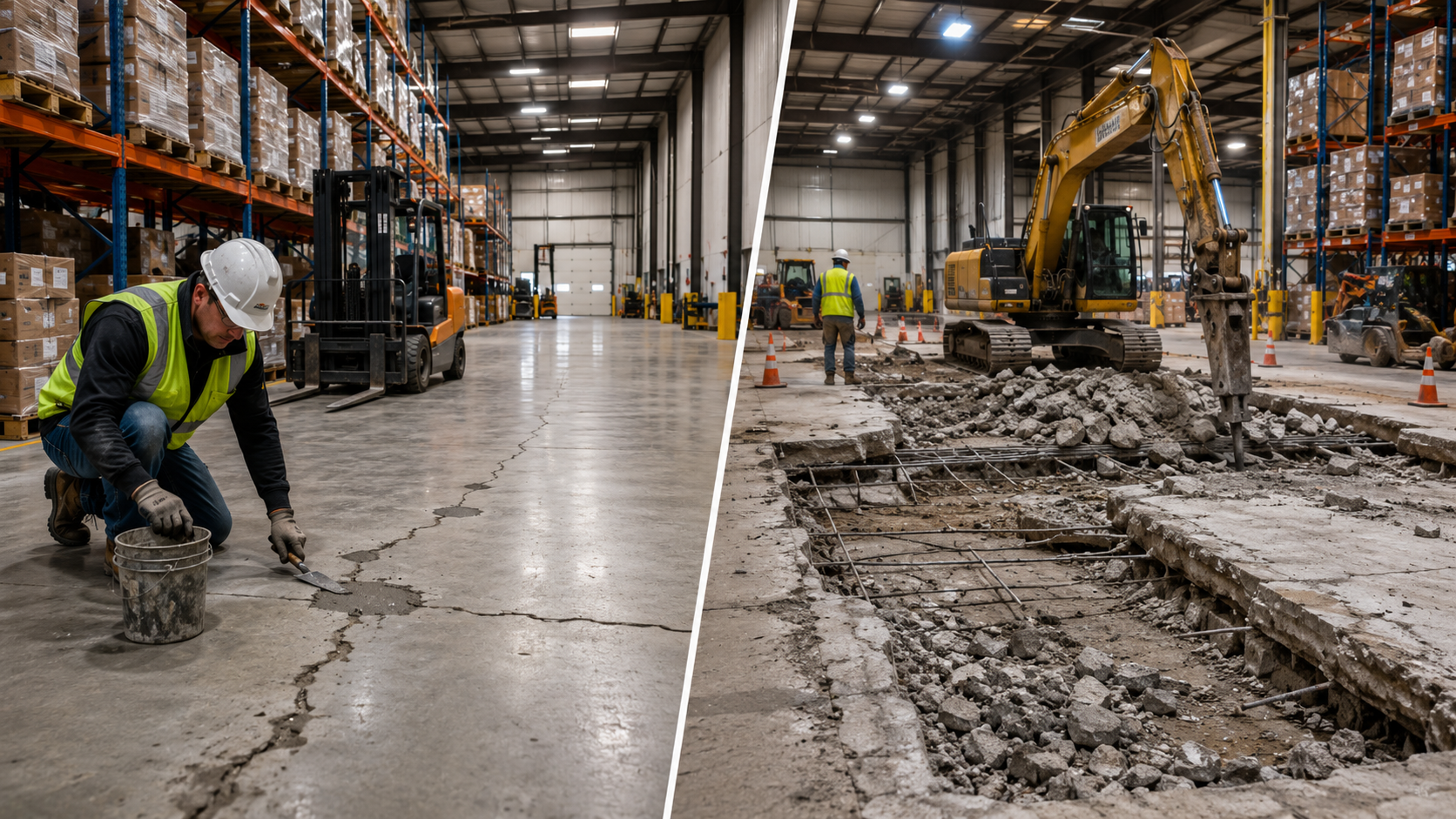
Many damaged warehouse floor joints can be repaired. Full slab replacement is not always necessary.
Repair may be the better option when:
- The joint damage is localized
- The surrounding concrete is still mostly sound
- The damaged edges can be removed and rebuilt
- The joint can be cleaned and filled properly
- The repaired area can be finished flush
- The slab is not severely settled or broken
- The facility wants to limit downtime
Replacement may be needed when:
- The slab panel is severely broken
- The surrounding concrete is crumbling across a wide area
- There is major settlement or instability
- Previous repairs keep failing because the slab has lost support
- The floor can no longer handle warehouse traffic safely
- The damage is too widespread for targeted repair
Do not assume replacement is required just because the joint looks bad. But do not keep patching a joint that has clearly failed structurally either.
The right decision comes from inspection. If you are comparing your options, read warehouse floor repair cost vs. replacement in NJ.
Can Warehouse Floor Joint Repairs Be Done Without Shutting Down Operations?
For warehouse facility managers, downtime matters almost as much as repair quality.
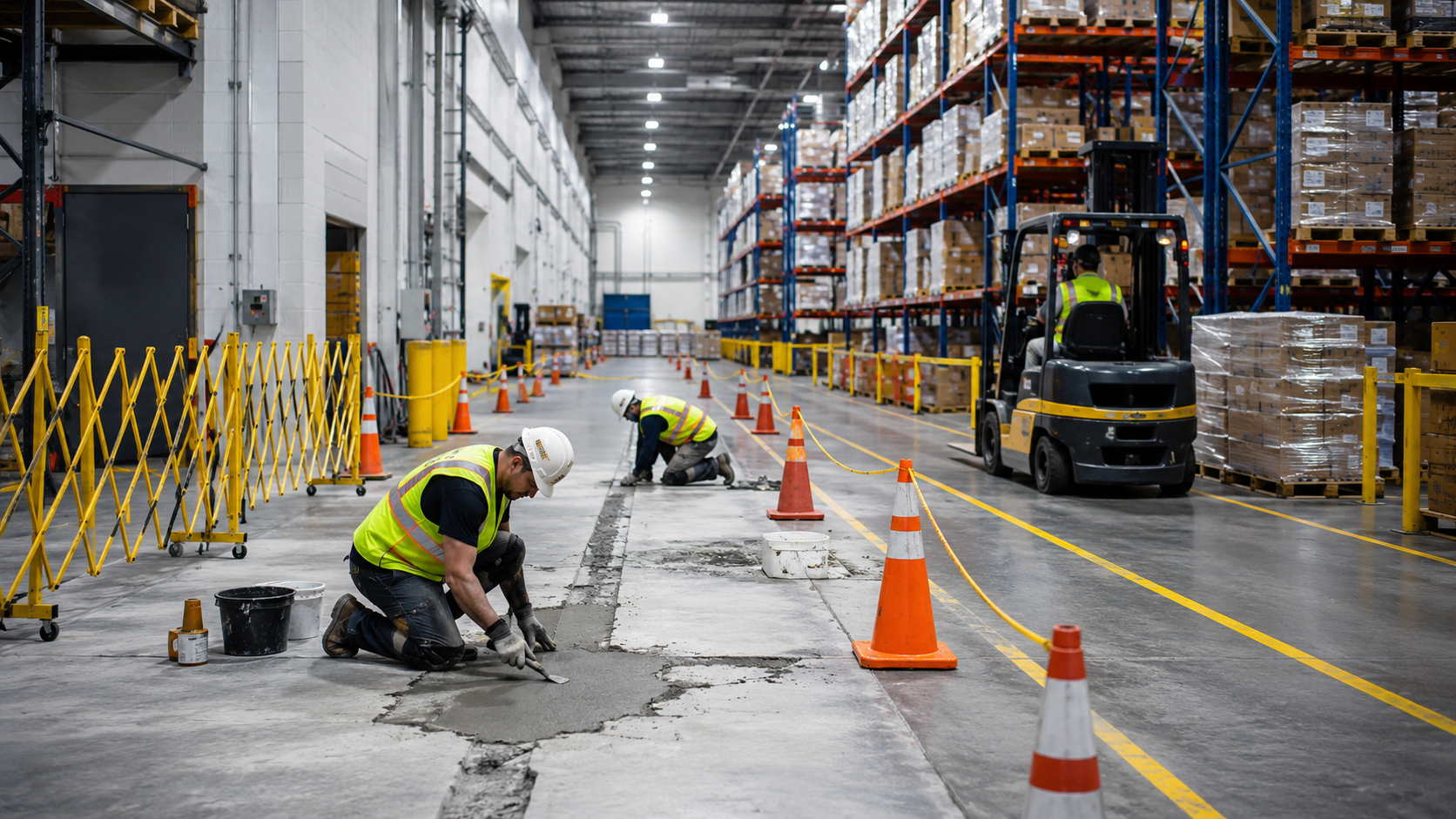
In many cases, warehouse floor joint repairs can be planned around operations. The best approach depends on the location of the joint, the repair method, the cure time, traffic flow, and how critical that aisle or dock area is to daily operations.
Possible scheduling options include:
- Repairing one aisle at a time
- Phasing repairs by traffic zone
- Working during off-hours
- Repairing around dock schedules
- Using temporary forklift routes
- Prioritizing the most hazardous joints first
- Coordinating repair areas with warehouse supervisors
However, the repaired joint should not reopen too early. If forklift traffic returns before the repair material is ready, the repair can fail before it has a chance to perform.
For facilities that run multiple shifts or operate around the clock, planning becomes even more important. If your facility cannot easily shut down, read concrete floor repair for 24/7 distribution centers in New Jersey.
How to Prevent Warehouse Floor Joint Damage From Coming Back
After a joint repair is completed, facility managers should think about prevention. A good repair can restore the joint, but the floor will still be exposed to forklift traffic, heavy loads, and daily warehouse use.
Here are practical ways to reduce future joint damage.
Inspect Joints Regularly
High-traffic joints should be inspected more often than low-use areas. Look for chips, loose filler, edge cracking, spalling, debris, or uneven transitions.
Repair Small Chips Early
Small chips are easier to repair than long runs of broken joint edges. Once forklifts begin striking the damaged edge, the repair area can grow quickly.
Keep Joints Clean
Dirt, debris, water, and loose concrete inside a joint can worsen damage and interfere with repair materials later.
Maintain Forklift Wheels
Damaged or worn forklift wheels can increase impact on the floor. If forklift wheels are failing quickly, inspect the floor joints too. The floor may be part of the problem.
Reduce Sharp Turning Over Joints
Where possible, avoid repeated sharp turns directly over damaged or vulnerable joints. Turning adds grinding and twisting force to the concrete edge.
Watch for Slab Settlement
If one side of a joint starts dropping, the problem may not be the joint alone. Slab movement should be addressed before the joint damage becomes worse.
Use Repair Materials Designed for Warehouse Traffic
A light-duty patch is not enough for a main forklift aisle. Warehouse joint repairs need materials and preparation appropriate for industrial traffic.
Plan Maintenance Before Peak Season
If your facility has busy shipping seasons, inspect and repair damaged joints before the floor is under maximum pressure.
When to Call a Warehouse Floor Joint Repair Contractor in NJ
You should call a professional warehouse floor repair contractor when joint damage begins affecting traffic, safety, or equipment movement.
Warning signs include:
- Forklifts bounce when crossing joints
- Operators complain about rough travel paths
- Joint edges are crumbling
- Broken concrete keeps spreading
- Joint filler is missing or coming loose
- Pallet jacks catch on the joint
- Dust and debris keep returning
- Prior patches have failed
- One side of the joint is higher than the other
- Safety complaints are increasing
- Forklift wheel or tire wear is getting worse
This is especially important in New Jersey warehouses, industrial parks, food storage facilities, cold storage buildings, manufacturing facilities, logistics hubs, and loading dock-heavy properties where forklift traffic is constant.
For broader concrete floor problems beyond joints, visit the warehouse concrete floor repair service page.
Service Areas for Warehouse Floor Joint Repair in New Jersey
Warehouse floor joint damage is common in New Jersey’s industrial and logistics-heavy areas, especially where forklifts run through the same traffic lanes every day.
Warehouse Floor Repairs serves facilities across New Jersey, including major warehouse markets such as:
- warehouse floor repairs in Jersey City, NJ
- warehouse floor repairs in Elizabeth, NJ
- warehouse floor repairs in Kearny, NJ
- warehouse floor repairs in Secaucus, NJ
- warehouse floor repairs in Union, NJ
- warehouse floor repairs in Passaic, NJ
- warehouse floor repairs in Hackensack, NJ
- warehouse floor repairs in Hoboken, NJ
If your facility is in or near one of these service areas and your joints are chipped, uneven, or breaking apart under forklift traffic, a professional inspection can help determine whether you need joint repair, crack repair, spalling repair, leveling, or a more complete warehouse floor repair plan.
Frequently Asked Questions About Warehouse Floor Joint Repair
What causes warehouse floor joints to break down?
Warehouse floor joints usually break down from repeated forklift traffic, heavy loads, slab movement, weak concrete, poor previous repairs, moisture, debris, and impact from pallet jacks or material handling equipment. Once the joint edge chips, every wheel crossing can make the damage worse.
Can damaged warehouse floor joints be repaired?
Yes. Many damaged warehouse floor joints can be repaired by removing weak concrete, cleaning and preparing the joint, rebuilding damaged edges, filling or sealing the joint, and grinding the repaired area smooth for forklift traffic.
Why do warehouse floor joints get worse so quickly?
They get worse because of repeated impact. Once a joint edge breaks, forklift wheels hit that rough edge again and again. Each impact breaks away more concrete, making the joint rougher, wider, and more expensive to repair.
Is warehouse floor joint repair better than replacing the floor?
In many cases, yes. If the damage is localized and the surrounding slab is stable, joint repair may be more practical and cost-effective than full replacement. Replacement may be needed if the slab is severely broken, unstable, or failing across a large area.
Can joint repairs be done while forklifts are still operating?
Often, repairs can be phased by aisle, dock, or work zone so the entire facility does not have to shut down. However, the repaired area should not reopen until the repair material is ready for forklift traffic.
How do I prevent warehouse floor joints from failing again?
Inspect joints regularly, repair chips early, keep joints clean, maintain forklift wheels, avoid sharp turning over weak joints when possible, address slab settlement, and use repair materials designed for warehouse traffic.
Get Warehouse Floor Joint Repair in NJ
Damaged warehouse floor joints do not usually stay minor for long. Once forklift wheels begin striking chipped or uneven joint edges, the damage can spread quickly.
If your warehouse floor joints are chipped, spalling, uneven, collecting debris, causing forklift vibration, or creating rough travel paths, schedule a professional inspection before the repair area grows.
Warehouse Floor Repairs helps New Jersey warehouse owners and facility managers repair damaged concrete joints, cracked slabs, spalling surfaces, uneven floors, forklift-damaged aisles, and loading dock concrete problems.
To discuss your facility, contact Warehouse Floor Repairs or call (908) 369-3110 to request an evaluation.

- Low-Downtime Concrete Floor Repair for Active Warehouses in NJ - June 30, 2026
- Repair vs Replacement:What to Do With a Damaged Warehouse Concrete Floor - June 30, 2026
- Warehouse Floor Joint Repair: Why Damaged Joints Get Worse Fast - June 30, 2026