
IN THIS ARTICLE
These are the Reasons Your Forklift Wheels Keep Failing Which you don’t know
If you manage a warehouse in New Jersey or Eastern Pennsylvania, you’ve probably run into this problem more than once: forklift wheels wearing out far too quickly.
You replace them, things improve for a short while, then the same issue comes back again.
At first, it feels like a wheel quality issue. Maybe the material isn’t holding up. Maybe the supplier is inconsistent.
But in most warehouse environments, the real issue is not the wheel at all.
It’s the floor underneath it.
And more specifically, it’s the way the concrete slab is supporting, or failing to support, the load of your forklifts.
Once you understand that connection, the pattern becomes obvious. Wheel failure is usually just the symptom.
The Hidden Cost of Ignoring Your Concrete Floor
Warehouse floors don’t fail suddenly. They degrade slowly over time, often in ways that are easy to ignore at first.
A slight vibration here. A rough patch there. A joint that feels a bit harsher than it used to.
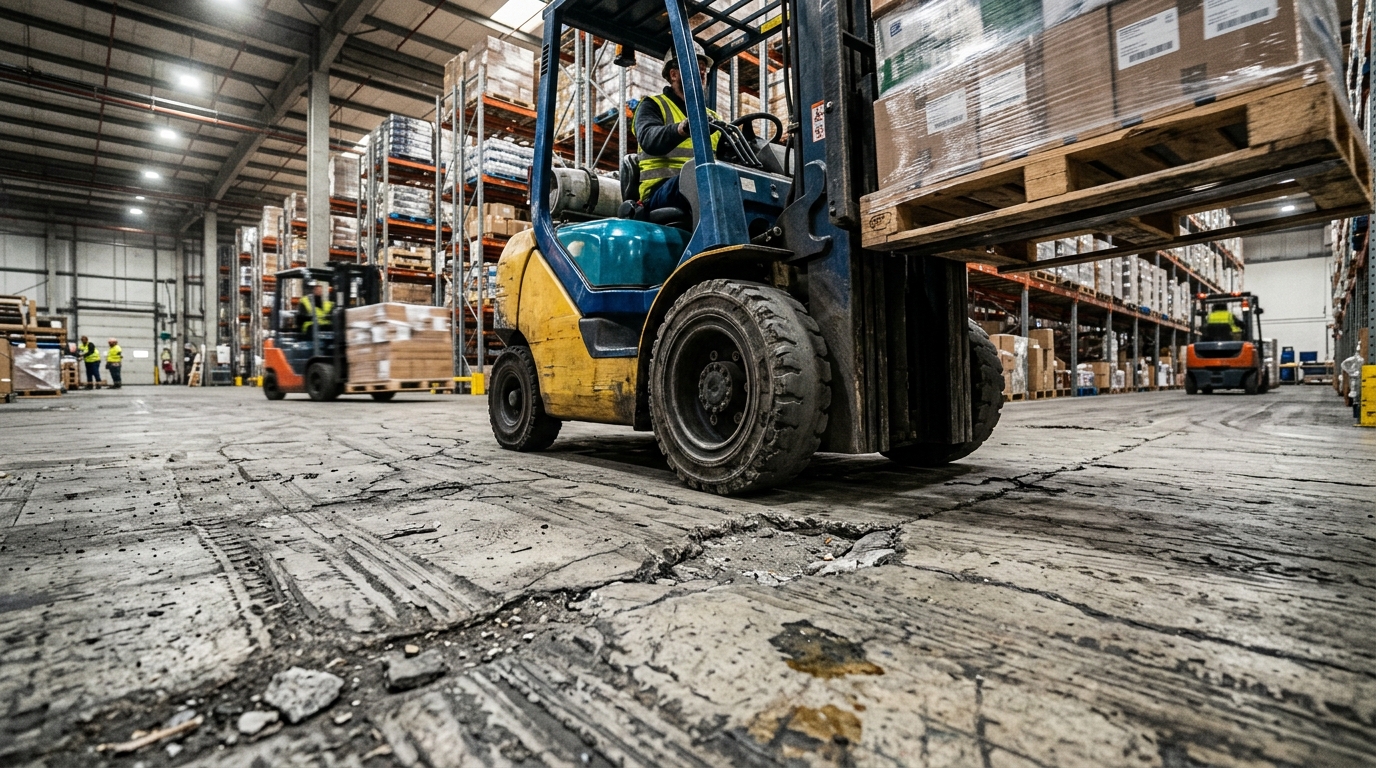
Individually, none of it seems urgent. But forklifts don’t experience the floor in isolated moments; they experience it thousands of times a day, in the exact same traffic paths.
Every pass introduces pressure and vibration into the system. When the slab is perfectly supported, that energy is absorbed evenly. But when support begins to weaken, even slightly, the floor starts to move under load.
That movement is what causes the real damage. Not just to the concrete, but to anything running on top of it, especially forklift wheels that are constantly absorbing those repeated impacts.
Over time, what looked like a minor floor issue turns into a recurring maintenance cycle that never really goes away.
What Most People Get Wrong About Forklift Wheel Failure
The first reaction in most facilities is to focus on the wheels themselves.
Upgrade the material. Change the supplier. Try a different compound.
And while better wheels might slightly delay wear, they don’t address the actual cause.
Forklifts concentrate a large amount of weight into very small contact points. That means even small imperfections in the floor are multiplied under load.
A slight dip, a broken joint edge, or a weak section of slab isn’t just a surface defect; it becomes a repeated impact zone.
So even high-quality wheels are forced to operate in a harsh, inconsistent environment. And that environment is what ultimately determines how long they last.
How Your Concrete Floor Is Destroying Your Forklift Wheels
Uneven Slabs and Joint Breakdown
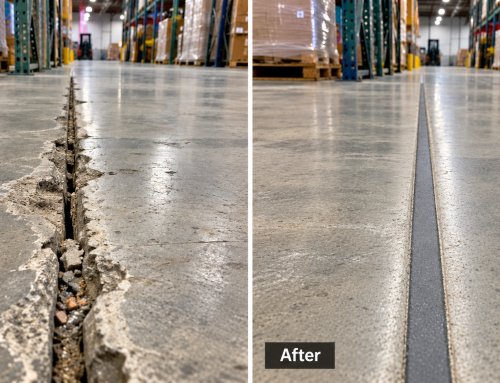
Every warehouse floor depends on joints. They’re necessary, but they’re also one of the first areas to show wear.
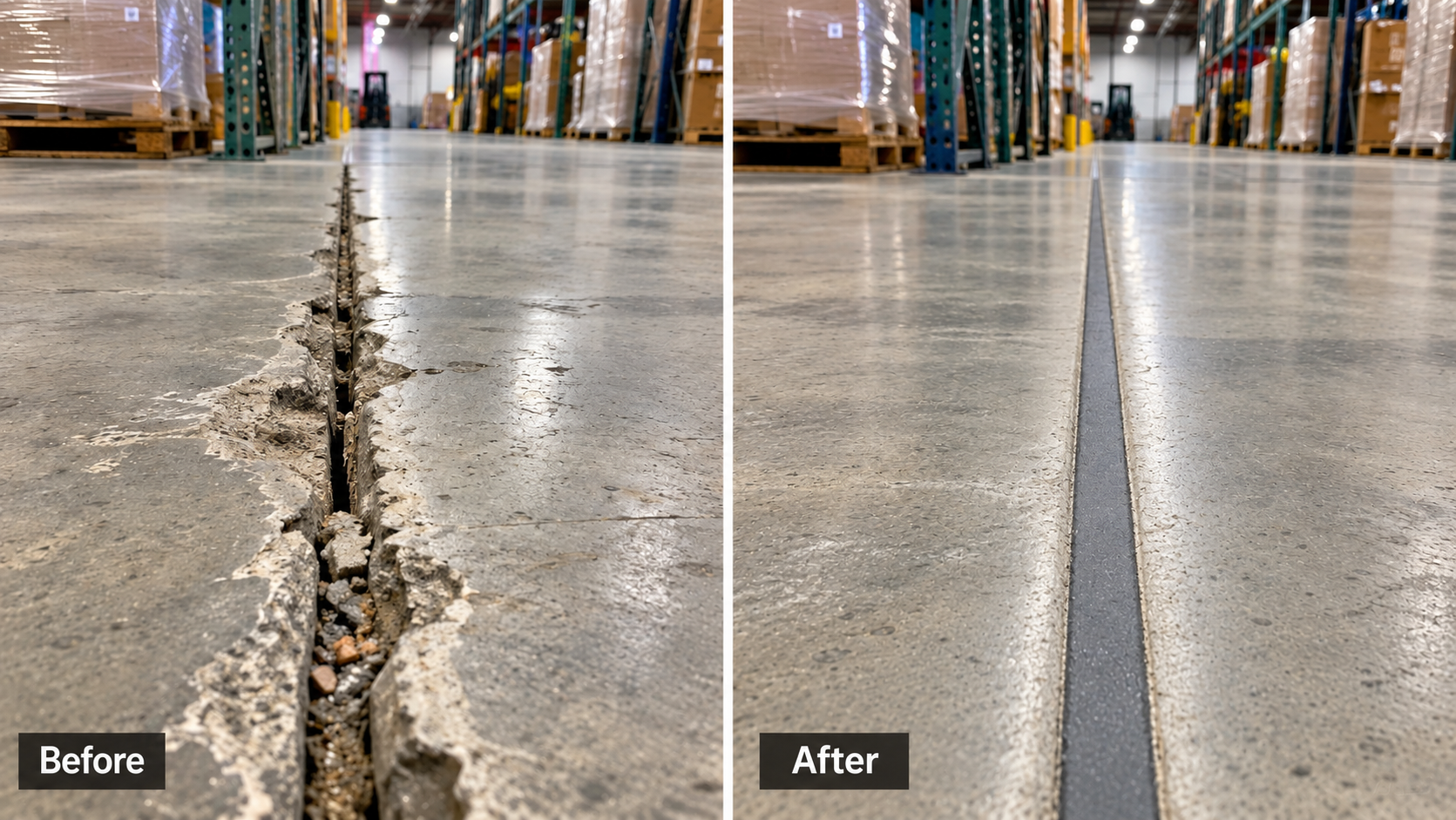
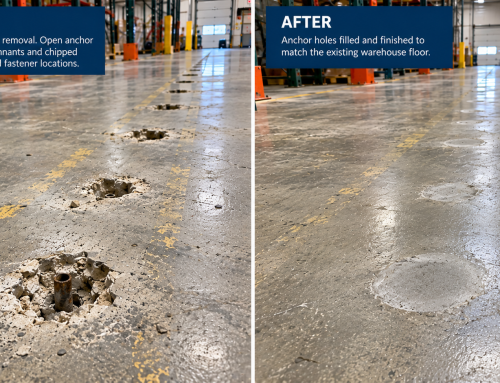
When joints are new and properly supported, forklifts pass over them with minimal impact. But as they begin to degrade, the edges chip away, and the transition between slabs becomes uneven.
At that point, forklifts are no longer rolling smoothly; they’re hitting small impact points repeatedly throughout the day.
Each impact may be small, but the repetition is constant. Over time, that creates cracking at the edges, surface breakdown, and accelerated wear on forklift wheels.
What makes this worse is the traffic volume. In busy aisles, those same joints are hit thousands of times every day, turning minor damage into a major operational issue.
Cracking, Pitting, and Surface Wear
Concrete damage rarely stays at the surface level for long.
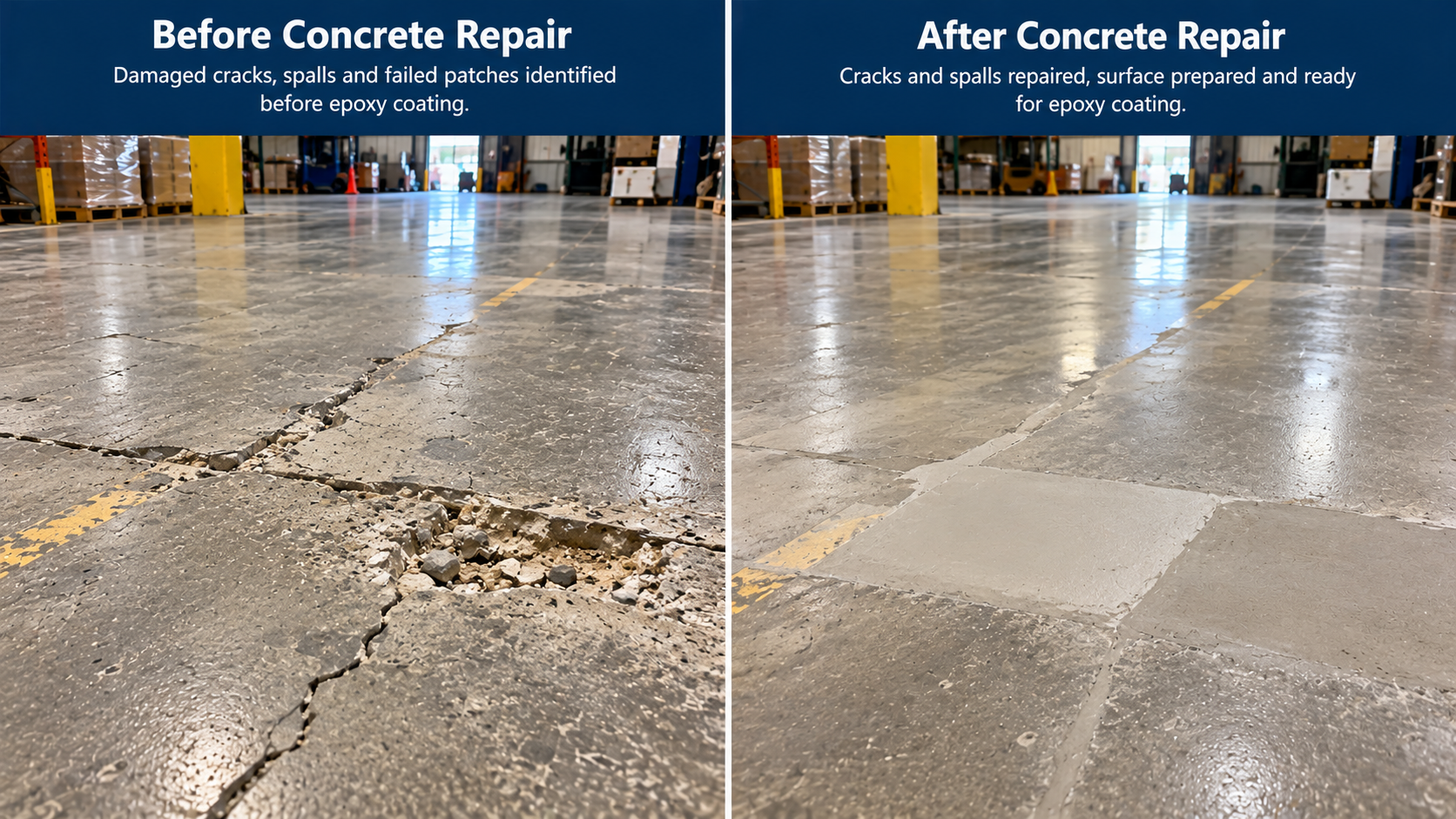
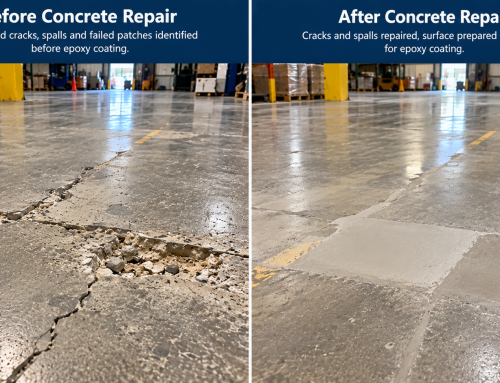
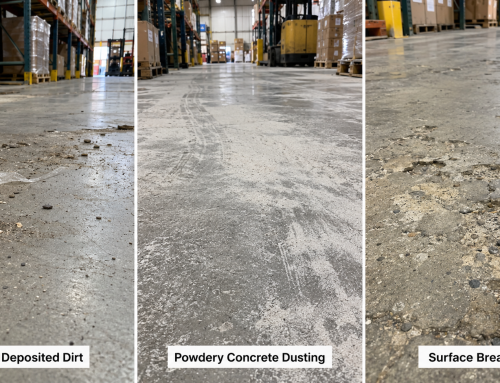
Hairline cracks begin to spread. Small pits form where the surface weakens. Certain areas start to feel rougher under load.
Once that happens, the wheel no longer rolls smoothly. Instead, it experiences continuous micro-impact and vibration.
That vibration doesn’t just affect comfort; it directly contributes to faster wear and uneven breakdown of the wheel surface.
And in warehouse environments where loads are heavy and repetitive, that effect compounds quickly.
What starts as surface wear eventually becomes a mechanical problem affecting equipment reliability.
Sub-Slab Movement and Loss of Support
The most overlooked cause of wheel failure is what’s happening beneath the slab.
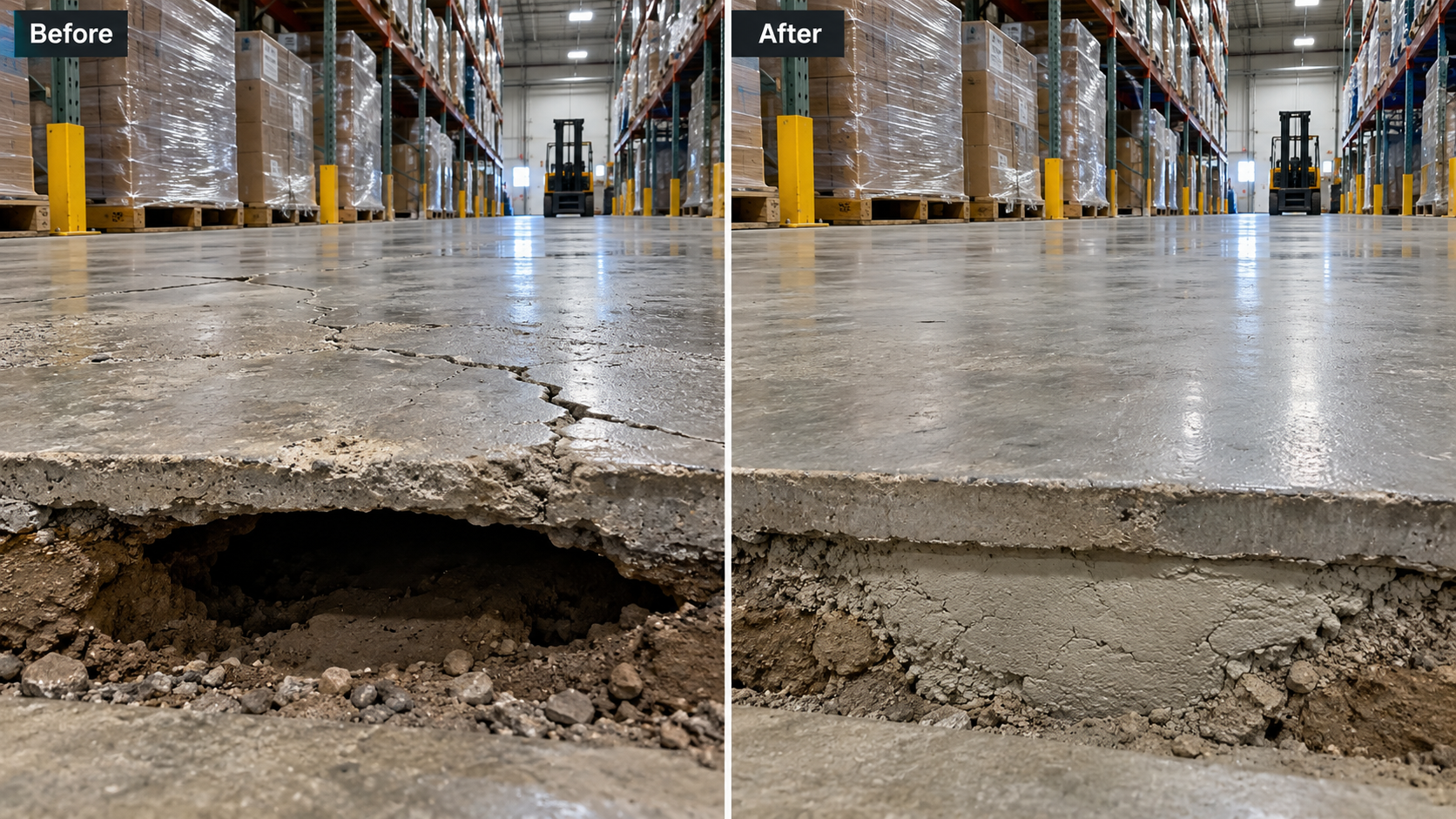
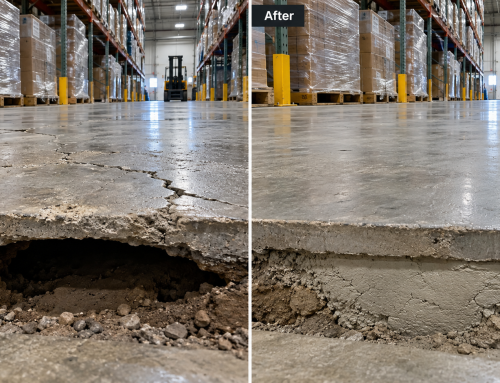
Concrete relies entirely on the material underneath it for support. When that support weakens, voids begin to form under sections of the slab.
These voids create areas where the concrete is no longer fully supported. When a forklift passes over those sections, the slab flexes slightly under the load.
That movement may not be visible, but it is absolutely felt by the equipment.
This deflection introduces instability into the system. Instead of a solid, predictable surface, the forklift is constantly transitioning between supported and unsupported areas.
That inconsistency is one of the biggest contributors to premature wheel wear and recurring failure.
High-Stress Traffic Zones
Not all parts of a warehouse floor deteriorate at the same rate.
Forklifts tend to follow predictable paths; loading docks, aisles, staging areas, and turning points. These zones experience far more stress than open floor areas.
The problem is not just traffic volume, but the type of movement. Turning, stopping, and pivoting under load creates lateral stress on the surface.
Over time, these areas break down faster than the rest of the floor. Once that happens, forklifts begin absorbing more impact in exactly the places they operate most frequently, accelerating wheel wear even further.
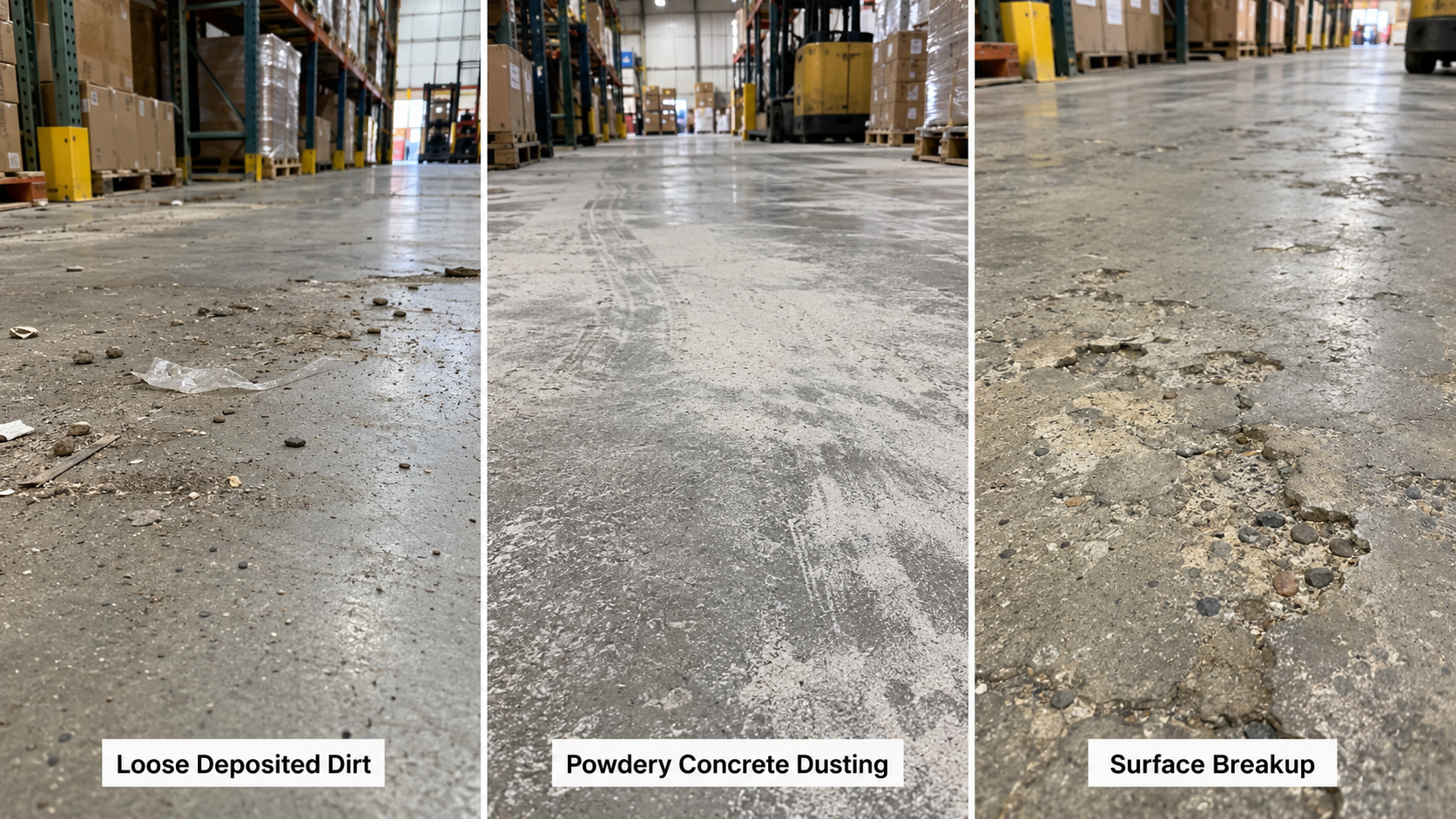
Dusting and Surface Breakdown
A dusty warehouse floor is often more than a housekeeping issue; it can be a sign of surface deterioration.
As concrete weakens, fine particles begin to break loose from the surface. Those particles get picked up by forklift wheels and carried through the facility.
Once embedded in the wheel surface, they increase friction and heat during operation. That added stress contributes to uneven wear patterns and faster breakdown of the wheel material.
It’s a small detail, but it often signals a larger structural issue developing beneath the surface.
Signs Your Floor Is the Real Problem
By the time forklift wheels are failing repeatedly, the floor has usually been showing warning signs for a while.
Operators may begin reporting vibration or discomfort during travel. Maintenance teams notice that replacement cycles are becoming shorter. Certain areas of the warehouse may look visibly worn, especially around joints and high-traffic routes.
In more advanced cases, sections of the floor may even sound hollow or feel slightly unstable under load.
When these patterns start appearing, it’s rarely an isolated issue. It usually means the floor system itself is no longer performing the way it should.
Why Replacing Wheels Doesn’t Solve the Problem
Replacing forklift wheels can improve performance temporarily, but it doesn’t change the environment they’re operating in.
If the floor remains uneven or unsupported, the same stresses will continue to exist. Every new wheel is still exposed to the same impacts, vibrations, and load inconsistencies.
That’s why many facilities end up in a cycle of repeated replacement without ever seeing long-term improvement.
The underlying issue remains untouched.
The Right Approach: Restore Floor Stability First
Why Sub-Slab Support Matters
A warehouse floor is only as strong as the support beneath it.
When that support is solid and continuous, loads are distributed evenly and surface movement is minimized. Forklifts operate smoothly, and wear is reduced across both equipment and concrete.
When that support is compromised, the slab begins to move, and everything running over it is affected.
Targeted Stabilization, Not Surface Fixes
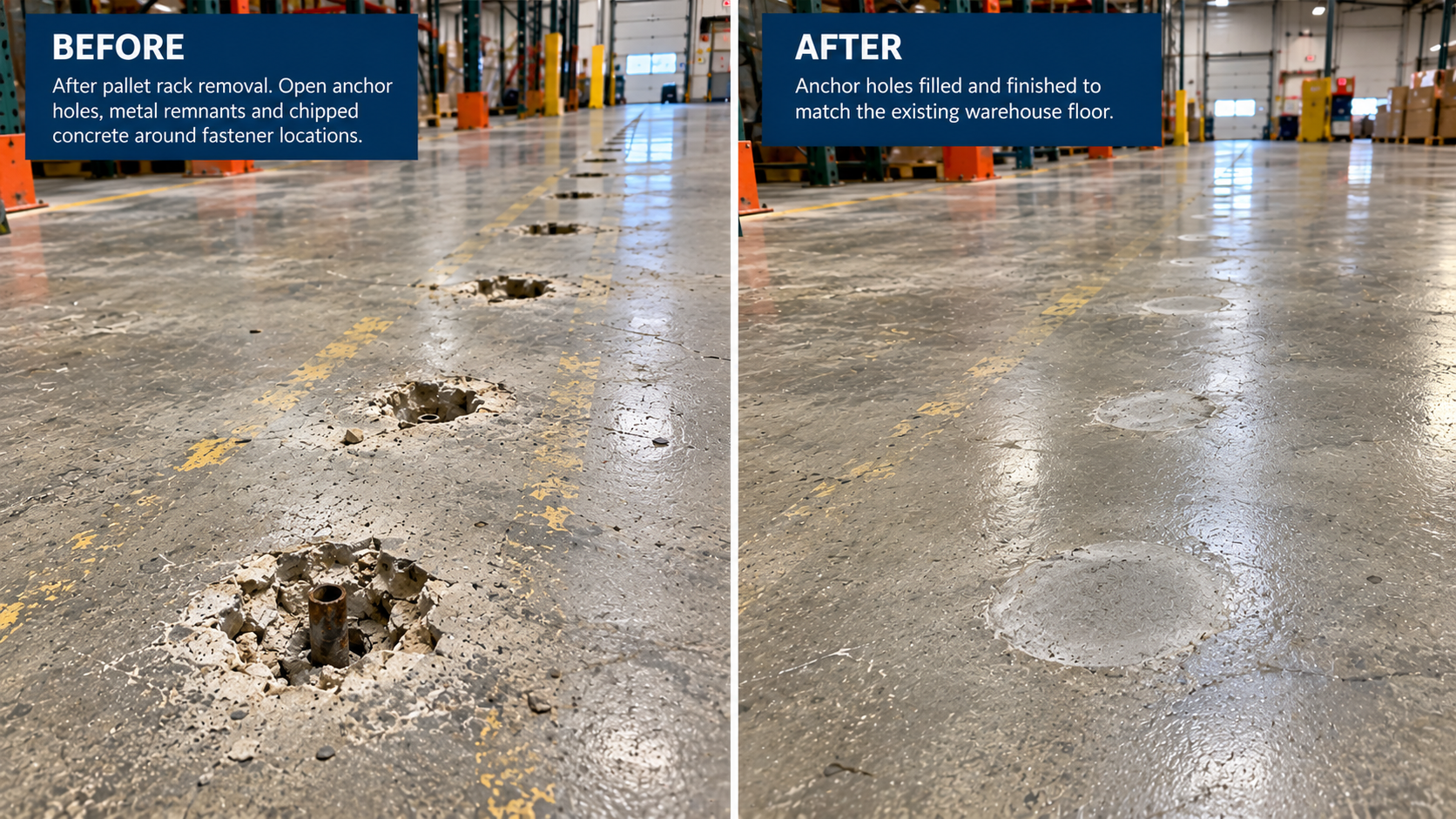
In warehouse environments, the priority is not simply surface repair; it’s restoring stability where the slab has lost support.
That often involves addressing voids beneath the concrete and reinforcing areas that are no longer carrying load properly.
In some cases, small-scale stabilization methods are used in tight or inaccessible areas where equipment cannot reach. The goal is not to “lift” the floor, but to restore proper support so the slab performs as intended under heavy traffic.
Joint Repair and Load Transitions
Once the slab is stable, attention shifts to the surface itself.
Joints must be rebuilt so they can handle repeated forklift traffic without breaking down again. Transitions between slabs need to be smooth enough to prevent repeated impact at the same points.
When both the support system and the surface transitions are corrected, the floor becomes significantly more durable under warehouse conditions.
How This Impacts Your Operation
When the floor is properly stabilized, the effects show up across the entire operation.
Forklift wheels last longer because they’re no longer absorbing unnecessary impact. Maintenance costs decrease because fewer components are being stressed. Operators experience smoother movement, which improves both efficiency and safety.
Most importantly, the operation becomes more predictable.
Instead of reacting to constant equipment issues, the warehouse runs on a more stable foundation.
Why Facility Managers in NJ & Eastern PA Work With Warehouse Floor Repairs
Warehouse floors in this region face unique challenges, including soil movement, seasonal moisture changes, and heavy industrial loading.
With over 25 years of experience across New Jersey and Eastern Pennsylvania, Warehouse Floor Repairs focuses on identifying and correcting the real causes of floor failure beneath the surface.
The goal is simple: restore long-term stability so warehouse operations can run without constant interruption from floor-related issues.
Stop Replacing Wheels. Fix the Floor.
If your forklift wheels keep failing, the floor is already telling you what’s wrong.
The only real question is whether you keep replacing parts or address the actual cause underneath the slab.
Contact Warehouse Floor Repairs today for a professional warehouse floor evaluation in NJ and Eastern PA.
With over 25 years of experience, we’ll identify what’s happening beneath your slab and restore proper support so your floor can finally perform the way your operation demands.