
IN THIS ARTICLE
Discover all you need to know about fixing Warehouse Concrete Floor Dusting
You clean the warehouse floor on Monday.
By Tuesday or Wednesday, that same fine gray dust is back along the forklift aisle.
So the floor gets swept again.
A few days later, you are looking at the same problem.
If this keeps happening in your warehouse, especially around busy forklift lanes, loading areas, turning zones or high-traffic sections, you may not have a cleaning problem at all.
The concrete floor itself could be producing the dust.
We see this in warehouses and industrial facilities throughout New Jersey and Eastern Pennsylvania. At first, facility managers often assume the powder is being tracked inside through loading docks or created by day-to-day warehouse activity. Sometimes that is exactly what is happening.
Other times, though, the top surface of the concrete is actually wearing away.
And no amount of sweeping will repair weak concrete.
At Warehouse Floor Repairs, one of the first things we want to determine is simple:
Is dirt collecting on your floor, or is your floor slowly turning into the material you keep cleaning up?
That distinction matters because ordinary warehouse dust, light surface deterioration and actual concrete breakdown do not require the same solution.
How to Tell If the Dust Is Coming From the Concrete Floor
Warehouses naturally get dusty.
Open dock doors allow dirt and fine debris inside. Forklift tires track material across the floor. Pallets, cardboard, packaging, manufacturing operations and general warehouse traffic all create mess.
That kind of dust sits on top of the concrete.
Concrete dusting is different because the powder is actually being produced by the concrete surface itself.
One of the easiest ways to spot the difference is to pay attention to what happens after cleaning.
If the area is thoroughly swept or scrubbed and stays relatively clean, you are probably dealing with normal housekeeping.
If gray powder quickly returns in the same places after forklifts and pallet jacks begin moving again, the concrete deserves a closer look.
Some common signs of warehouse concrete floor dusting include:
- Fine gray powder returning shortly after cleaning
- Dust collecting repeatedly along forklift travel lanes
- A chalky, sandy or soft-feeling concrete surface
- Visible wear in turning areas or loading zones
- Small pits appearing in the floor
- Aggregate beginning to show through the top surface
- Concrete that flakes or rubs away more easily than surrounding areas
- One section dusting heavily while nearby concrete remains solid
One simple test is to clean a small area thoroughly and monitor it during normal operations.
If the powder comes back from the same surface, especially after equipment has passed over it several times, you are probably dealing with more than ordinary warehouse dirt.
For general housekeeping, our guide to warehouse concrete floor cleaning covers routine cleaning practices.
But when the floor itself is producing the dust, cleaning only removes the symptom.
That is when a proper industrial concrete floor repair assessment becomes much more useful.
Why Warehouse Concrete Floors Start Dusting
A warehouse concrete floor is expected to handle a lot.
Forklifts run the same routes every shift. Pallet jacks turn in tight areas. Heavy equipment stops, starts and changes direction repeatedly. Over time, weak areas in the slab can begin to show.
One of the most common reasons for concrete dusting is simply a weak surface layer.
The concrete underneath may still be solid, but the upper portion of the slab can become softer or less durable than it should be. Once forklift tires begin wearing against that weak surface every day, tiny concrete particles start breaking loose.
Think of it like gradually sanding down the top of the floor.
You sweep away the powder, but the weak concrete underneath remains. More traffic creates more dust.
There are several reasons this can happen.
Weak concrete near the surface
Problems during the original placement, finishing or curing of the concrete can sometimes leave the top layer weaker than the concrete below.
This does not always become obvious right away.
A slab may look fine for years before heavy warehouse traffic gradually exposes the weaker surface.
Repeated forklift traffic
Forklifts can make a small concrete problem much worse.
Straight-line traffic creates abrasion, but turning, braking and accelerating put even more stress on the surface.
That is why we often see warehouse floor deterioration concentrated around aisle intersections, loading areas, dock approaches and tight turning points.
Age and long-term wear
Even well-built warehouse floors do not stay new forever.
Years of heavy traffic can slowly wear away the surface, especially in facilities that operate multiple shifts or run forklifts continuously.
A floor that was once smooth and hard can gradually become rough, dusty and pitted.
Previous coatings or repairs
Older warehouses in New Jersey and Eastern Pennsylvania often have a repair history.
A floor may have been coated, patched, sealed or treated years ago. Before anything new is applied, it is important to understand what is already on the slab and whether the underlying concrete is still sound.
Putting another product over weak concrete without fixing the weak material underneath usually does not solve the real problem.
What We Look for When Inspecting a Dusting Warehouse Floor
When we inspect a warehouse floor, we do not simply look at the dust and recommend a product.
We want to understand what is happening underneath it.
The first question is how widespread the problem is.
Is one small forklift turning area dusting badly? Is the damage following a main travel lane? Is the entire warehouse surface affected?
Those patterns tell us a lot.
We also look at how the concrete feels and behaves.
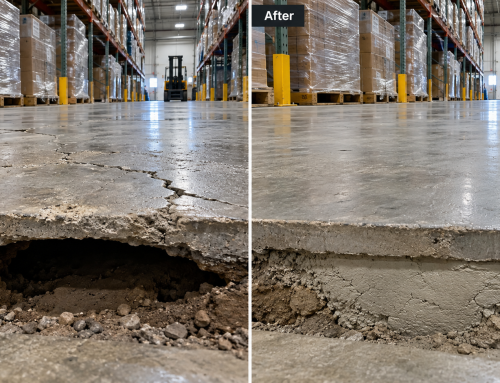
A powdery surface may indicate relatively shallow deterioration. But if the floor is already pitting, flaking, breaking apart or exposing aggregate, the problem has moved beyond simple dusting.
At that point, we may be dealing with actual concrete surface failure.
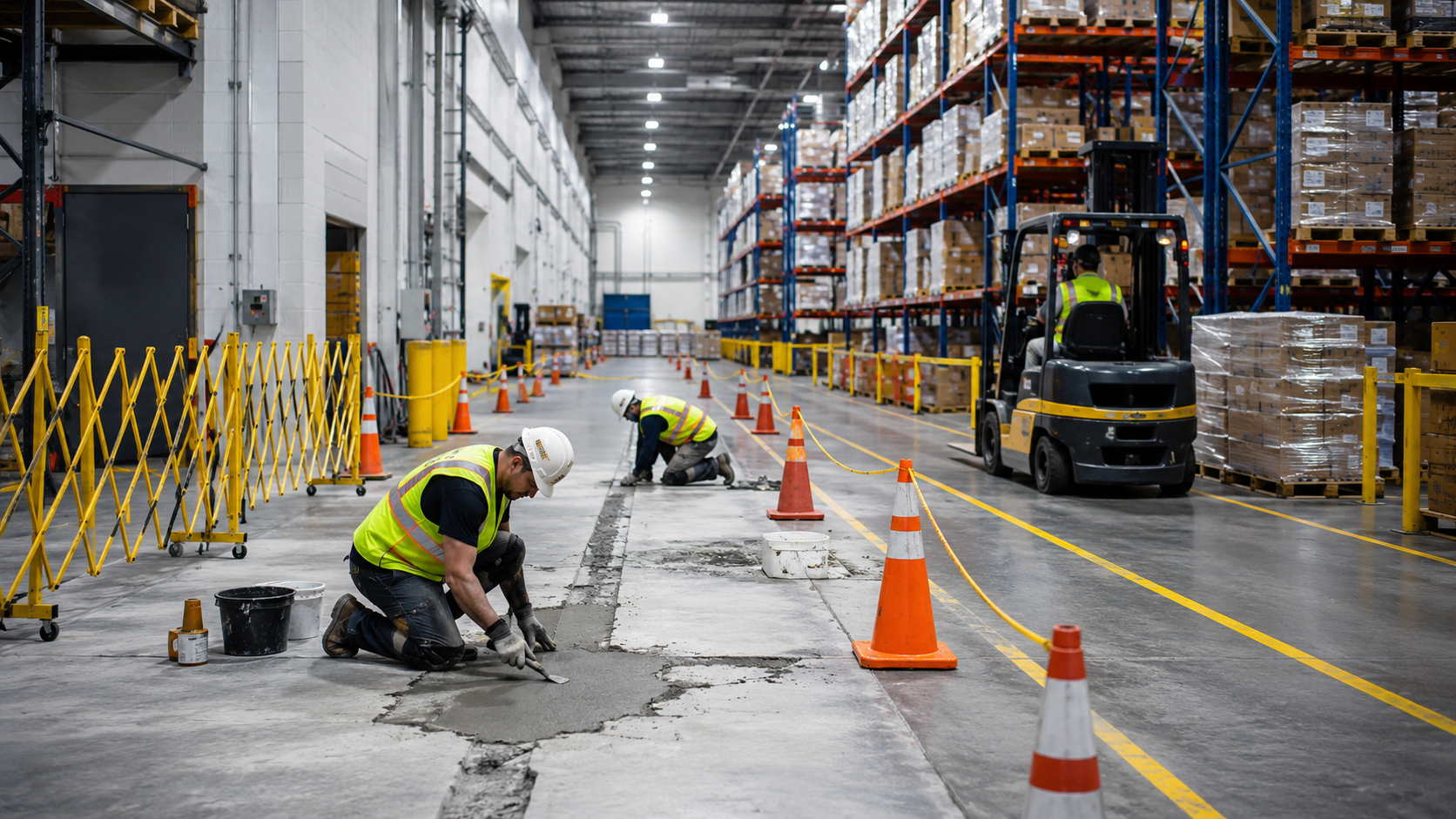
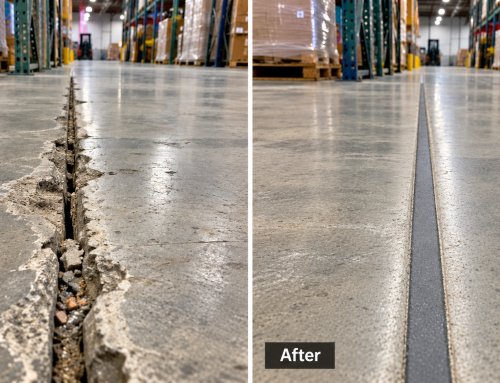
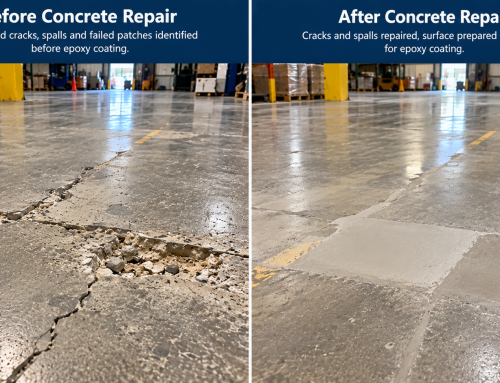
That is where concrete spalling repair or other industrial floor repair methods may become more appropriate.
We also want to understand the traffic.
A warehouse that runs light pallet-jack traffic for one shift is very different from a distribution center running loaded forklifts around the clock.
That matters when deciding how serious the wear is and what kind of repair makes sense.
Previous treatments matter too.
If the floor has been coated, patched or repaired before, we need to know what was done and whether that material is still bonded properly.
For facility managers, it helps to think of the inspection as answering four basic questions:
- Is the concrete itself creating the dust?
- How deep does the weak material go?
- Is the slab still sound underneath the damaged surface?
- What repair will hold up under the way this warehouse actually operates?
That last question is especially important.
A repair that looks good but cannot handle daily forklift traffic is not much of a repair.
When Cleaning Is Enough — and When It Is Not
Not every dusty warehouse floor needs concrete repair.
If the material is coming from open doors, pallets, cardboard, production activity or outdoor dirt tracked inside, proper cleaning may be all you need.
But if the concrete is producing the powder, more frequent sweeping will not strengthen the slab.
You could clean the same aisle every morning and still have dust again by the end of the week.
That is where facility managers can end up wasting time and labor on a problem that is not really a cleaning problem.
In some cases, the surface may still be sound enough for an appropriate treatment after proper preparation.
In other cases, weak concrete may need to be removed before a durable repair can be installed.
And when deterioration has progressed into deeper pitting, surface breakup or spalling, the damaged concrete needs more direct attention.
The important thing is not to guess.
At Warehouse Floor Repairs, we work with warehouses and industrial facilities throughout New Jersey and Eastern Pennsylvania, and we know these buildings cannot simply shut down because one section of floor is causing trouble.
That is why the condition of the concrete, traffic patterns and operating schedule all need to be considered before recommending a repair.
Our industrial concrete floor repair services are designed around those kinds of real warehouse conditions.
We are not interested in selling you a repair that your floor does not need.
But if the slab is deteriorating, catching the problem while it is still limited can help prevent a small dusty area from becoming a larger damaged section later.
What to Send Us Before Requesting an Assessment
If you are seeing recurring concrete dust in your warehouse, you can make the assessment much easier by collecting a few details before contacting us.
Start with your facility location.
We regularly work throughout New Jersey and Eastern Pennsylvania, so knowing where the building is located helps us understand the site and plan the next step.
Then tell us approximately how much floor is affected.
You do not need a perfect measurement. Even an estimate such as “one forklift aisle,” “about 500 square feet,” or “the area around three loading docks” gives us something useful to work with.
It also helps to tell us:
- How quickly the dust returns after cleaning
- Whether the problem follows forklift traffic
- Whether the surface feels soft, sandy or rough
- Whether you can see pitting or exposed aggregate
- Whether pieces of concrete are breaking loose
- Whether the area has been repaired before
- Whether the floor has an existing coating or treatment
- What type of equipment regularly travels over the area
Photos are also extremely helpful.
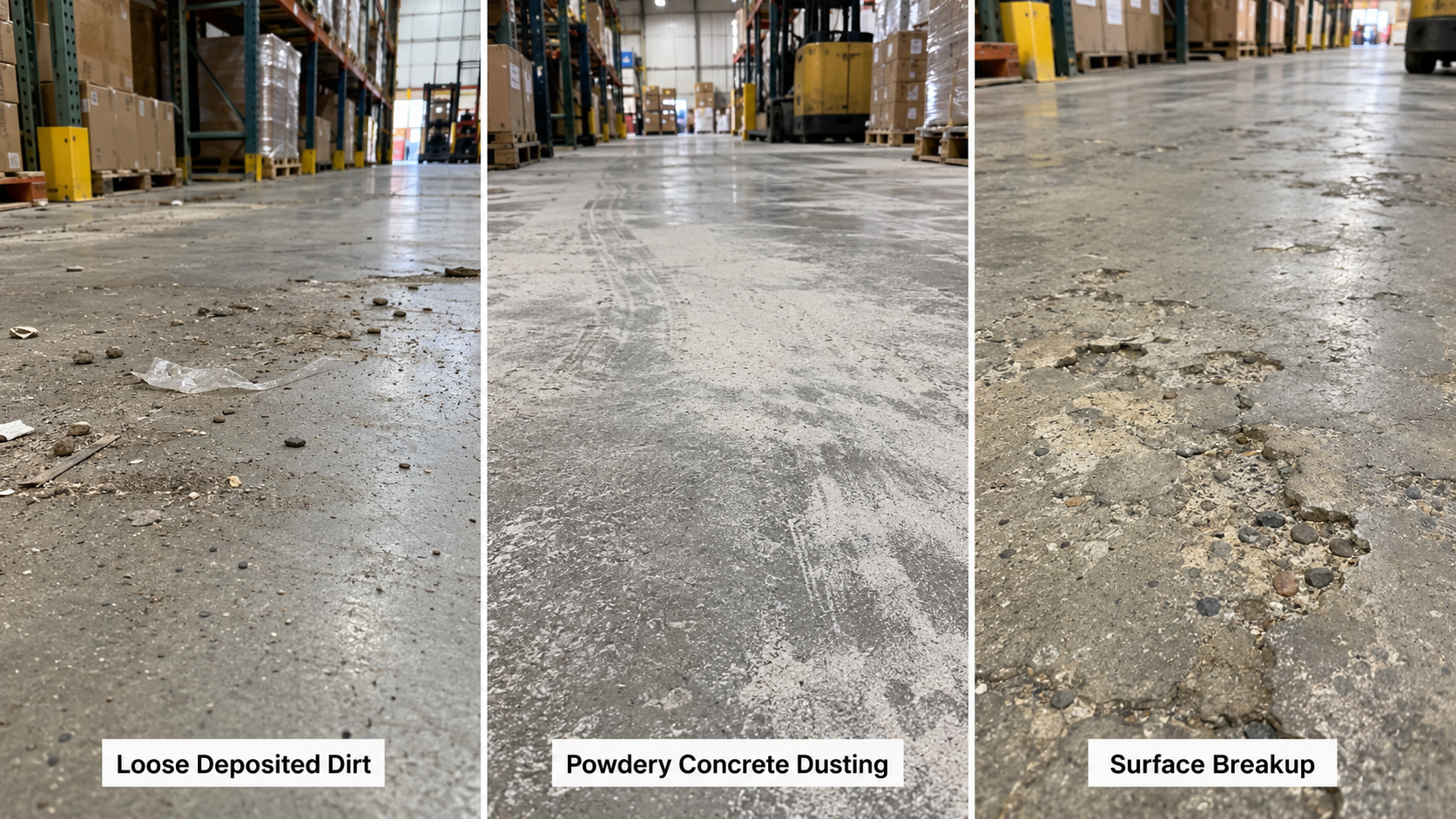
If possible, take one photo before cleaning, another after cleaning and another after normal traffic has returned to the area.
That can help us see whether we are dealing with loose dirt, concrete dusting or actual surface breakup.
Tired of Cleaning the Same Dust Over and Over?
If the same gray powder keeps returning after your warehouse floor is cleaned, do not assume your maintenance team is doing something wrong.
The concrete may be telling you there is a problem.
The sooner you know whether you are dealing with normal warehouse dirt, weak surface concrete or actual slab deterioration, the easier it is to decide what to do next.
At Warehouse Floor Repairs, we help facility managers throughout New Jersey and Eastern Pennsylvania diagnose and repair damaged warehouse and industrial concrete floors.
If you are dealing with recurring warehouse concrete floor dusting, contact us for an assessment.
Send us your facility location, approximate affected area, photos if available, and whether the dust returns after cleaning.
We will help you determine whether the floor simply needs better housekeeping or whether the concrete surface itself needs attention.