
IN THIS ARTICLE
What a Hollow-Sounding Warehouse concrete floor means and how to fix it
You tap or drive over one section of your warehouse floor and something sounds different.
Instead of the solid response you expect from concrete, you hear a noticeably hollow sound.
That can be concerning, especially when the area sits in a busy forklift aisle where you cannot simply close the space indefinitely while you figure out what is happening.
But a hollow-sounding warehouse concrete floor does not automatically mean the slab needs to be lifted.
Sometimes the problem is closer to the surface. A portion of concrete may have separated or deteriorated while the slab below remains supported.
In other situations, there may be a loss of support beneath the slab.
Those are very different repair problems.
At Warehouse Floor Repairs, we work with warehouse and industrial facilities throughout New Jersey and Eastern Pennsylvania, and the first goal with a symptom like this is to understand where the problem actually is before choosing a repair method.
A patch will not correct missing support underneath a slab.
And slab leveling would be the wrong place to start if the problem is limited to a deteriorated surface layer.
Here is what facility managers should look at before deciding what comes next.
What Can a Hollow Sound Tell You — and What Can It Not Tell You?
A hollow sound is useful because it tells you that one part of the floor may be behaving differently from the surrounding concrete.
What it does not tell you on its own is why.
That distinction is important.
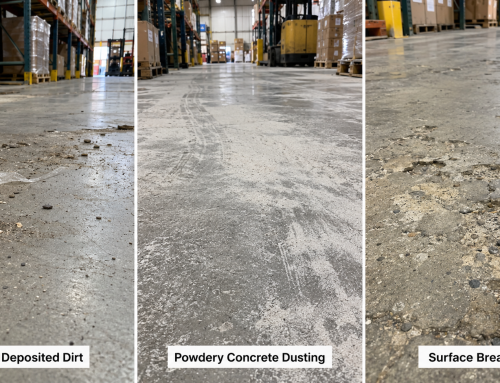
One possible explanation is surface separation or delamination.
In simple terms, part of the upper concrete surface may no longer be fully bonded to the sound concrete underneath it.
The affected area might still look reasonably normal from above. But when tapped or trafficked, it can produce a different sound from the solid surrounding floor.
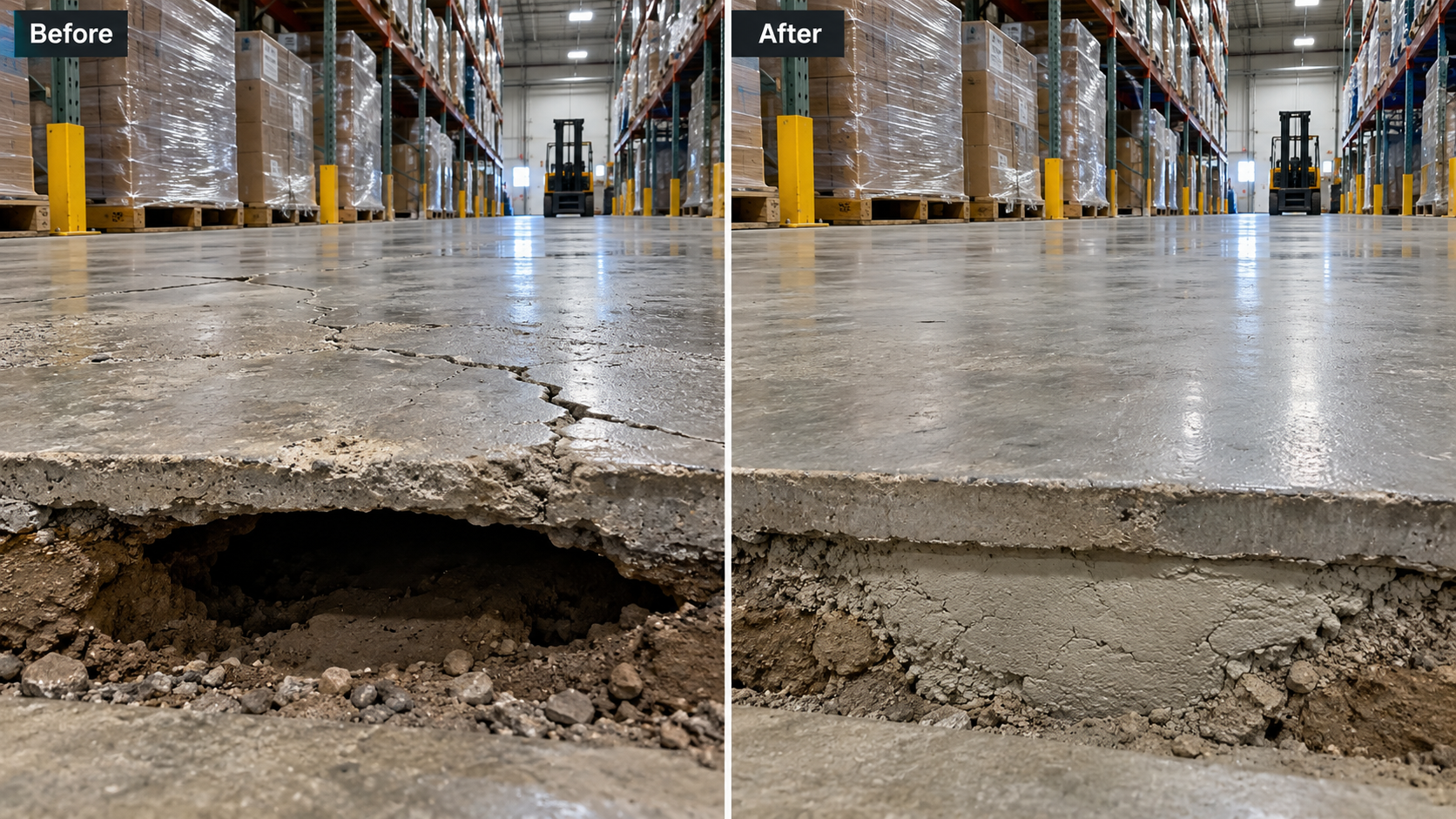
Another possibility is a loss of support below the slab itself.
If a void or poorly supported area exists underneath the concrete, the entire slab section may respond differently when loads pass over it.
Those two conditions can sound similar to someone walking the floor.
But the repair discussion is very different.
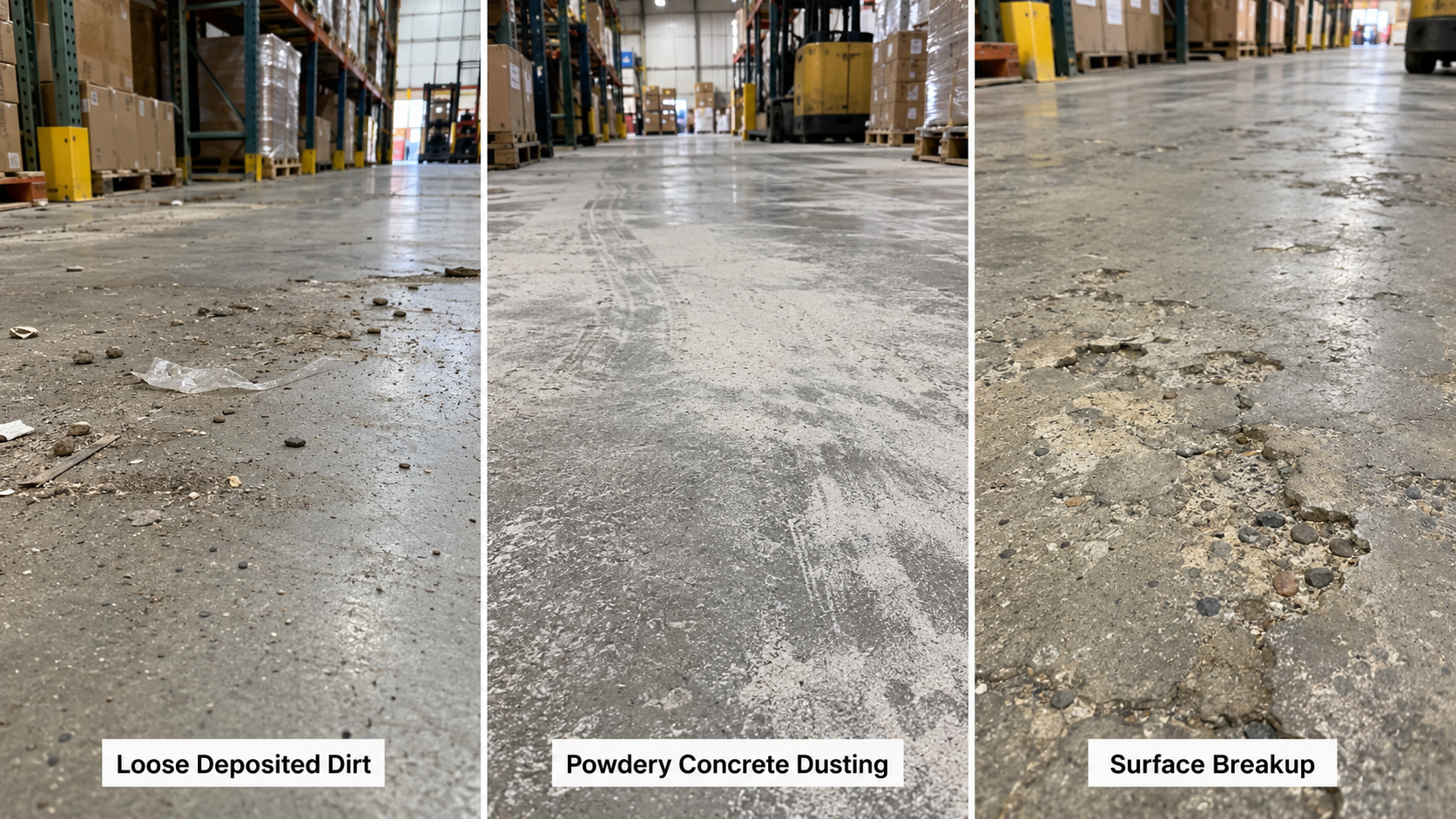
Signs that may point toward surface deterioration
You may also notice:
- Flaking or chipping
- Shallow cracking
- Loose surface concrete
- Small spalled areas
- Previous patches beginning to fail
- A surface that breaks apart around the hollow-sounding location
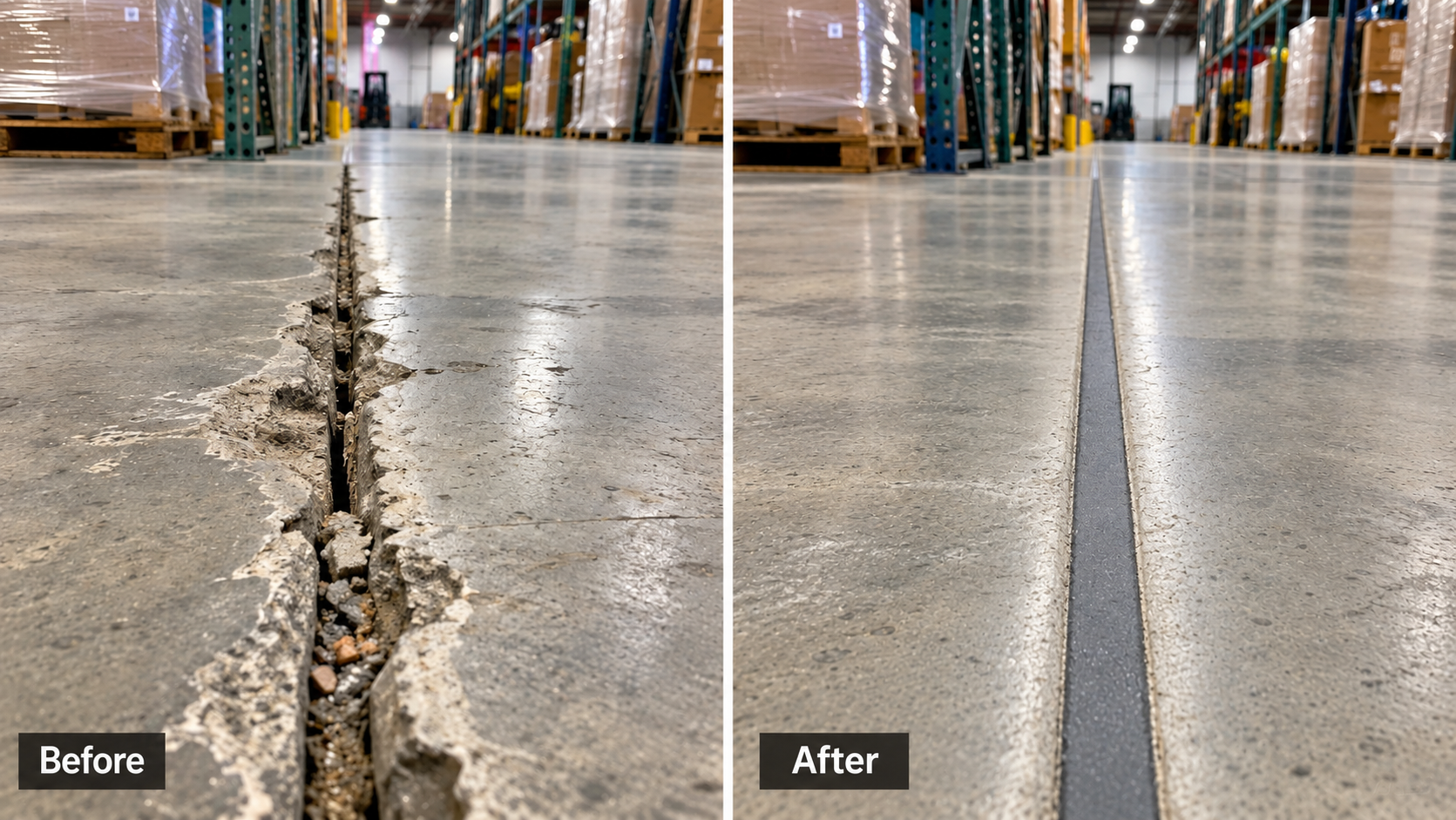
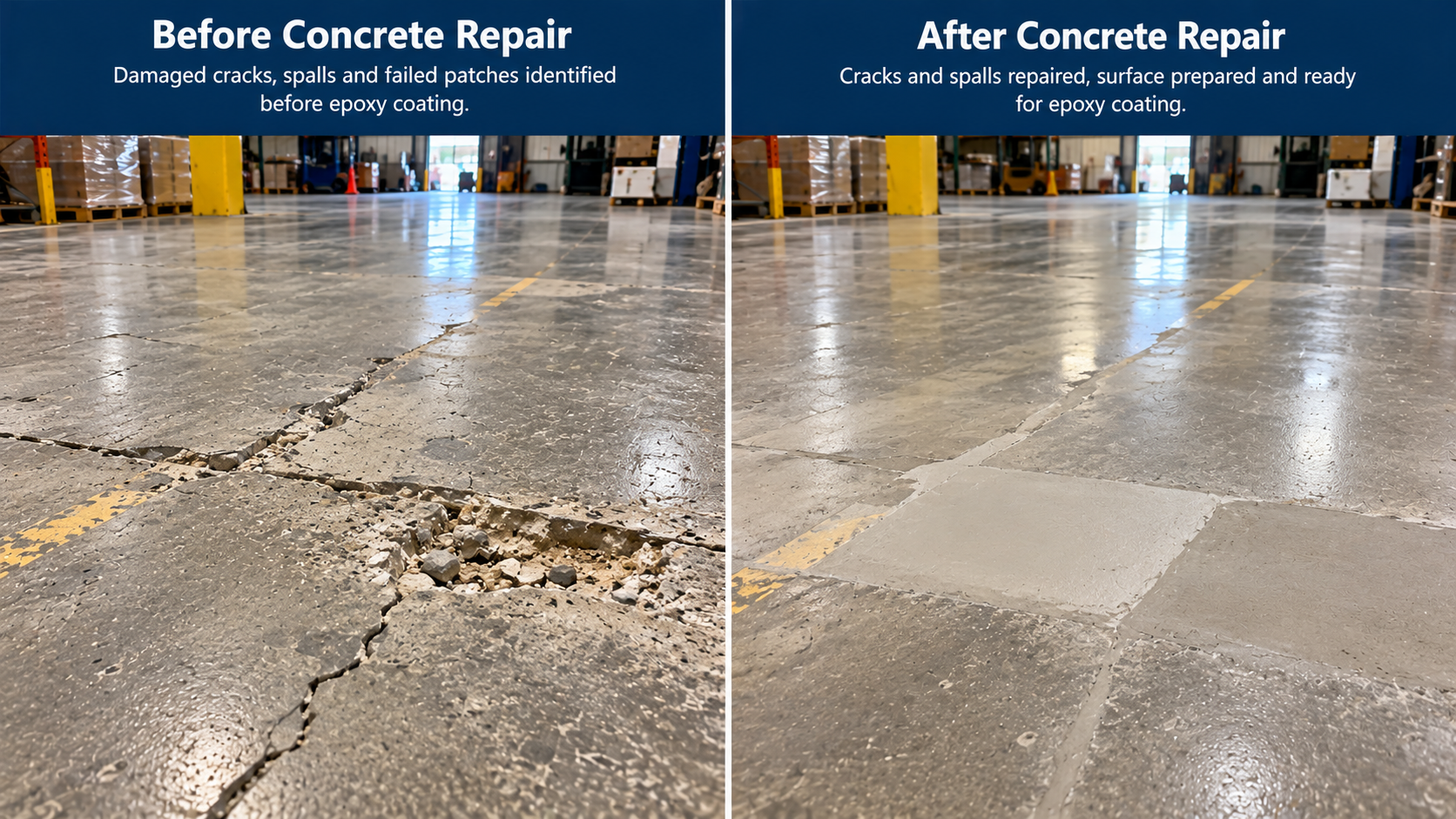
When deterioration is confirmed near the surface, concrete spalling repair may be part of the repair discussion.
Signs that deserve a closer look below the slab
The concern changes if the area also shows:
- A dip in the floor
- A noticeable elevation difference
- Cracks associated with settlement
- Movement under forklift traffic
- A rough transition into an adjacent slab
- Continued settlement after previous surface repairs
Those conditions may point toward a support or settlement problem that needs to be investigated separately.
The main takeaway for a facility manager is straightforward:
A hollow sound is a reason to investigate. It is not a diagnosis by itself.
Surface Separation or Loss of Support: Why the Difference Matters
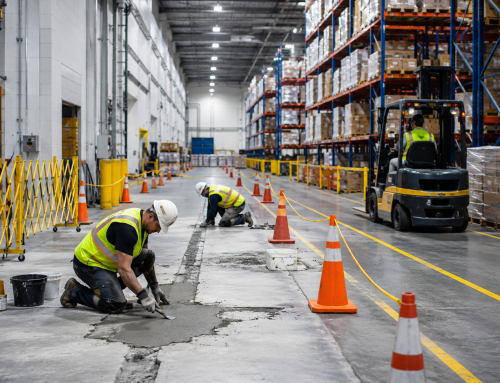
Imagine a facility manager checking a suspicious section of a main aisle in a New Jersey warehouse.
Forklifts cross the area throughout the day.
There is a hollow response when part of the slab is tapped, but the warehouse still needs to operate normally while the problem is evaluated.
The worst thing to do is choose a repair method based only on the sound.
Instead, the affected area needs to be compared with the surrounding floor.
We want to know questions such as:
- How large is the hollow-sounding area?
- Is the surface visibly deteriorated?
- Are there cracks nearby?
- Has the area been patched before?
- Is the floor at the same elevation as the surrounding slab?
- Does it move when loaded equipment crosses it?
- Is the condition spreading?
These observations help separate a surface-level defect from something happening underneath the slab.
When the problem is near the surface
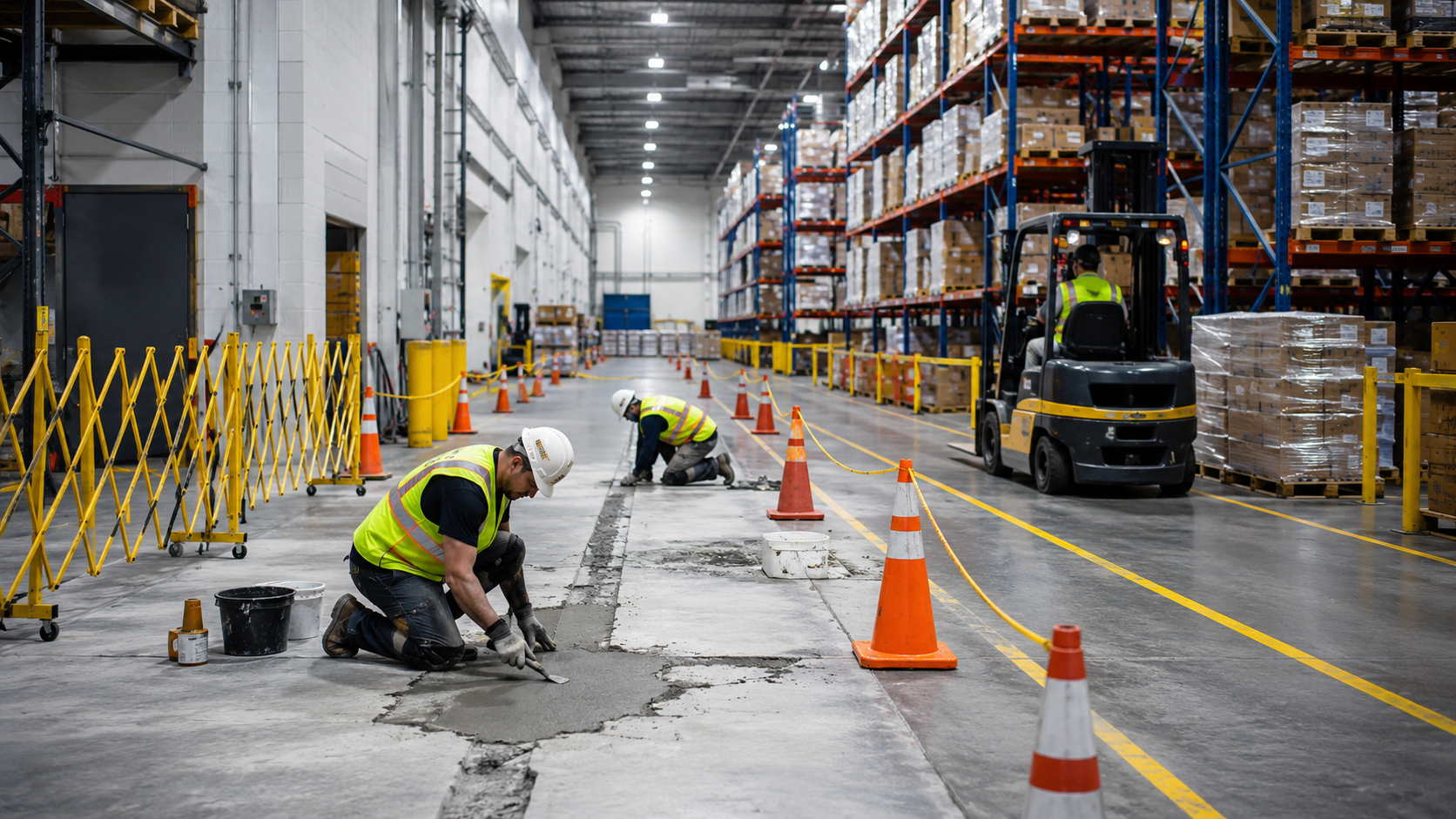
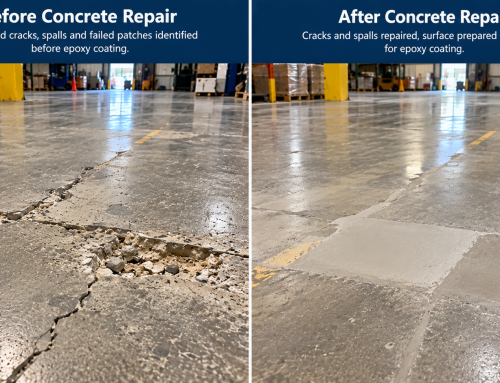
If investigation shows that the issue is limited to a separated or deteriorated layer of concrete, the weak material may need to be removed and the damaged surface repaired back to sound concrete.
In this situation, the slab underneath may still be properly supported.
Lifting the slab would not address the actual defect.
When support beneath the slab is questionable
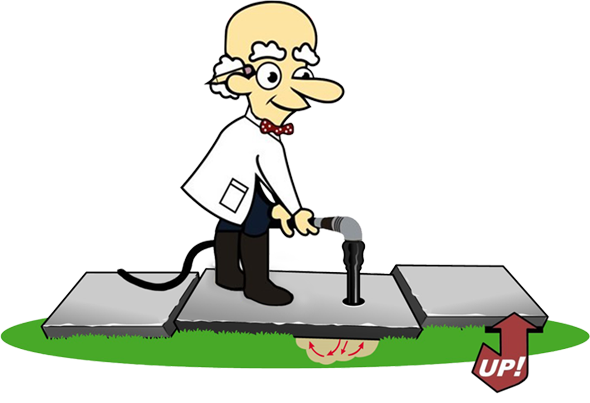
If the concrete is settling, uneven or lacking support underneath, the conversation changes.
Our concrete floor leveling service addresses warehouse slab settlement and uneven floor conditions where support and elevation need to be evaluated.
Warehouse Floor Repairs currently lists concrete floor leveling alongside crack, spalling, joint and warehouse concrete repair services for NJ and Eastern Pennsylvania facilities.
The important thing is sequencing.
First understand the defect. Then choose the repair.
That sounds obvious, but it can prevent a facility from repeatedly patching a symptom while the underlying problem continues.
How the Findings Change the Repair Discussion
Once the depth and extent of the problem are better understood, there are several possible directions.
Surface repair
If the issue is confined to deteriorated concrete near the top of the slab, the repair may focus on removing unsound material, properly preparing the area and restoring the damaged surface.
This is especially relevant where you can see spalling, flaking or an older patch separating from the surrounding concrete.
Slab support or leveling work
If the investigation shows settlement or a loss of support beneath the slab, surface patching alone is unlikely to solve the problem.
The affected section may need support-related work or leveling based on the actual floor condition.
A warehouse slab can sometimes look reasonably intact from above while still having an underlying support problem. That is why visible appearance alone is not enough.
A combination of repairs
Sometimes the floor has both problems.
For example, a slab may have lost support and then developed edge damage or spalling as forklift traffic repeatedly crossed the unstable area.
In that situation, the scope may need to address the support problem and repair the damaged concrete surface.
Further investigation
There are also situations where the cause is not obvious during an initial visual assessment.
That is when further specialist investigation may be appropriate before committing to a repair method.
This is preferable to assuming that every hollow area needs the same solution.
If you want a broader look at how different warehouse concrete problems lead to different repair approaches, see our guide to choosing the best repair method for warehouse concrete floors.
That broader guide makes the same practical point: repair selection should follow the actual failure condition rather than a one-size-fits-all method.
What Information Helps Us Evaluate a Hollow-Sounding Area?
You do not need to diagnose the problem before contacting a concrete repair contractor.
But a few details can make the first conversation much more useful.
Start by showing us where the problem is located within the warehouse.
For example:
- Main forklift aisle
- Loading area
- Staging zone
- Near a floor joint
- Under or beside pallet racking
- Production area
- Cold-storage section
Then estimate the size of the affected area.
You do not need exact measurements.
“About 10 feet along one aisle” or “a section roughly the size of a pallet position” already gives us useful context.
Also tell us whether the problem has changed.
Has the hollow-sounding area stayed the same for years?
Has it recently become larger?
Is the floor now cracking or breaking up?
Do forklift operators feel a dip or movement when crossing it?
Information worth collecting
Before arranging an evaluation, note:
- Facility location
- Approximate affected area
- Photos of the floor
- Nearby cracks or joints
- Whether the surface is flaking or spalling
- Whether the floor is visibly uneven
- Whether forklifts feel movement in the area
- Previous repairs or patches
- How long you have noticed the problem
- Whether the condition appears to be spreading
- How much traffic crosses the area each day
Previous repair history is particularly useful.
If the same location has already been patched several times and keeps failing, that tells us something different from a newly discovered surface defect.
How Warehouse Floor Repairs Can Help
At Warehouse Floor Repairs, we repair warehouse and industrial concrete floors throughout New Jersey and Eastern Pennsylvania.
If you are concerned about a hollow-sounding area, our goal is not to decide on a patch or floor-leveling method before understanding the condition.
We first want to determine whether the problem appears to involve:
- Surface deterioration
- Spalling or delamination
- A failed previous repair
- Settlement
- Loss of support beneath the slab
- Or a combination of conditions
That distinction determines the next conversation.
Warehouse Floor Repairs provides services covering warehouse concrete repair, spalling repair and concrete floor leveling, so the appropriate scope can be based on what the floor actually needs rather than automatically treating every symptom the same way.
For a facility manager, the goal is simple.
You want that aisle or work area back to a solid, usable condition without spending money on a repair that addresses the wrong problem.
That starts with diagnosis.
If the issue is at the surface, deal with the surface.
If the slab has lost support, investigate the support problem.
And if both conditions are present, make sure the repair plan clearly addresses each one.
Concerned about a hollow-sounding area in your warehouse?
Contact Warehouse Floor Repairs or call (908) 369-3110 to discuss an evaluation for your New Jersey or Eastern Pennsylvania facility.
Tell us where the affected area is located, approximately how large it is, whether the surface is breaking up and whether you have noticed any movement or settlement.
We can help you determine what the floor needs before you commit to a repair method.