
IN THIS ARTICLE
Common Issues with Foam Jacking You Should Know Before Paying That Contractor
Your residential or warehouse concrete floor started sinking six months ago. You called a contractor, they pumped foam under the slab, and everything looked fine. Now the floor is uneven again, or a forklift operator flagged a trip hazard near the loading dock, and you’re looking at doing the whole thing over. Sound familiar?
This is the story we hear all the time. Foam jacking gets sold as the smart, fast solution. But for residential buildings, warehouses, industrial facilities, and high-traffic concrete floors, it often creates more problems than it solves. In this article, we’ll walk you through exactly why that happens and why grout jacking is the more reliable choice for your facility.
What Is Foam Jacking and Why Is It Popular?
Before we get into the problems, let’s make sure we’re on the same page about what foam jacking actually is.
How Foam Jacking (Polyurethane Lifting) Works
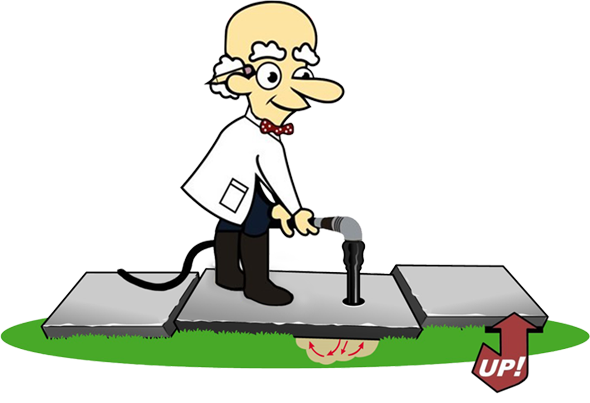
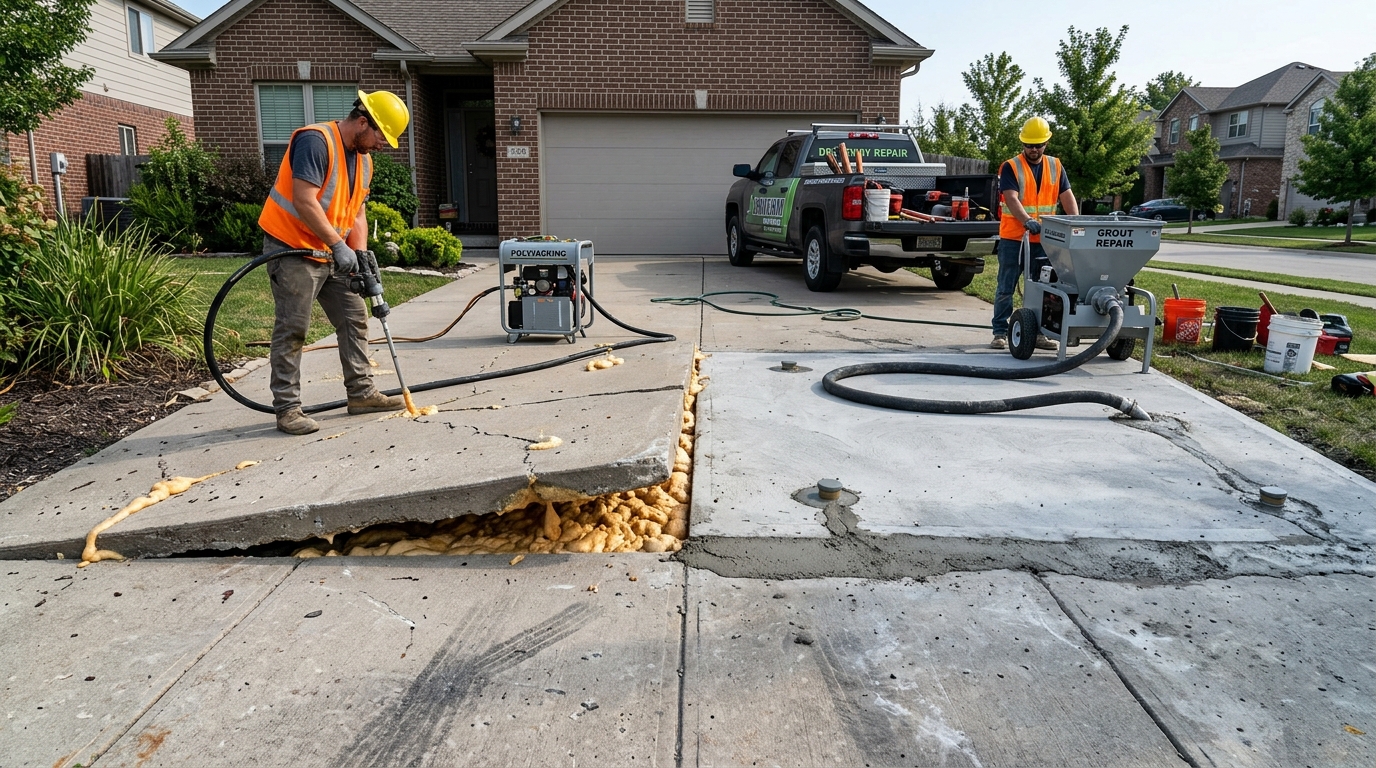
Foam jacking, also called polyurethane lifting or polyjacking, involves drilling small holes into a sunken concrete slab and injecting an expanding polyurethane foam underneath it. As the foam expands, it fills the void beneath the slab and pushes the concrete back up. The holes are then patched, and the surface looks repaired.
The process is straightforward, and that’s part of why it caught on.
Why Contractors Promote It as a “Quick Fix”
Foam jacking is fast. A crew can complete a job in a few hours, the foam cures quickly, and the area is back in use almost immediately. For contractors, it’s an easy sell. For facility managers under pressure to minimize downtime, it sounds perfect.
It’s also relatively inexpensive upfront. Shorter job time means lower labor costs, and that initial quote looks attractive compared to alternatives.
Common Applications in Warehouses, Sidewalks, and Loading Docks
You’ll see foam jacking used across a wide range of settings. Municipalities use it on sidewalks and driveways. Commercial property managers use it on parking lots. In industrial settings, it gets applied under warehouse floors, loading docks, and aprons around truck bays.
It’s used in a lot of places, but that doesn’t mean it performs equally well in all of them.
The Appeal: Fast Curing and Minimal Downtime
The curing time for polyurethane foam is measured in minutes, not days. That appeals to anyone running a busy operation. You’re not shutting down a loading dock for a week. You’re back to work the same afternoon.
That speed is real. The problem is what happens over the following months.
The Most Common Problems with Foam Jacking
Lightweight Material Struggles Under Heavy Industrial Loads
Polyurethane foam is, by nature, a lightweight material. That works fine under a residential driveway or a garden path. It does not hold up the same way under industrial loads.
In a warehouse, you’re dealing with forklifts that can weigh 9,000 pounds or more when loaded. Add the weight of pallet racks, stored inventory, and regular truck traffic at the dock, and the pressure on your floor is significant. Foam simply wasn’t designed to support that kind of sustained, concentrated weight. Over time, it compresses. When it compresses, the slab sinks again.
Voids and Uneven Lifting Over Time
When foam is injected, it expands rapidly and unpredictably. The goal is to lift the slab evenly, but the foam doesn’t always go where you want it to go. It follows the path of least resistance. This means some areas get more foam than others, and the lift can be uneven from the start.
As the foam breaks down or shifts, you can end up with new voids forming beneath the slab. That’s the opposite of what you paid for.
Difficult to Control During Injection (Over-Expansion Issues)
Once the foam starts expanding, it’s hard to stop it precisely. Crews are working with small drill holes and can’t see exactly what’s happening underneath. Over-expansion is a real risk. Too much foam in one spot can lift a slab too high, crack it, or cause adjacent sections to heave.
Correcting an over-expansion mistake is not simple. You can’t just pull the foam back out.
Not Environmentally Friendly (Chemical-Based Material Concerns)
Polyurethane foam is a petroleum-derived, chemical-based product. Once it’s in the ground, it stays there. It doesn’t break down in any meaningful timeframe. Depending on the specific formulation, there are concerns about chemical leaching into the surrounding soil and groundwater.
For facilities with environmental compliance requirements or for companies with sustainability commitments, this is worth taking seriously.
Shorter Lifespan Compared to Traditional Methods
Here’s the number that matters most: foam jacking repairs tend to last between 2 and 5 years in demanding environments. Some fail sooner. For comparison, a properly executed grout jacking repair can last decades.
When you factor in the cost of repeat repairs, the math on foam jacking stops looking so attractive.
Why Foam Jacking Often Fails in Warehouses and Industrial Floors
Heavy Forklift Traffic and Point Load Pressure
A loaded forklift doesn’t distribute its weight the way a car does. The load is concentrated. When a forklift stops, turns, or sits in place, it puts intense pressure on a small area of the floor. Foam beneath that point compresses. Do that hundreds of times a day, over months, and the repair degrades.
This is one of the most common failure patterns we see in New Jersey and Eastern Pennsylvania warehouse facilities. The foam holds up for a season, then the floor starts moving again.
Constant Vibration Loosening the Foam Structure
Industrial environments are not still. Equipment runs, trucks pull in and out, conveyors run all day. That constant vibration works against foam jacking repairs. Foam doesn’t bond rigidly to the underside of the slab or to the sub-base. Over time, vibration loosens the contact points, and gaps can develop.
Temperature Fluctuations in Large Facilities
Large warehouses and distribution centers experience significant temperature swings. An unheated facility in January in New Jersey can see temperatures well below freezing. In summer, a metal-roofed warehouse can get extremely hot. Polyurethane foam expands and contracts with temperature changes. Repeated thermal cycling causes it to degrade and lose its structural integrity faster than it would in a stable environment.
Moisture Intrusion and Sub-Base Instability
If the reason your floor sank in the first place was poor drainage, a compromised sub-base, or moisture movement under the slab, foam jacking doesn’t fix any of that. It fills the void that resulted from those conditions, but the underlying cause is still there. Water continues to move. The sub-base continues to shift. And the foam, which doesn’t bond or compact the way grout does, can’t hold its position as the ground moves beneath it.
This is a particularly relevant issue in the region. The clay-heavy soils common in parts of New Jersey and Eastern Pennsylvania are prone to movement with moisture changes. A repair method that doesn’t account for that will keep failing.
Real-World Performance Issues in High-Traffic Environments
We’ve seen foam jacking repairs on loading dock aprons that lasted less than a year before sinking again. We’ve seen warehouse floors re-level with foam that were back to calling for repairs within two years. In lower-traffic, lower-load environments, foam can perform acceptably. But in an industrial setting, the performance gap between foam and grout becomes very clear, very fast.
Why Grout Jacking Is a Longer-Lasting, More Reliable Solution
Natural, Dense Material That Supports Heavy Loads
Grout jacking uses a cement-based slurry, a dense, natural material that becomes a permanent structural component beneath your slab once it cures. It doesn’t compress the way foam does. It doesn’t degrade under repeated loading. It’s engineered to support weight because it cures into something that is, essentially, concrete.
For forklifts, pallet racks, truck traffic, and the general demands of an industrial floor, that matters enormously.
Better Compaction and Void Filling
The grout slurry flows under pressure and fills voids completely before it cures. It also compacts the surrounding sub-base material as it’s injected, which helps address one of the root causes of slab settlement. You’re not just filling a hole. You’re stabilizing the ground the slab sits on.
Foam fills space. Grout fills space and strengthens what’s around it.
More Controlled Lifting Process
Grout jacking allows for a more controlled lift. Because the grout doesn’t expand the way foam does, experienced operators can manage the lifting process with greater precision. You can raise a slab gradually and stop at the right point without the risk of over-expansion.
That control matters when you’re leveling a floor that needs to meet tight tolerances for forklift safety or equipment alignment.
Long-Term Stability with Minimal Rework
Once grout cures, it’s stable. It doesn’t shift with temperature. It doesn’t compress under load cycles. It doesn’t lose contact with the underside of the slab over time. The repair holds, and it holds for a long time. Facilities that invest in grout jacking are not calling us back two years later to do the same floor again.
That’s the difference between a fix and a solution.
Environmentally Friendly and Non-Chemical Solution
Grout is made from cement, water, and naturally occurring materials. There are no chemical additives that leach into soil. There’s no petroleum-derived content. When the job is done, what’s under your floor is essentially concrete. It’s a clean, inert material that poses no environmental concerns.
For facilities operating under environmental permits or pursuing green certifications, that’s a meaningful advantage.
Choosing the Right Concrete Lifting Method for Your Facility
When Foam Jacking Might Seem Appealing (But Risky)
We understand the appeal. If you have a small residential stoop or a lightly used sidewalk section, foam jacking might get the job done for a few years at a low cost. In genuinely low-load, low-traffic situations, the risks are lower.
But if you manage a warehouse, a distribution center, a manufacturing floor, or any facility with heavy equipment or regular truck traffic, foam is a gamble. You may save money today and spend more money sooner than you expect.
When Grout Jacking Is the Smarter Investment
Grout jacking makes sense wherever long-term performance matters. That includes warehouse floors, loading docks, truck courts, industrial aprons, and any concrete that lives under real stress. It’s also the right call when the sub-base has been compromised by moisture or erosion, because grout addresses that problem directly rather than papering over it.
If you want the repair to last, grout is the answer.
Cost vs. Long-Term Value Comparison
Foam jacking typically costs less upfront. Grout jacking costs more initially but lasts significantly longer. When you factor in the cost of repeat foam repairs, the disruption of repeated work, and the safety risks of a floor that keeps failing, grout jacking delivers better value over the life of the repair.
Think of it this way. Paying once for something that lasts 20 years is cheaper than paying three times for something that lasts 5.
Signs Your Floor Needs Professional Evaluation
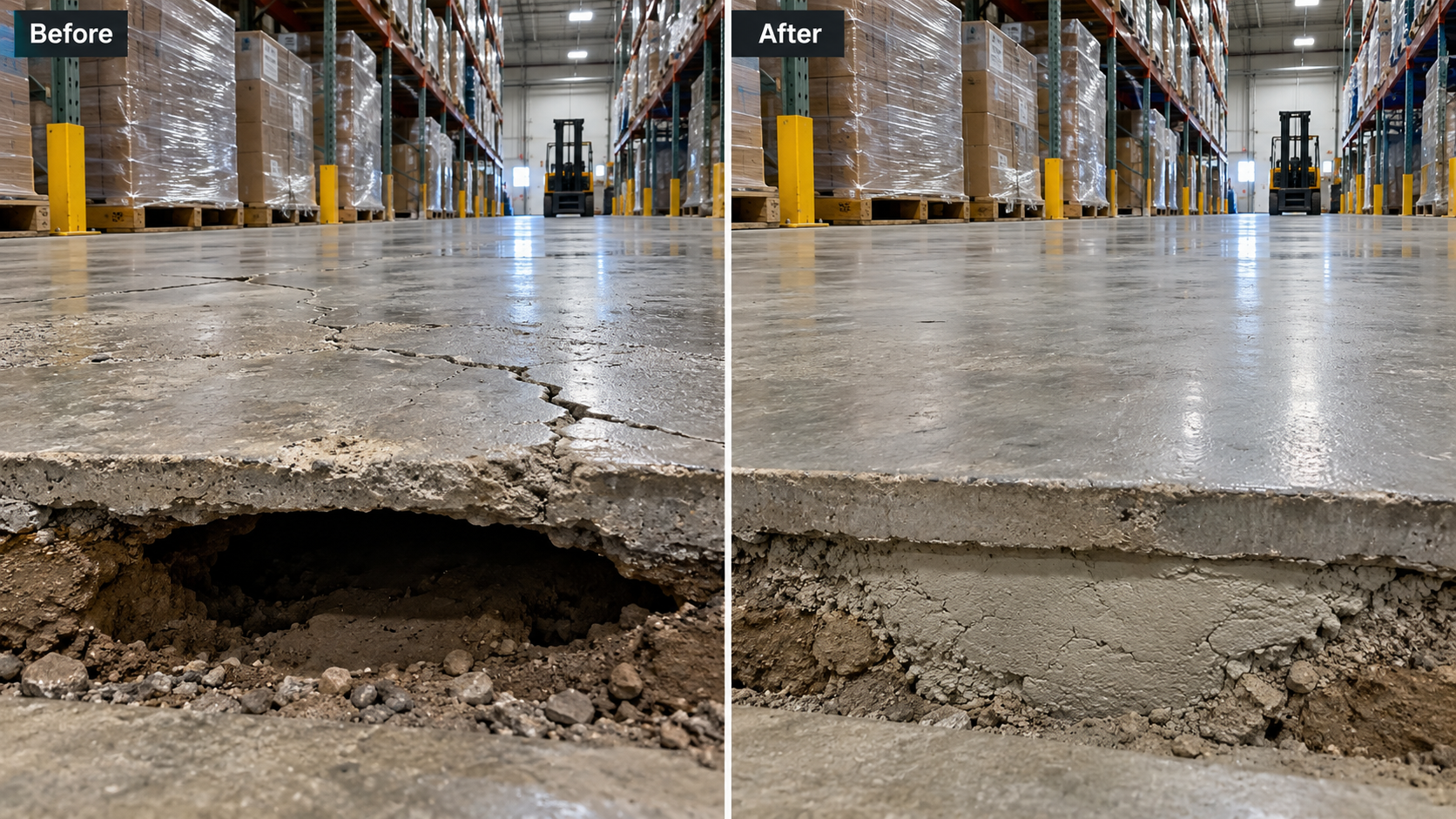
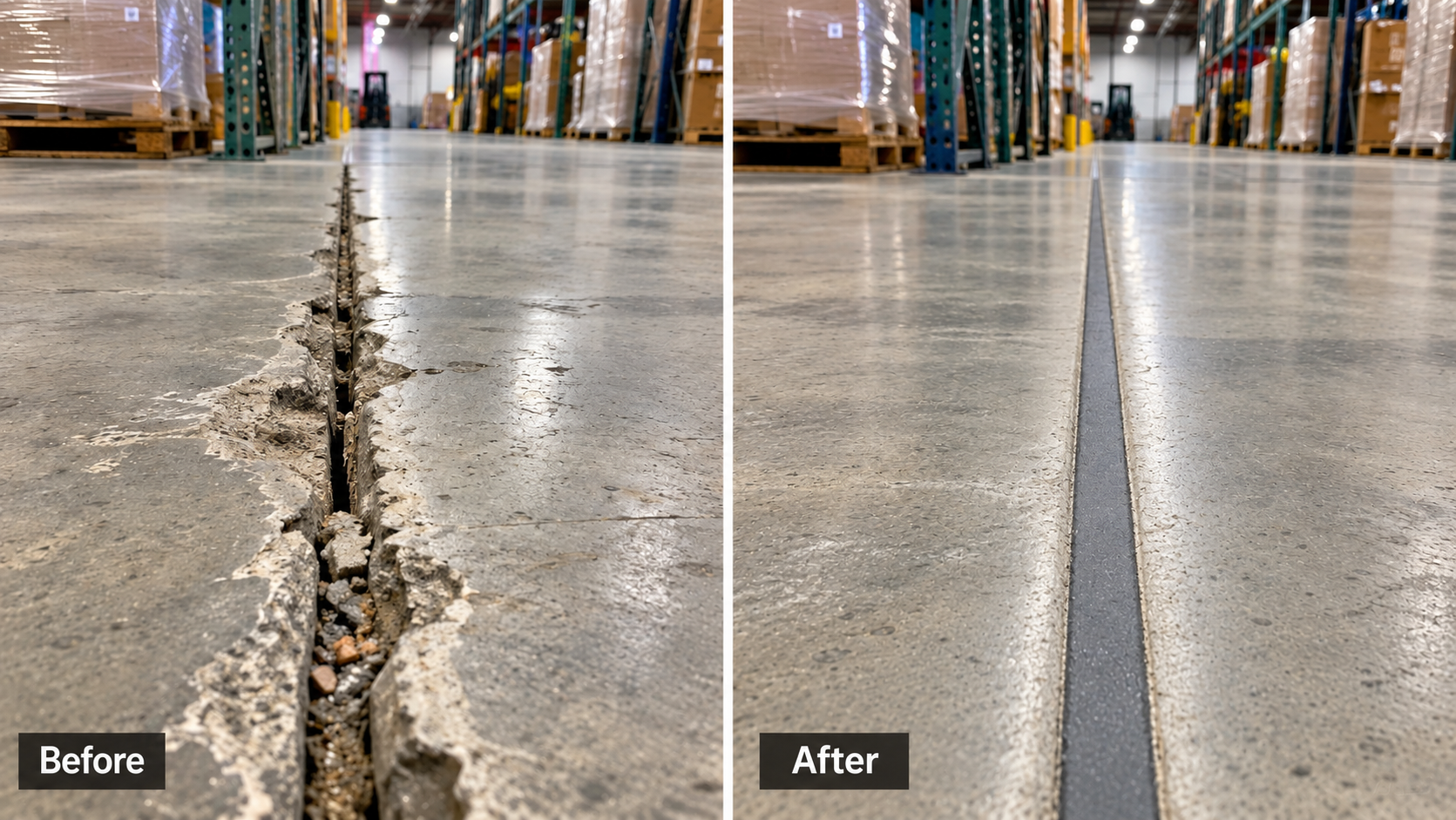
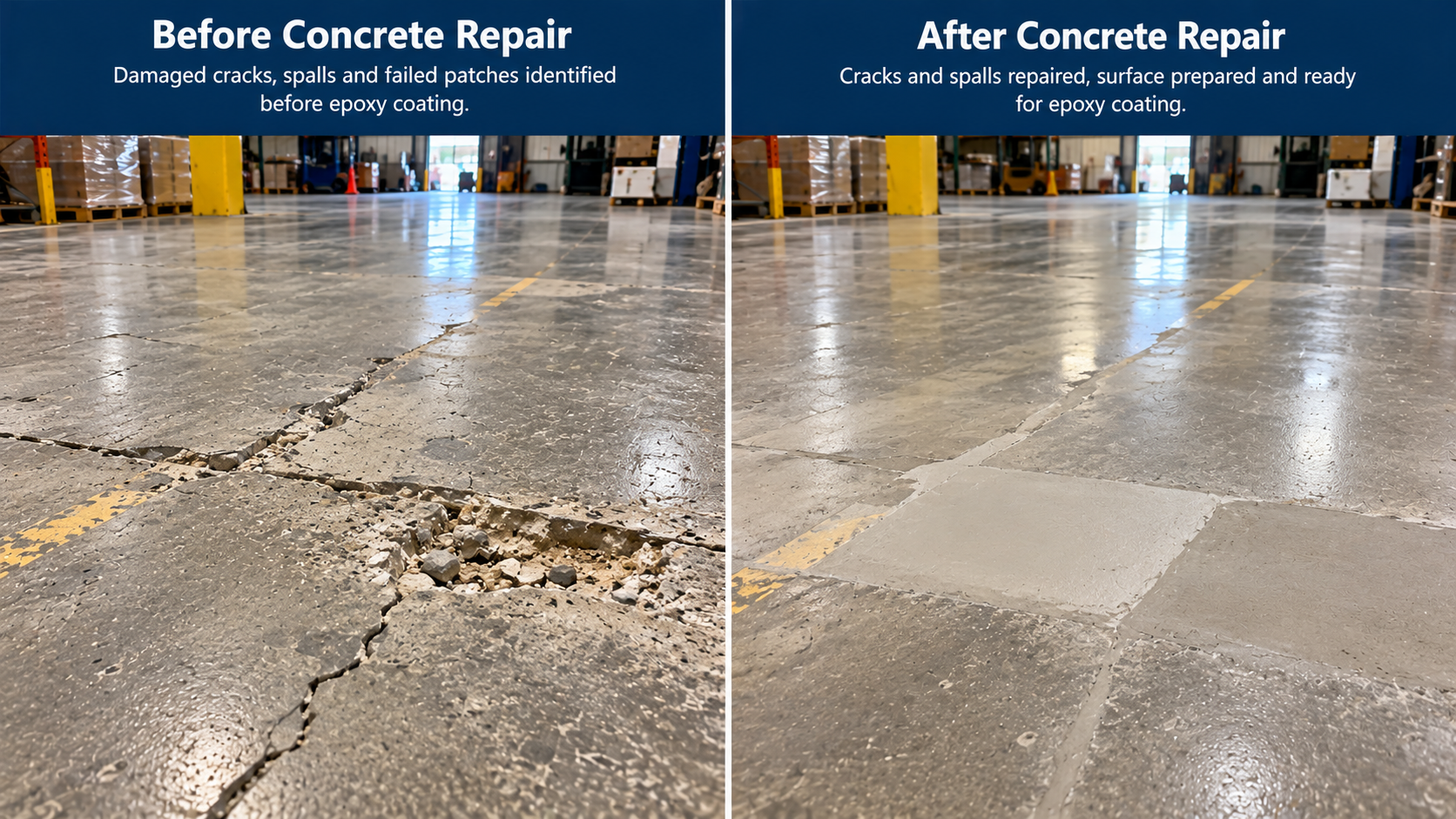
There are some clear signals that your floor needs attention. Visible cracks or gaps between slabs are an obvious one. Uneven surfaces that create trip hazards or affect forklift stability are another. Water pooling near slab edges, doors that no longer close properly, and racking that’s gone out of level can all point to slab settlement beneath the surface.
If you’re seeing any of these, it’s worth getting a professional assessment before the problem gets worse.
Why Working with an Experienced Grout Specialist Matters
Concrete lifting isn’t a commodity service. The outcome depends heavily on the experience of the crew, the quality of the materials, and the accuracy of the lift. Working with a specialist who understands industrial floors, knows the soil conditions in your region, and has a track record with facilities like yours makes a real difference.
We’ve worked with warehouses and industrial facilities across New Jersey and Eastern Pennsylvania. We know what these floors go through, and we know how to fix them in a way that holds. If your concrete floor is giving you problems, we’re happy to take a look and give you an honest assessment of what it needs.