
IN THIS ARTICLE
Learn About the Best Repair Method for Warehouse Concrete Floors for Warehouse Facility owners in New Jersey and Eastern Pennsylvania
If you manage or operate a warehouse in New Jersey or Eastern Pennsylvania, your concrete floor is one of the most critical yet overlooked assets in your facility. Every day, it carries dynamic loads from forklifts, pallet jacks, and stored inventory, all while being expected to remain flat, stable, and safe.
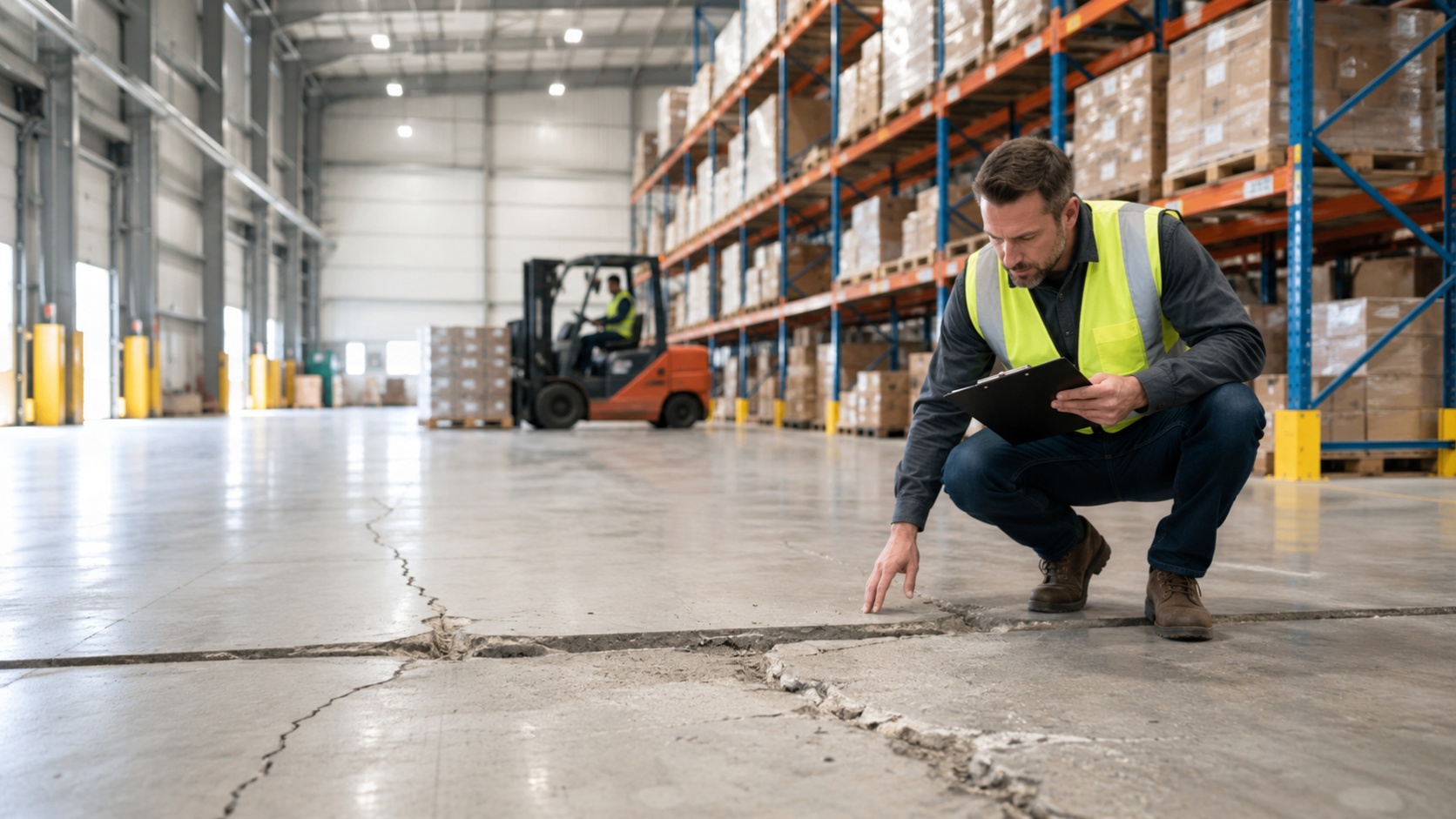
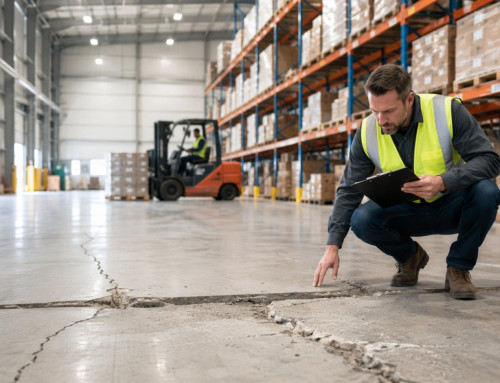
When problems begin to show—uneven slabs, joint deterioration, cracks, or subtle dips in high-traffic areas—it’s rarely just a surface issue. These symptoms often point to deeper structural concerns beneath the slab. And at that point, many facility managers start asking the same question:
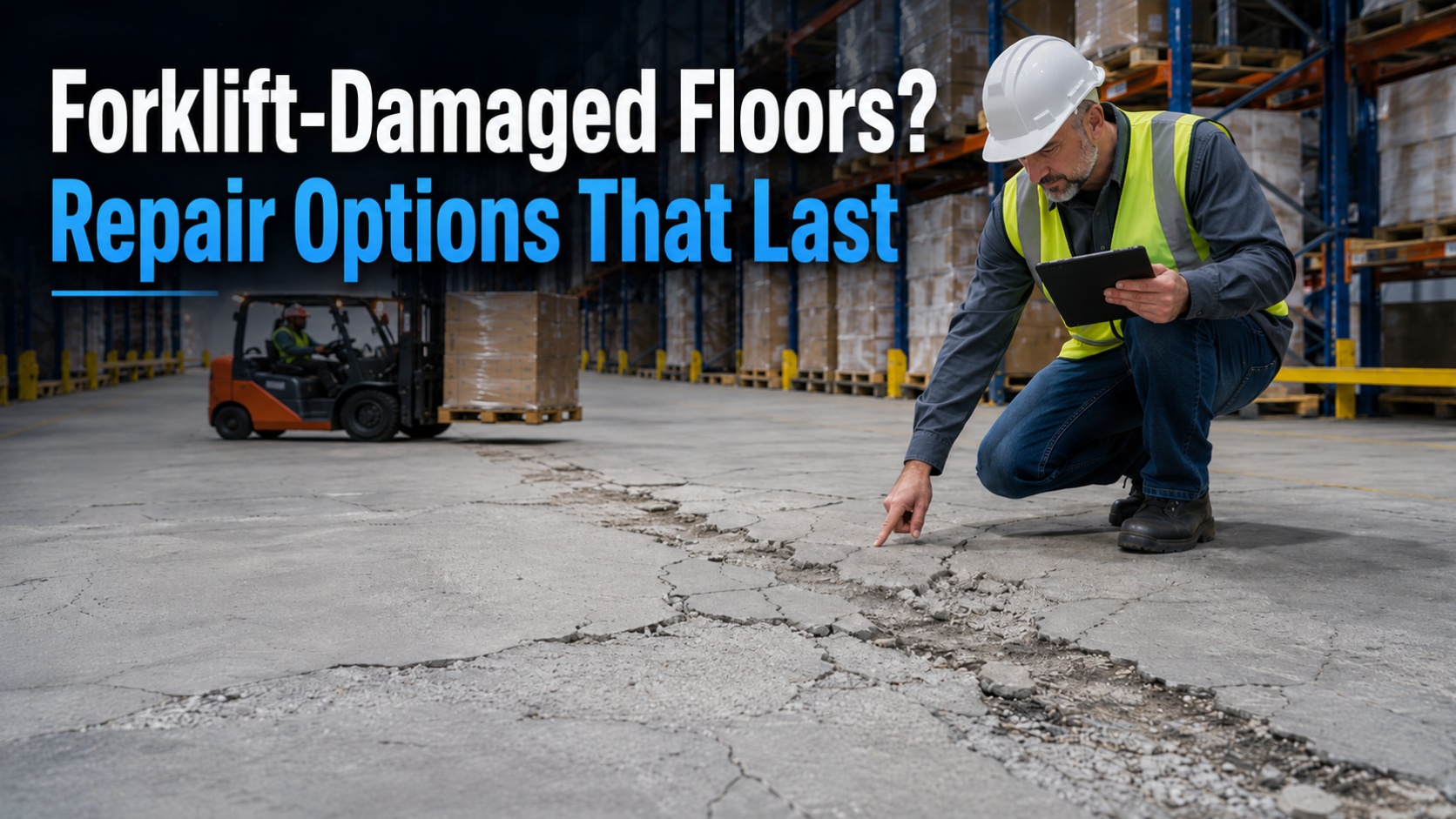
What Is the Best Repair Method for Warehouse Concrete Floors?
The answer is not as straightforward as many online sources suggest. A lot of general advice comes from residential or light-commercial contexts, where access is open, and loads are relatively low. Warehouses are different. You’re dealing with constant traffic, concentrated wheel loads, and operational constraints that limit how repairs can even be carried out.
In reality, the “best” method is not defined by popularity or speed. It is defined by how well it addresses the root cause of the problem while fitting within the operational realities of your facility. In many cases, the issue is not that the entire slab has failed, but that specific areas—especially along joints and forklift travel paths—have lost support underneath.
This distinction is important. It shifts the focus away from large-scale, disruptive solutions and toward targeted, controlled repair approaches that stabilize the floor where it matters most.
In the sections that follow, we’ll break down what actually causes warehouse floors to fail, how different repair methods compare in real-world conditions, and why a more precise stabilization approach is often the most practical solution in active facilities.
Why Warehouse Floors Fail (Understanding the Root Cause)
Before choosing any repair method, it’s essential to understand why warehouse floors fail in the first place. Without that, it’s easy to apply a solution that addresses the symptom but not the underlying issue—leading to repeated problems over time.
Concrete itself is a durable material, but it is not self-supporting. Its performance depends almost entirely on the condition of the subgrade, which is the soil or base material beneath the slab. When that support becomes inconsistent, the slab begins to behave differently under load.
The Role of Subgrade Support
In a properly constructed warehouse floor, the slab rests on a compacted, stable base that distributes loads evenly. But over time, that support can change due to several factors:
- Soil consolidation under repeated weight
- Poor compaction during the original construction phase
- Moisture infiltration weakening the base material
- Environmental conditions affecting soil density
Once the subgrade is no longer uniform, the slab begins to bridge unsupported areas. These are commonly referred to as voids.
What Happens When Voids Form
Voids don’t always cause immediate failure. In fact, a floor can look relatively normal even when support has already been compromised. The problem becomes visible when the slab is subjected to repeated loading.
In a warehouse setting, this typically involves forklifts traveling along the same paths multiple times per hour. When a forklift passes over an unsupported section:
- The slab flexes slightly under the load
- Stress concentrates at the edges of the void
- Micro-movements begin to occur
Over time, this leads to:
- Cracking along weak نقاط
- Joint separation or spalling
- Gradual settlement of the slab
- Noticeable dips in traffic areas
This process is progressive. The more the slab moves, the worse the void becomes.
Why Warehouse Conditions Accelerate Failure
Warehouses create a unique environment that speeds up this type of deterioration:
- Repetitive loading from forklifts magnifies small weaknesses
- Tight turning نقاط create concentrated stress zones
- Joint crossings introduce impact forces at slab edges
- Continuous operation means the floor rarely gets a break
In regions like New Jersey and Eastern Pennsylvania, additional factors come into play, such as freeze-thaw cycles and moisture movement, which can further destabilize the subgrade over time.
Understanding this failure mechanism is critical. It explains why simply fixing the surface—grinding, patching, or even lifting—does not always solve the problem unless the underlying support is restored.
The Most Common Warehouse Floor Repair Methods (And Their Limitations)
Once a floor begins to show signs of settlement or instability, the next step is choosing how to repair it. Most facility managers researching this topic will come across a similar set of options. However, what is often missing from these comparisons is how each method performs inside an active warehouse environment, not just in theory.
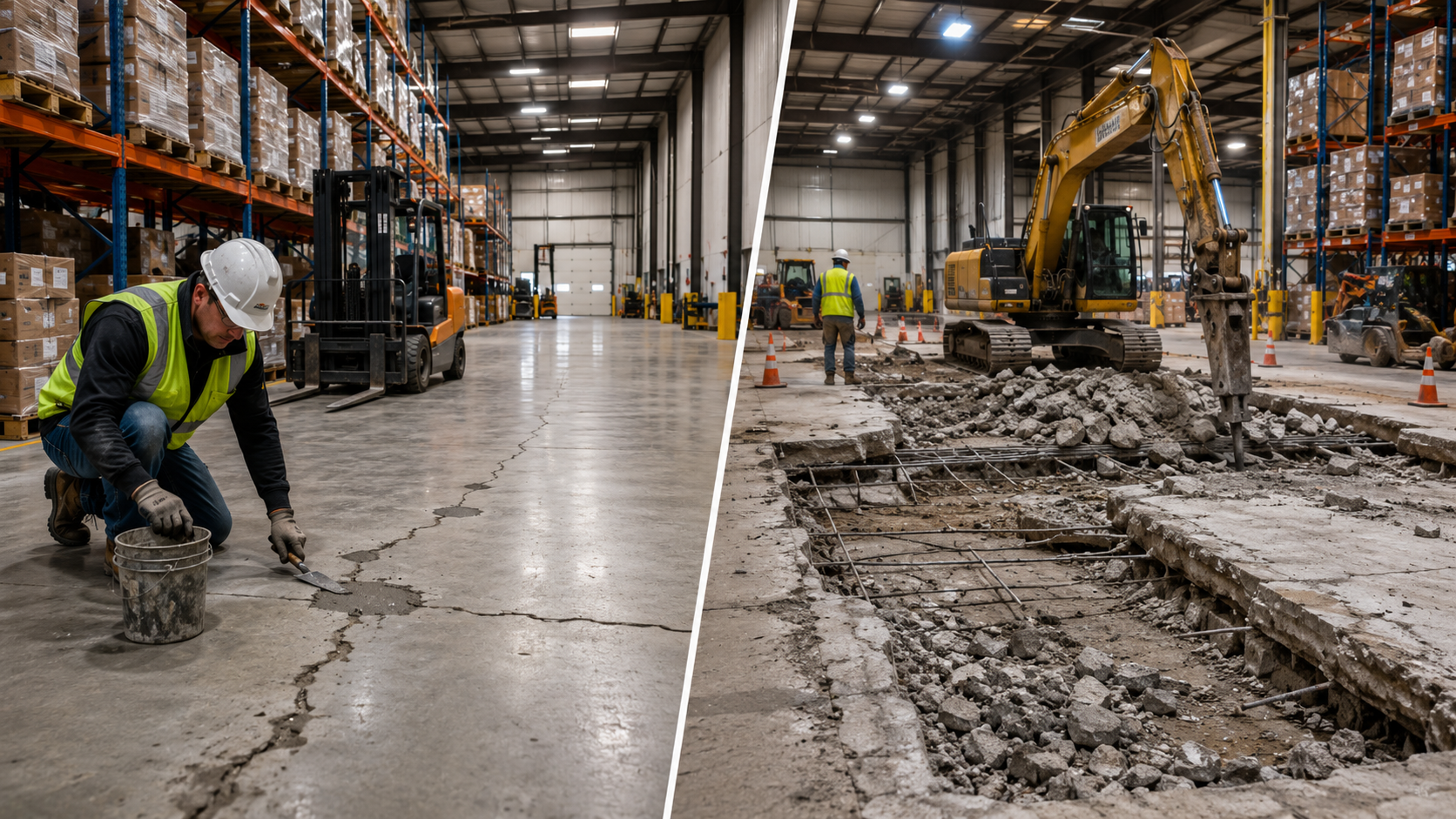
Full Concrete Replacement
Full replacement is the most comprehensive approach. It involves removing the existing slab, addressing the subgrade, and pouring new concrete.
From a structural standpoint, this can solve both surface and underlying issues—if executed correctly. However, in a warehouse setting, the practical challenges are significant.
First, replacement requires extensive downtime. Sections of the facility must be cleared, which may involve moving racking systems, inventory, and equipment. After demolition and re-pouring, the new slab must cure before it can handle heavy loads, which can take days or even weeks depending on conditions.
Second, the cost is typically the highest of all repair options. You’re not just paying for the new slab, but also for demolition, disposal, labor, and operational disruption.
Because of this, full replacement is usually reserved for situations where the slab is structurally beyond repair, not for localized settlement or joint-related issues.
Large-Scale Lifting Approaches
Another category of repair involves lifting the slab by introducing material beneath it. While this concept can work in open environments, warehouses present unique limitations.
Access is a major constraint. In many facilities, large portions of the floor are covered by racking systems or fixed equipment. This makes it difficult to position machinery or drill patterns across wide areas.
There is also the issue of precision. Warehouse floors often do not fail uniformly. Problems tend to be concentrated in specific نقاط—such as joints or forklift travel lanes. Applying a broad lifting approach across a large area can be unnecessary and, in some cases, less effective than addressing the exact نقاط of failure.
Additionally, lifting alone does not always resolve the issue if the underlying voids are not fully and properly stabilized.
Surface Repairs and Patching
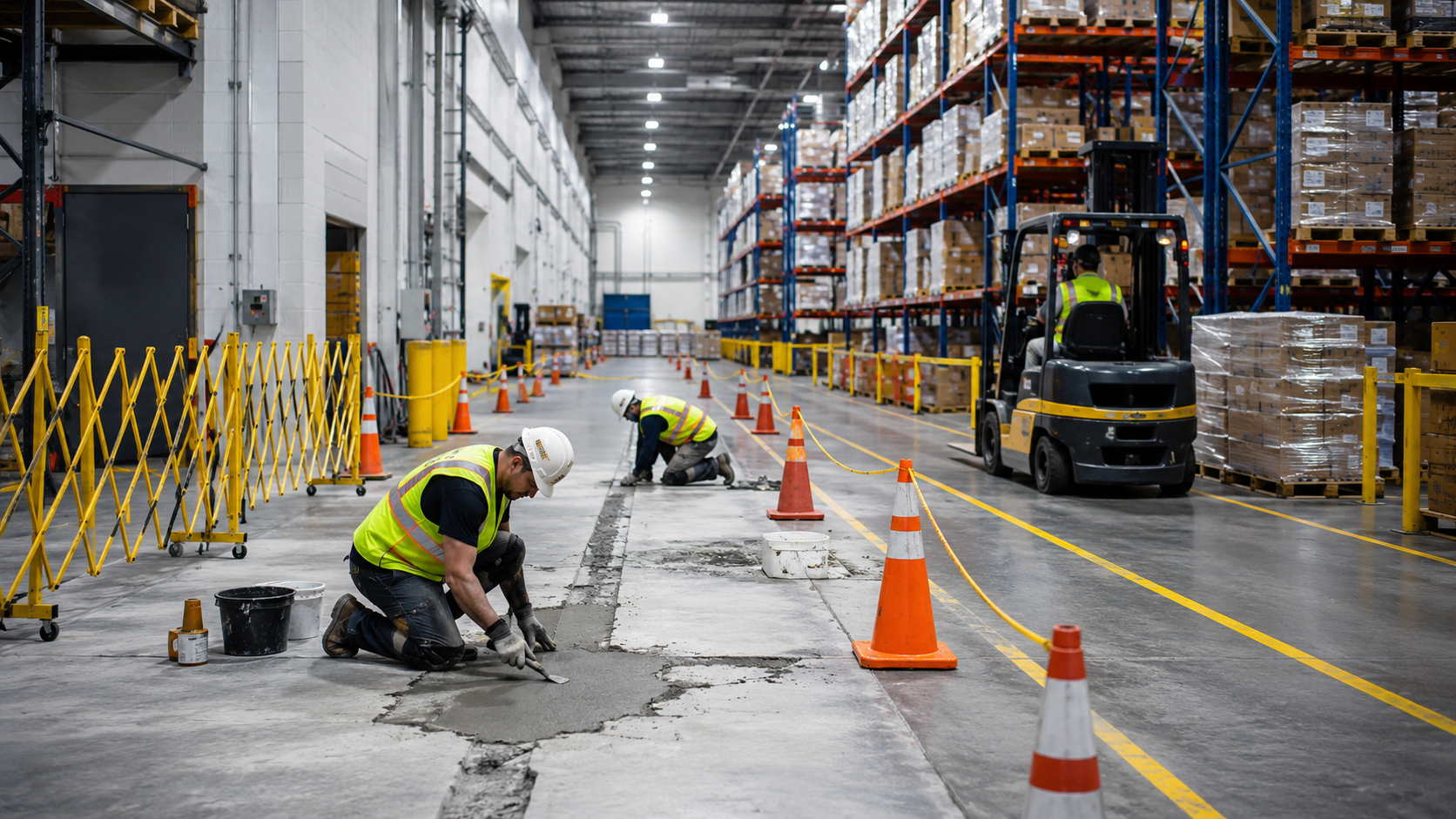
Some facilities attempt to address visible damage using patching compounds or joint fillers. While these can improve appearance temporarily, they do not address the root problem.
If the slab continues to move due to lack of support underneath:
- Patches crack again
- Joints reopen
- Surface repairs fail prematurely
These methods are best viewed as cosmetic or short-term fixes, not structural solutions.
Why Method Selection Is Often Misunderstood
One of the biggest challenges in this space is that many repair methods are marketed based on speed or simplicity rather than suitability for warehouse conditions.
In reality, the effectiveness of any method depends on:
- Where the failure is occurring
- How accessible the area is
- Whether the goal is lifting, stabilizing, or both
- How much disruption the facility can tolerate
This is why a one-size-fits-all answer rarely works in warehouses. The most effective approach is usually one that is targeted, controlled, and aligned with how the facility actually operates.
A More Practical Approach — Targeted Stabilization in Active Warehouses
In real warehouse environments, the biggest challenge is not always the condition of the slab itself—it’s how little access you actually have to repair it properly. Racking systems, production lines, stored inventory, and constant forklift movement often make large-scale intervention difficult without disrupting operations.
Because of this, many modern warehouse floor repair strategies focus less on full-slab correction and more on targeted stabilization of problem areas.
Instead of trying to treat the entire floor as one uniform system, this approach focuses on specific failure zones, particularly:
- Joint lines where slabs meet
- Forklift travel corridors
- Edges where slabs begin to lift or drop
- Isolated settlement points
These areas are usually where movement begins and where damage becomes most noticeable during operations.
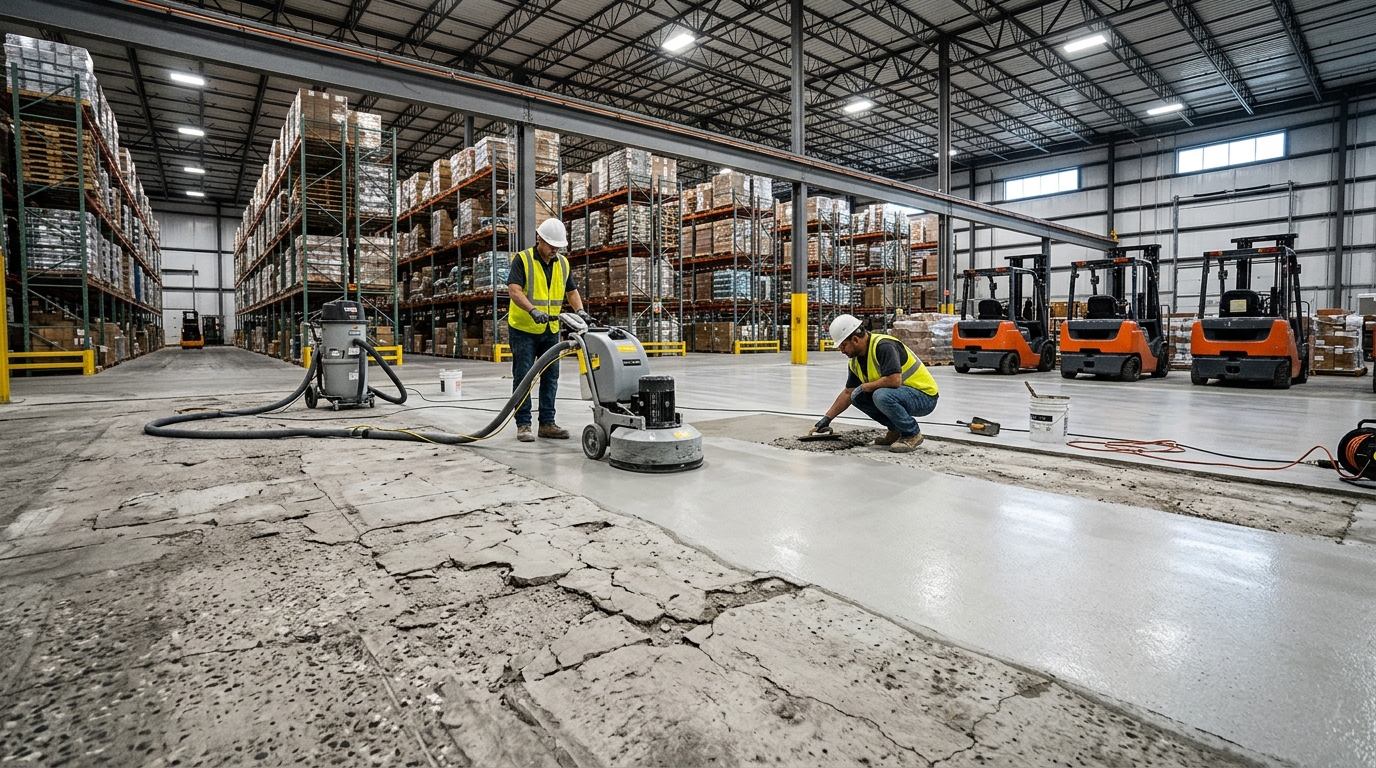
Targeted stabilization is not about rebuilding the entire floor. It is about restoring support where it has been lost, so the slab can continue performing under load without further deterioration. In many cases, this involves working in small, controlled sections where access is possible, rather than attempting broad coverage.
This approach is especially relevant in active warehouses where downtime must be minimized. Instead of shutting down large portions of the facility, work can be concentrated in limited zones, allowing operations to continue around the repair area.
The key principle here is simple: warehouse floors fail locally before they fail globally. Addressing those local weaknesses early often prevents larger structural issues later.
Why Joint Areas Are the First Point of Failure
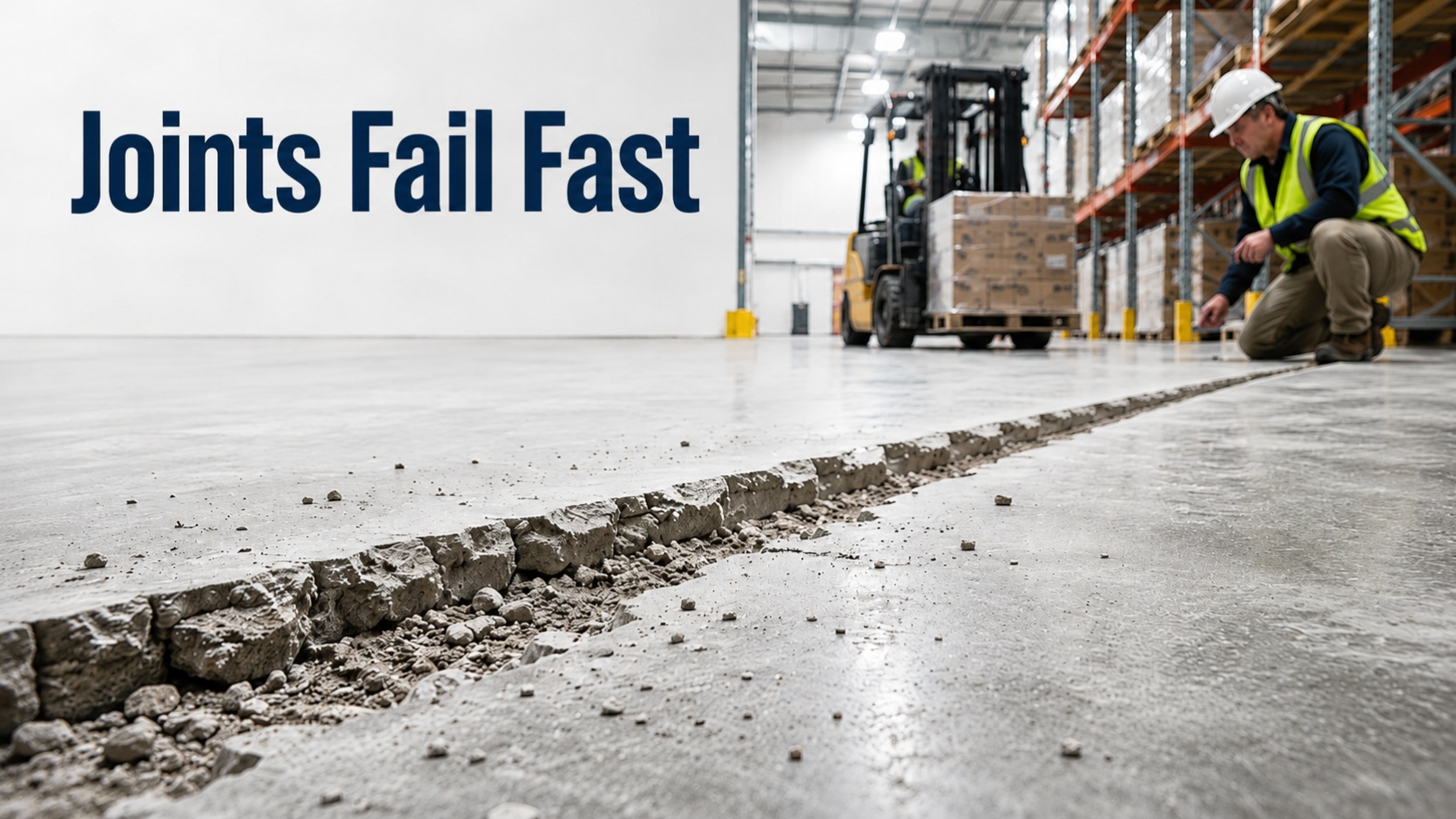
In most warehouse floors, joints are the weakest and most critical points in the entire slab system. These are the lines where separate concrete pours meet, and while they are designed to accommodate movement, they are also the first areas to show signs of distress under heavy industrial use.
Every time a forklift crosses a joint, it creates a small impact load. Over time, this repeated stress leads to a range of issues:
- Edge spalling or chipping
- Vertical displacement between slabs
- Open joints that allow water infiltration
- Increased vibration felt by operators
Once a joint begins to lose support beneath it, the problem accelerates. The slab edges start to move independently, which increases impact forces even further. This creates a cycle where damage feeds itself.
In many warehouse inspections, joint-related issues are actually the earliest visible sign that voids or weak subgrade conditions exist beneath the slab. The surface damage is only the symptom—the real issue is the loss of uniform support underneath.
Because joints are also high-traffic areas, they tend to deteriorate faster than the rest of the floor. Forklift operators often adjust their paths to avoid rough sections, which unintentionally concentrates traffic elsewhere, increasing stress in other zones.
This is why joint stabilization is often a priority in warehouse floor repair strategies. Addressing these areas early helps:
- Reduce ongoing slab movement
- Improve forklift ride quality
- Prevent edge breakdown from spreading
- Extend the usable life of the surrounding slab
In many cases, stabilizing joint areas can significantly improve overall floor performance without needing large-scale intervention.
So, What Actually Makes a Repair Method “Best”?
The idea of a single “best” repair method for warehouse concrete floors is often misleading. In practice, the right approach depends on a combination of structural conditions, operational constraints, and access limitations within the facility.
A method may be technically effective, but if it disrupts operations too heavily, requires extensive demolition, or cannot be applied in restricted areas, it may not be practical for a live warehouse environment.
Instead of focusing on one universal solution, it is more accurate to evaluate repair methods based on a few key criteria:
1. Ability to Address the Root Cause
The most important factor is whether the method restores support beneath the slab. If the underlying issue is void formation or soil movement, surface-level fixes will not provide lasting results.
2. Precision of Application
Warehouse floors rarely fail evenly. The ability to target specific areas—especially joints and isolated settlement points—is often more valuable than broad treatment.
3. Operational Impact
In active facilities, minimizing downtime is critical. Methods that allow work to be done in sections or confined areas are often more suitable than those requiring full shutdowns.
4. Long-Term Stability Under Load
Forklifts, pallet jacks, and storage loads create repeated stress. Any repair method must be evaluated based on how it performs under continuous industrial traffic, not just initial results.
Ultimately, the “best” method is not defined by marketing claims or speed of installation. It is defined by how well it integrates into a working warehouse while addressing the actual failure conditions beneath the floor.
Final Thought
The best repair method isn’t the one that sounds the most advanced or covers the largest area. It’s the one that solves the actual problem without creating new ones in the process.
In a warehouse, the floor is constantly being tested. Forklifts pass over the same نقاط hundreds of times a day, often under load and at speed. That repeated stress quickly exposes any weakness beneath the slab—especially at joints and transition points.
If those weak spots aren’t properly stabilized, the issue doesn’t go away. It continues to develop, leading to more movement, more wear on equipment, and eventually more costly repairs.
That’s why a focused approach—one that prioritizes targeted support, controlled application, and minimal disruption—often delivers better long-term results than broad, one-size-fits-all methods.
For facility managers, this comes down to keeping the floor functional, safe, and reliable without interrupting operations more than necessary.
Need a Warehouse Floor Evaluation?
If you’re dealing with uneven joints, slab movement, or recurring problem areas in your facility, it’s worth getting a proper assessment before the issue spreads.
At Warehouse Floor Repairs, the focus is on real-world warehouse conditions, including limited access, active operations, and the need for targeted solutions rather than unnecessary disruption.
With over 25 years of experience working across New Jersey and Eastern Pennsylvania, the approach is straightforward:
- Identify where support has been lost
- Focus on the areas that actually need attention
- Stabilize the floor in a way that fits your operation
If you want a clear, practical evaluation of your warehouse floor and your options, you can reach out to discuss your facility and next steps.
Frequently Asked Questions
What is the most durable warehouse floor repair method?
Durability depends on the condition of the slab, but methods that restore solid support beneath the concrete—like mudjacking—tend to perform well in heavy-use environments.
Is foam jacking suitable for warehouse floors?
It can be used in some cases, but its performance under constant heavy loads should be evaluated carefully based on site conditions.
How long does mudjacking last?
When properly installed and when underlying issues are addressed, it can provide long-lasting support for many years.
Can warehouse floors be repaired without shutting down operations?
In many cases, yes. Methods like mudjacking are often completed in sections, allowing parts of the warehouse to remain operational.

- Low-Downtime Concrete Floor Repair for Active Warehouses in NJ - June 30, 2026
- Repair vs Replacement:What to Do With a Damaged Warehouse Concrete Floor - June 30, 2026
- Warehouse Floor Joint Repair: Why Damaged Joints Get Worse Fast - June 30, 2026